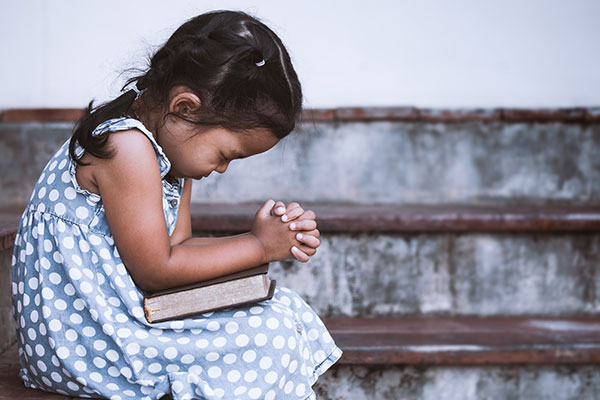
 Dear readers, Catholic Online was de-platformed by Shopify for our pro-life beliefs. They shut down our Catholic Online, Catholic Online School, Prayer Candles, and Catholic Online Learning Resources essential faith tools serving over 2.2 million students and millions of families worldwide. Our founders, now in their 70's, just gave their entire life savings to protect this mission. But fewer than 2% of readers donate. If everyone gave just $5, the cost of a coffee, we could rebuild stronger and keep Catholic education free for all. Stand with us in faith. Thank you. DONATE TODAY >
Mariology, in a Historical Perspective
FREE Catholic Classes
Interview With Father Paul Haffner, Professor and Author
ROME, DEC. 6, 2004 (Zenit) - The modern world's difficulty in accepting the dogma of the Immaculate Conception is a fruit of the many false and incomplete philosophies it lives with, says a theologian.
Father Paul Haffner, a theology professor at the Regina Apostolorum Pontifical University, made that point in an interview with us.
The London native, whose book "The Mystery of Mary" was recently published by Gracewing in Great Britain, and Hillenbrand Books in the United States, shared some insights with us.
Q: Why did you feel it was necessary to write a book on the dogma of the Immaculate Conception?
Father Haffner: The book is not only on the dogma of the Immaculate Conception. This book is published to celebrate the 150th anniversary of the definition, by Pope Blessed Pius IX, of the dogma of the Immaculate Conception of Our Lady.
In this book I have tried to offer a clear, structured overview of theology and doctrine concerning Mary, within a historical perspective. It is the author's conviction that the foundation for fruitful devotion to the Mother of God starts from sound doctrine based in Scripture and Tradition, and is nurtured by good theology.
Q: Why did Pius IX decide to proclaim the dogma?
Father Haffner: In 1849, Pope Blessed Pius IX consulted the bishops regarding the faith of the Church concerning the doctrine of the Immaculate Conception, and also whether a dogmatic definition in this regard would be opportune.
The response was affirmative on both counts, and so, on December 8, 1854, Blessed Pius IX solemnly defined the doctrine of the Immaculate Conception. The Pope proclaimed a doctrine which had been believed by the Church in one form or other since the earliest times.
Q: How does your book develop the topic, and what are the salient aspects that you will like to emphasize to readers?
Father Haffner: The book goes in thematic order. In the first chapter, I outlined the basic scheme of what constitutes Mariology, not in isolation but in relation to other forms of theological enquiry.
The second chapter works through the contribution of sacred Scripture -- in the Old Testament forms of prefiguration and prophecy, and then the New Testament fulfillment and witness are proposed in Chapter 3.
The succeeding chapters examine each of the fundamental doctrines that the Church teaches about Our Lady.
Chapter 4 develops the doctrine of the Immaculate Conception, and other truths dealing with Our Lady as being full of grace.
The fifth chapter looks at Mary as Mother of God, the central dogma of Mariology. The various dimensions of the perpetual Virginity of Mary are elaborated in the sixth chapter.
Mary's discipleship, a relatively recent theological acquisition, is examined in the seventh chapter, and this forms the basis for a discussion of her special and active participation in the Redemption.
Chapter 8 illustrates the end of Mary's earthly life and her glorious assumption, body and soul, into the glory of heaven.
The ninth and final chapter elaborates Mary's continuing Motherhood in the Church, in which she is the Mediatrix of all graces. In this year of the Eucharist, there is also a special focus on Mary's relation to the Eucharistic Christ.
Q: It is difficult for the modern world to understand the meaning of the dogma, and it is even more complicated in regard to the Virgin Mary. How would you explain it to the young people of today?
Father Haffner: The difficulty lies with the modern world, and the fact that it is the heir to many false and incomplete philosophies.
In fact, the mystery of Mary illustrates and reveals not only the Mystery of Christ, but also the deepest yearnings and aspirations of human existence. The fact of her Immaculate Conception and sinless life, for example, shows us that God's salvation really has had an impact, since e preserved her from sin. She is thus a ray of light in a darkened world.
Also, the definition of Mary's assumption took place in 1950, and this was of great historical significance. It took place in the middle of a century when the sacredness of the human body was denied theoretically and practically at many levels.
In the first half of the 20th century it was denied politically in the totalitarian systems of Marxism and Nazism, which denied the sacredness of the body in theory, and in the slaughter of millions in the gulags and concentration camps.
In the second half of the 20th century, the assault on the sacredness of the human body was taken a step further through the massacre of untold millions through abortion and euthanasia, and also through sacrilegious experiments carried out on embryos -- to say nothing of genetic engineering and attempts to clone the human being.
All of this is counterbalanced by the Church's affirmation that Our Lady was assumed "body" and soul to the glory of heaven. The Church, which believes in the resurrection of the body, believes that this same body has been created in the image and likeness of God, and is called to a supernatural destiny in Christ.
Q: What is the relationship between Mary and ecumenical dialogue?
Father Haffner: I have often treated ecumenical questions concerning Our Lady in this work.
While there is considerable agreement between Catholics and Orthodox on Mariology, it is heartening that there is also growing appreciation of Mary in Reformed circles.
Indeed, one Reformed theologian, whom I have cited in Chapter 7, John Macquarrie, writes: "It is Mary who has come to symbolize that perfect harmony between the divine will and the human response, so that it is she who gives meaning to the expression Co-Redemptrix."1
Mary is also Mediatrix for the angels, as Eastern theology has often pointed out. Mary, being nearest to God, is the only one worthy of receiving all of the grace of the Holy Spirit.
St. Gregory Palamas pointed out the importance of the Theotokos after her departure from this world: "To the degree that she is closer to God than all those who have drawn close to him, by so much has the Theotokos been deemed worthy of greater audience. I do not speak of men alone, but also of the angelic hierarchies themselves."2
_____________________
1 J. Macquarrie, "Mary for All Christians," (London: Collins, 1990), p. 113.
2 St. Gregory Palamas, "A Homily on the Dormition of Our Supremely Pure Lady Theotokos and Ever-Virgin Mary," (Homily 37).

Contact
Catholic Online
https://www.catholic.org
CA, US
Catholic Online - Publisher, 661 869-1000
info@yourcatholicvoice.org
Keywords
Mary, Mother, Immaculate, Conception, Virgin
More Catholic PRWire
Showing 1 - 50 of 4,716
A Recession Antidote
Randy Hain
Monaco & The Vatican: Monaco's Grace Kelly Exhibit to Rome--A Review of Monegasque-Holy See Diplomatic History
Dna. Maria St. Catherine Sharpe, t.o.s.m., T.O.SS.T.
The Why of Jesus' Death: A Pauline Perspective
Jerom Paul
A Royal Betrayal: Catholic Monaco Liberalizes Abortion
Dna. Maria St.Catherine De Grace Sharpe, t.o.s.m., T.O.SS.T.
Embrace every moment as sacred time
Mary Regina Morrell
My Dad
JoMarie Grinkiewicz
Letting go is simple wisdom with divine potential
Mary Regina Morrell
Father Lombardi's Address on Catholic Media
Catholic Online
Pope's Words to Pontifical Latin American College
Catholic Online
Prelate: Genetics Needs a Conscience
Catholic Online
State Aid for Catholic Schools: Help or Hindrance?
Catholic Online
Scorsese Planning Movie on Japanese Martyrs
Catholic Online
2 Nuns Kidnapped in Kenya Set Free
Catholic Online
Holy See-Israel Negotiation Moves Forward
Catholic Online
Franchising to Evangelize
Catholic Online
Catholics Decry Anti-Christianity in Israel
Catholic Online
Pope and Gordon Brown Meet About Development Aid
Catholic Online
Pontiff Backs Latin America's Continental Mission
Catholic Online
Cardinal Warns Against Anti-Catholic Education
Catholic Online
Full Circle
Robert Gieb
Three words to a deeper faith
Paul Sposite
Relections for Lent 2009
chris anthony
Wisdom lies beyond the surface of life
Mary Regina Morrell
World Food Program Director on Lent
Catholic Online
Moral Clarity
DAN SHEA
Pope's Lenten Message for 2009
Catholic Online
A Prayer for Monaco: Remembering the Faith Legacy of Prince Rainier III & Princess Grace and Contemplating the Moral Challenges of Prince Albert II
Dna. Maria St. Catherine Sharpe
Keeping a Lid on Permissiveness
Sally Connolly
Glimpse of Me
Sarah Reinhard
The 3 stages of life
Michele Szekely
Sex and the Married Woman
Cheryl Dickow
A Catholic Woman Returns to the Church
Cheryl Dickow
Modernity & Morality
Dan Shea
Just a Minute
Sarah Reinhard
Catholic identity ... triumphant reemergence!
Hugh McNichol
Edging God Out
Paul Sposite
Burying a St. Joseph Statue
Cheryl Dickow
George Bush Speaks on Papal Visit
Catholic Online
Sometimes moving forward means moving the canoe
Mary Regina Morrell
Action Changes Things: Teaching our Kids about Community Service
Lisa Hendey

Easter... A Way of Life
Paul Spoisite
Papal initiative...peace and harmony!
Hugh McNichol
Proclaim the mysteries of the Resurrection!
Hugh McNichol
Jerusalem Patriarch's Easter Message
Catholic Online
Good Friday Sermon of Father Cantalamessa
Catholic Online
Papal Address at the End of the Way of the Cross
Catholic Online
Cardinal Zen's Meditations for Via Crucis
Catholic Online
Interview With Vatican Aide on Jewish-Catholic Relations
Catholic Online
Pope Benedict XVI On the Easter Triduum
Catholic Online
Holy Saturday...anticipation!
Hugh McNichol
Come Grow With Us
Sign up and walk the Catholic journey with millions around the world.
Receive inspiring emails on saints, daily readings, and free faith-building resources—no cost, ever.
Who is forming our children—algorithms or Christ?
Watch Sister Sara's Message Now
- 7 Morning Prayers
- Mysteries of the Rosary
- Litany of the Bl. Virgin Mary
- Popular Saints
- Popular Prayers
- Female Saints
- Saint Feast Days by Month
- Stations of the Cross
- St. Francis of Assisi
- St. Michael the Archangel
- The Apostles' Creed
- Unfailing Prayer to St. Anthony
- Pray the Rosary






Copyright 2026 Catholic Online. All materials contained on this site, whether written, audible or visual are the exclusive property of Catholic Online and are protected under U.S. and International copyright laws, © Copyright 2026 Catholic Online. Any unauthorized use, without prior written consent of Catholic Online is strictly forbidden and prohibited.
Catholic Online is a Project of Your Catholic Voice Foundation, a Not-for-Profit Corporation. Your Catholic Voice Foundation has been granted a recognition of tax exemption under Section 501(c)(3) of the Internal Revenue Code. Federal Tax Identification Number: 81-0596847. Your gift is tax-deductible as allowed by law.