We ask you, humbly: don't scroll away.
Hi readers, it seems you use Catholic Online a lot; that's great! It's a little awkward to ask, but we need your help. If you have already donated, we sincerely thank you. We're not salespeople, but we depend on donations averaging $14.76 and fewer than 1% of readers give. If you donate just $5.00, the price of your coffee, Catholic Online School could keep thriving. Thank you.Help Now >
Jean-Philippe Rameau
FREE Catholic Classes
Musician, b. at Dijon, Burgundy, 25 Sept., 1683; d. at Paris, 12 Sept., 1764. His father, himself an organist, was his first master. At the age of seven he was able to perform every kind of music. For his further education he was sent to a Jesuit college ; but even during class he was either singing or writing music. Excepting a short stay in Italy, he always lived in France, was twice organist at Clermont, and from 1723 remained constantly in Paris, where he was organist in several churches. Rameau was very tall and extraordinarily thin, so he had more the appearance of a ghost than of a human being. He was a great thinker, fond of solitude, and out of place in society. In 1726 he married Marie-Louise Mangot, and had four children, a son and three daughters, one of whom entered the Order of the Visitation. Without denying the merits of Lully (1633-1687) and Couperin (1663-1733), the founders of the French opera, and even admitting that Rameau was not right in all the details of his theory, we must acknowledge that he opened up a new road, which was followed by all who came after him. His main principle, for the defence of which he had to sustain hard struggles, was that melody, far from being sufficient for a good piece of music, itself depends on the rules of harmony, so that the real guide of every composer is harmony, not melody. His chief merit consists in having established the relations between science and art, and in having highly developed the symphonic part of the opera. His most famous theoretical works are: "Traité de l'harmonie réduite à son principe naturel" (1722); "Génération harmonique" (1737); "Démonstration du principe de l'harmonie" (1750); "Code de musique pratique" (1760). Only at the age of fifty did he begin to write for the stage, and in sixteen years (1733-1749) he composed about thirty operas and ballets, the best of which are: "Castor et Pollux", "Les Indes Galantes", "Dardanus" and "Zoroastre". Of his church music some motets only are known. He left many compositions for the piano, either alone or with other instruments, eighteen of which have been lately published by Vincent d'Indy. Durand, in Paris, has undertaken a complete edition of Rameau's works, under the direction of Saint-Saëns.

We ask you, humbly: don't scroll away.
Hi readers, it seems you use Catholic Online a lot; that's great! It's a little awkward to ask, but we need your help. If you have already donated, we sincerely thank you. We're not salespeople, but we depend on donations averaging $14.76 and fewer than 1% of readers give. If you donate just $5.00, the price of your coffee, Catholic Online School could keep thriving. Thank you.Help Now >
Join the Movement
When you sign up below, you don't just join an email list - you're joining an entire movement for Free world class Catholic education.


-

-
Mysteries of the Rosary
-
St. Faustina Kowalska
-
Litany of the Blessed Virgin Mary
-
Saint of the Day for Wednesday, Oct 4th, 2023
-
Popular Saints
-
St. Francis of Assisi
-
Bible
-
Female / Women Saints
-
7 Morning Prayers you need to get your day started with God
-
Litany of the Blessed Virgin Mary


Sacrifices of Faith: The Pro-Life Legacies of St. Gianna and Jessica Hanna
-
How to love God by caring for our bodies
-
Pope Francis calls for negotiations to End Russia-Ukraine War
-
Pope Francis Contemplates Return to U.S. for United Nations Assembly Address
-
Pope Francis Calls on Faithful to Embrace Faith, Hope, and Charity in New Teaching Series


Daily Catholic
- Daily Readings for Sunday, April 28, 2024
- St. Peter Chanel: Saint of the Day for Sunday, April 28, 2024
- Prayer before a Crucifix: Prayer of the Day for Sunday, April 28, 2024
- Daily Readings for Saturday, April 27, 2024
- St. Zita: Saint of the Day for Saturday, April 27, 2024
- Prayer for the Dead # 2: Prayer of the Day for Saturday, April 27, 2024
 Daily Readings for Sunday, April 28, 2024
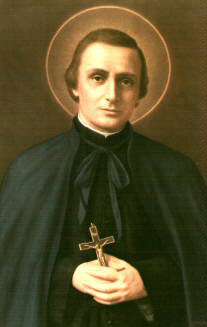 St. Peter Chanel: Saint of the Day for Sunday, April 28, 2024
 Prayer before a Crucifix: Prayer of the Day for Sunday, April 28, 2024
We ask you, humbly: don't scroll away.
Hi readers, it seems you use Catholic Online a lot; that's great! It's a little awkward to ask, but we need your help. If you have already donated, we sincerely thank you. We're not salespeople, but we depend on donations averaging $14.76 and fewer than 1% of readers give. If you donate just $5.00, the price of your coffee, Catholic Online School could keep thriving. Thank you.Help Now >

Copyright 2024 Catholic Online. All materials contained on this site, whether written, audible or visual are the exclusive property of Catholic Online and are protected under U.S. and International copyright laws, © Copyright 2024 Catholic Online. Any unauthorized use, without prior written consent of Catholic Online is strictly forbidden and prohibited.
Catholic Online is a Project of Your Catholic Voice Foundation, a Not-for-Profit Corporation. Your Catholic Voice Foundation has been granted a recognition of tax exemption under Section 501(c)(3) of the Internal Revenue Code. Federal Tax Identification Number: 81-0596847. Your gift is tax-deductible as allowed by law.