We ask you, humbly: don't scroll away.
Hi readers, it seems you use Catholic Online a lot; that's great! It's a little awkward to ask, but we need your help. If you have already donated, we sincerely thank you. We're not salespeople, but we depend on donations averaging $14.76 and fewer than 1% of readers give. If you donate just $5.00, the price of your coffee, Catholic Online School could keep thriving. Thank you.Help Now >
Priscianus
FREE Catholic Classes
Latin grammarian, born at Caesarea (Mauretania) , taught at Constantinople under Anastatius I (491-518).
He delivered the panegyric of the Emperor Anastatius about 512; we possess this work in 312 hexameter verses, preceded by a prologue of 22 iambic senarii . Besides this he composed a "Periegenis" is 1087 hexameters; a translation of the work of the same name written under Hadrian by Dionysius of Alexandria ; three works, dedicated to a certain Symmachus (perhaps the consul of 485), on numbers, numeration, and coins, on the metrical character of Latin comedies, on rhetoric according to the "Progymnasmata" at Hermogenes; the "Partitiones XII versuum Aeneidos" (on the versification of the Aeneid); a treatise "De aecentibus"; a compendium on declensions ("Institutio de nomine et pronomine at verbo").
But he is chiefly celebrated for a great work of which the last-named is an extract, the eighteen books of the "Institutiones Grammaticae", the most important grammatical work of antiquity which we possess. Each of these eighteen books has its own special title and subject. The first sixteen, often separately copied ("Priscianus Maior") treat of forms ("De accidentibus"); the last two ("Priscianus Minor") of syntax. They are dedicated to a certain Julianus, consul and patrician. In this preface Priscian declares that he borrows his doctrines from the enormous volumes ( spatiosa volumina ) of Appollonius Dyscolus and from "the sea" ( pleagus ) of Herodian. He also cites Juba, Heliodorus, and Hephaestion. Moreover, he follows his sources servilely, as is proved by comparison with the extant fragments of Apollonius. His knowledge of Latin authors is chiefly derived from his predecessor Flavius Caper (end of second century). Priscian lacks judgment and taste, but he is valuable because he has preserved for us the theories of the Greek grammarians, and numerous Latin quotations for which he is our sole authority. The best edition is Hertz in Keil's "Grammatici Latini", II, III (1855-9).
We ask you, humbly: don't scroll away.
Hi readers, it seems you use Catholic Online a lot; that's great! It's a little awkward to ask, but we need your help. If you have already donated, we sincerely thank you. We're not salespeople, but we depend on donations averaging $14.76 and fewer than 1% of readers give. If you donate just $5.00, the price of your coffee, Catholic Online School could keep thriving. Thank you.Help Now >
A copy of Priscian carried to England in the time of Aldhelm (d. 709) was quoted by Bede and Aldhelm, and copied by Rabanus Maurus, who reintroduced Priscian on the Continent. Together with Donatus he became the personification of grammar. More than a thousand manuscripts of his work exist. His accompanies the allegorical figure of Grammar at Santa Maria Novella, and on the doorway of cathedral of Chartes.


Join the Movement
When you sign up below, you don't just join an email list - you're joining an entire movement for Free world class Catholic education.


-

-
Mysteries of the Rosary
-
St. Faustina Kowalska
-
Litany of the Blessed Virgin Mary
-
Saint of the Day for Wednesday, Oct 4th, 2023
-
Popular Saints
-
St. Francis of Assisi
-
Bible
-
Female / Women Saints
-
7 Morning Prayers you need to get your day started with God
-
Litany of the Blessed Virgin Mary


Sacrifices of Faith: The Pro-Life Legacies of St. Gianna and Jessica Hanna
-
How to love God by caring for our bodies
-
Pope Francis calls for negotiations to End Russia-Ukraine War
-
Pope Francis Contemplates Return to U.S. for United Nations Assembly Address
-
Pope Francis Calls on Faithful to Embrace Faith, Hope, and Charity in New Teaching Series


Daily Catholic
- Daily Readings for Sunday, April 28, 2024
- St. Peter Chanel: Saint of the Day for Sunday, April 28, 2024
- Prayer before a Crucifix: Prayer of the Day for Sunday, April 28, 2024
- Daily Readings for Saturday, April 27, 2024
- St. Zita: Saint of the Day for Saturday, April 27, 2024
- Prayer for the Dead # 2: Prayer of the Day for Saturday, April 27, 2024
 Daily Readings for Sunday, April 28, 2024
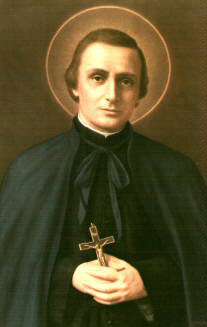 St. Peter Chanel: Saint of the Day for Sunday, April 28, 2024
 Prayer before a Crucifix: Prayer of the Day for Sunday, April 28, 2024
 Hi readers, it seems you use Catholic Online a lot; that's great! It's a little awkward to ask, but we need your help. If you have already donated, we sincerely thank you. We're not salespeople, but we depend on donations averaging $14.76 and fewer than 1% of readers give. If you donate just $5.00, the price of your coffee, Catholic Online School could keep thriving. Thank you. Help Now >


Copyright 2024 Catholic Online. All materials contained on this site, whether written, audible or visual are the exclusive property of Catholic Online and are protected under U.S. and International copyright laws, © Copyright 2024 Catholic Online. Any unauthorized use, without prior written consent of Catholic Online is strictly forbidden and prohibited.
Catholic Online is a Project of Your Catholic Voice Foundation, a Not-for-Profit Corporation. Your Catholic Voice Foundation has been granted a recognition of tax exemption under Section 501(c)(3) of the Internal Revenue Code. Federal Tax Identification Number: 81-0596847. Your gift is tax-deductible as allowed by law.