 Hi readers, it seems you use Catholic Online a lot; that's great! It's a little awkward to ask, but we need your help. If you have already donated, we sincerely thank you. We're not salespeople, but we depend on donations averaging $14.76 and fewer than 1% of readers give. If you donate just $5.00, the price of your coffee, Catholic Online School could keep thriving. Thank you. Help Now >
Jean Picard
FREE Catholic Classes
Astronomer, b. at La Flêche, 21 July, 1620; d. at Paris, 12 Oct., 1682. He was a priest and prior of Rillé in Anjou. As a pupil of Gassendi he observed with him the solar eclipse of 25 Aug., 1645. In 1655 he succeeded his master as professor of astronomy at the College de France. His principal achievement was the accurate measurement of an arc of a meridian of the earth, the distance from Sourdon, near Amiens, to Malvoisine, south of Paris, in 1669-70. His result, 57060 toises (a toise = about 6.4 ft.) for the degree of arc, has been found to be only 14 toises too small. He applied telescopes and micrometers to graduated astronomical and measuring instruments as early as 1667. The quadrant he used had a radius of 38 inches and was so finely graduated that he could read the angles to one quarter of a minute. The sextant employed for determining the meridian was 6 feet in radius. In 1659 he was able to observe stars on the meridian during day-time and to measure their position with the aid of cross-wires at the focus of his telescope. In order to make sure that his standard toise should not be lost, like those used by others before him, he conceived the idea of comparing it with the length of the simple pendulum beating seconds at Paris, and thus made it possible to reproduce the standard at any time.
We ask you, humbly: don't scroll away.
Hi readers, it seems you use Catholic Online a lot; that's great! It's a little awkward to ask, but we need your help. If you have already donated, we sincerely thank you. We're not salespeople, but we depend on donations averaging $14.76 and fewer than 1% of readers give. If you donate just $5.00, the price of your coffee, Catholic Online School could keep thriving. Thank you.Help Now >
Picard is regarded as the founder of modern astronomy in France. He introduced new methods, improved the old instruments, and added new devices, such as the pendulum clock. As a result of Picard's work, Newton was able to revise his calculations and announce his great law of universal gravitation. The discovery of the aberration of light also became a possibility on account of Picard's study of Tycho Brahe's observations. In 1671 he received from Bartholinus at Copenhagen an exact copy of Tycho's records and then went with Bartholinus to the Island of Hveen in order to determine the exact position of Tycho's observatory at Uranienborg. He was modest and unselfish enough to recommend the rival Italian astronomer Cassini to Colbert and Louis XIV for the direction of the new observatory at Paris. Cassini, on the contrary, proved envious, ignoring Picard's insistent recommendations of a mural circle for accurate meridional observations, until after the latter's death.
Picard was among the first members of the Academy. He also started the publication of the annual "Connaissance des temps" in 1679 (Paris, 1678), and continued the same until 1683. Since then it has been published continuously. His "Mesure de la terre" was brought out in 1671, Paris.
Hi readers, it seems you use Catholic Online a lot; that's great! It's a little awkward to ask, but we need your help. If you have already donated, we sincerely thank you. We're not salespeople, but we depend on donations averaging $14.76 and fewer than 1% of readers give. If you donate just $5.00, the price of your coffee, Catholic Online School could keep thriving. Thank you. Help Now >

Join the Movement
When you sign up below, you don't just join an email list - you're joining an entire movement for Free world class Catholic education.


-

-
Mysteries of the Rosary
-
St. Faustina Kowalska
-
Litany of the Blessed Virgin Mary
-
Saint of the Day for Wednesday, Oct 4th, 2023
-
Popular Saints
-
St. Francis of Assisi
-
Bible
-
Female / Women Saints
-
7 Morning Prayers you need to get your day started with God
-
Litany of the Blessed Virgin Mary


Sacrifices of Faith: The Pro-Life Legacies of St. Gianna and Jessica Hanna
-
How to love God by caring for our bodies
-
Pope Francis calls for negotiations to End Russia-Ukraine War
-
Pope Francis Contemplates Return to U.S. for United Nations Assembly Address
-
Pope Francis Calls on Faithful to Embrace Faith, Hope, and Charity in New Teaching Series

Daily Catholic
- Daily Readings for Sunday, April 28, 2024
- St. Peter Chanel: Saint of the Day for Sunday, April 28, 2024
- Prayer before a Crucifix: Prayer of the Day for Sunday, April 28, 2024
- Daily Readings for Saturday, April 27, 2024
- St. Zita: Saint of the Day for Saturday, April 27, 2024
- Prayer for the Dead # 2: Prayer of the Day for Saturday, April 27, 2024
 Daily Readings for Sunday, April 28, 2024
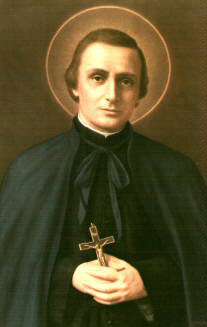 St. Peter Chanel: Saint of the Day for Sunday, April 28, 2024
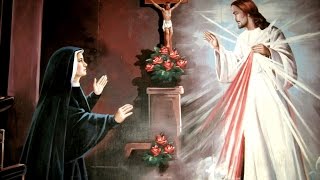
 Prayer before a Crucifix: Prayer of the Day for Sunday, April 28, 2024
We ask you, humbly: don't scroll away.
Hi readers, it seems you use Catholic Online a lot; that's great! It's a little awkward to ask, but we need your help. If you have already donated, we sincerely thank you. We're not salespeople, but we depend on donations averaging $14.76 and fewer than 1% of readers give. If you donate just $5.00, the price of your coffee, Catholic Online School could keep thriving. Thank you.Help Now >

Copyright 2024 Catholic Online. All materials contained on this site, whether written, audible or visual are the exclusive property of Catholic Online and are protected under U.S. and International copyright laws, © Copyright 2024 Catholic Online. Any unauthorized use, without prior written consent of Catholic Online is strictly forbidden and prohibited.
Catholic Online is a Project of Your Catholic Voice Foundation, a Not-for-Profit Corporation. Your Catholic Voice Foundation has been granted a recognition of tax exemption under Section 501(c)(3) of the Internal Revenue Code. Federal Tax Identification Number: 81-0596847. Your gift is tax-deductible as allowed by law.