 Hi readers, it seems you use Catholic Online a lot; that's great! It's a little awkward to ask, but we need your help. If you have already donated, we sincerely thank you. We're not salespeople, but we depend on donations averaging $14.76 and fewer than 1% of readers give. If you donate just $5.00, the price of your coffee, Catholic Online School could keep thriving. Thank you. Help Now >
Paul of Middelburg
FREE Catholic Classes
A scientist and bishop, born in 1446 at Middelburg, the ancient capital of the province of Zealand, belonging then to the German Empire, now to Holland ; died in Rome, 13 December, 1534. After finishing his studies in Louvain he received a canonry in his native town, of which he was afterwards deprived. The circumstances of this fact are not known, but in his apologetic letter on the celebration of Easter he calls it a usurpation, and shows great bitterness against his country, calling it "barbara Zelandiæ insula", "vervecum patria", "cerdonum regio", etc. He then taught for a while in Louvain, was invited by the Signoria of Venice to take a chair for sciences in Padua (1480), travelled through Italy, became physician to Francesco Maria della Rovere, Duke of Urbino, and friend to Maximilian, Archduke of Austria, afterwards emperor. By the former he was endowed with the Benedictine Abbey St. Christophorus in Castel Durante (1488), and by the latter he was recommended to Alexander VI for the Bishopric of Fossombrone (Moroni, LXXXV, 314). Being nominated to that see, in 1494, he destroyed some of his former publications; first "Giudizio dell' anno 1480", in which he had censured a number of mathematicians; then a "Practica de pravis Constellationibus", and a defence of that work against the nephew of Paul II (1484); and finally an "Invectiva in superstitiosum Vatem". He chose for himself an astronomical coat of arms, and, in 497, enlarged and embellished the episcopal palace. Besides some smaller treatises against usurers and against the superstitious fear of a flood in 1524 (Fossombrone, 1523), he wrote important works on the reform of the Calendar, which procured for him invitations by Julius II and Leo X to the Fifth Lateran Council (1512-1518). His "Epistola ad Universitatem Lovaniensem de Paschate recte observando" (1487) was followed by an "Epistola apologetica" (1488), and finally by his principal work "Paulina, de recta Pasch celebratione" (Fossombrone, 1513). The contents and result of the work are described under the article LILIUS. He died while assisting at the Divine Office in Rome, and was buried in S. Maria dell' Anima. His family name is unknown, but in one place he is called Paolo di Adriano (Moroni, XLIV, 120). Scaliger, who calls him "Omnium sui sæculi mathematicorum . . . facile princeps", was his godson.
We ask you, humbly: don't scroll away.
Hi readers, it seems you use Catholic Online a lot; that's great! It's a little awkward to ask, but we need your help. If you have already donated, we sincerely thank you. We're not salespeople, but we depend on donations averaging $14.76 and fewer than 1% of readers give. If you donate just $5.00, the price of your coffee, Catholic Online School could keep thriving. Thank you.Help Now >


Join the Movement
When you sign up below, you don't just join an email list - you're joining an entire movement for Free world class Catholic education.


-

-
Mysteries of the Rosary
-
St. Faustina Kowalska
-
Litany of the Blessed Virgin Mary
-
Saint of the Day for Wednesday, Oct 4th, 2023
-
Popular Saints
-
St. Francis of Assisi
-
Bible
-
Female / Women Saints
-
7 Morning Prayers you need to get your day started with God
-
Litany of the Blessed Virgin Mary


Sacrifices of Faith: The Pro-Life Legacies of St. Gianna and Jessica Hanna
-
How to love God by caring for our bodies
-
Pope Francis calls for negotiations to End Russia-Ukraine War
-
Pope Francis Contemplates Return to U.S. for United Nations Assembly Address
-
Pope Francis Calls on Faithful to Embrace Faith, Hope, and Charity in New Teaching Series


Daily Catholic
- Daily Readings for Sunday, April 28, 2024
- St. Peter Chanel: Saint of the Day for Sunday, April 28, 2024
- Prayer before a Crucifix: Prayer of the Day for Sunday, April 28, 2024
- Daily Readings for Saturday, April 27, 2024
- St. Zita: Saint of the Day for Saturday, April 27, 2024
- Prayer for the Dead # 2: Prayer of the Day for Saturday, April 27, 2024
 Daily Readings for Sunday, April 28, 2024
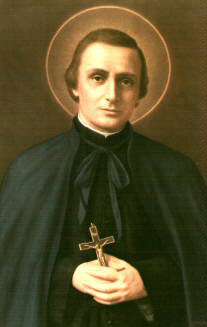 St. Peter Chanel: Saint of the Day for Sunday, April 28, 2024
 Prayer before a Crucifix: Prayer of the Day for Sunday, April 28, 2024


Copyright 2024 Catholic Online. All materials contained on this site, whether written, audible or visual are the exclusive property of Catholic Online and are protected under U.S. and International copyright laws, © Copyright 2024 Catholic Online. Any unauthorized use, without prior written consent of Catholic Online is strictly forbidden and prohibited.
Catholic Online is a Project of Your Catholic Voice Foundation, a Not-for-Profit Corporation. Your Catholic Voice Foundation has been granted a recognition of tax exemption under Section 501(c)(3) of the Internal Revenue Code. Federal Tax Identification Number: 81-0596847. Your gift is tax-deductible as allowed by law.