We ask you, humbly: don't scroll away.
Hi readers, it seems you use Catholic Online a lot; that's great! It's a little awkward to ask, but we need your help. If you have already donated, we sincerely thank you. We're not salespeople, but we depend on donations averaging $14.76 and fewer than 1% of readers give. If you donate just $5.00, the price of your coffee, Catholic Online School could keep thriving. Thank you.Help Now >
Joseph Maria Amiot
FREE Catholic Classes
A missionary to China, born at Toulon, 8 February, 1718; died at Pekin, 8 or 9 October, 1793. He was admitted into the Society of Jesus in 1737. Sent to China as a missionary in 1740, he soon won the esteem and confidence of the Emperor Kien Long, whose language, the Tatar, he spoke fluently. His thorough mastery of this tongue as well as the Chinese, and his extensive knowledge of physics, literature, history, mathematics, and music, enabled him to give to the European world, in a voluminous correspondence, much striking and curious information concerning the Chinese. He made a special study of their music. Most of the important works of Amiot are found in the collection: "Mémoires concernant l'histoire, les sciences, les arts, les moeurs et les usages des chinois, par les missionaires de Pekin" (Paris, Nyon ainé , 1776-89). He composed a Tatar-Manchu grammar and dictionary in French, and a chronological table of the Chinese Emperors from the sixty-first year of the Empire to 1769. There are also articles from his pen n the weights and measures of the Chinese, their military science, music, language, teaching of their books, the geography and climate of their country, as well as historical treatises on the migrations of the Tatar-Tourgouths. These and other works, and where they can be found, are noted by Sommervogel in his "Bibliothèque de la Compagnie de Jésus", I, 294 sqq.



Join the Movement
When you sign up below, you don't just join an email list - you're joining an entire movement for Free world class Catholic education.


-

-
Mysteries of the Rosary
-
St. Faustina Kowalska
-
Litany of the Blessed Virgin Mary
-
Saint of the Day for Wednesday, Oct 4th, 2023
-
Popular Saints
-
St. Francis of Assisi
-
Bible
-
Female / Women Saints
-
7 Morning Prayers you need to get your day started with God
-
Litany of the Blessed Virgin Mary


Sacrifices of Faith: The Pro-Life Legacies of St. Gianna and Jessica Hanna
-
How to love God by caring for our bodies
-
Pope Francis calls for negotiations to End Russia-Ukraine War
-
Pope Francis Contemplates Return to U.S. for United Nations Assembly Address
-
Pope Francis Calls on Faithful to Embrace Faith, Hope, and Charity in New Teaching Series


Daily Catholic
- Daily Readings for Sunday, April 28, 2024
- St. Peter Chanel: Saint of the Day for Sunday, April 28, 2024
- Prayer before a Crucifix: Prayer of the Day for Sunday, April 28, 2024
- Daily Readings for Saturday, April 27, 2024
- St. Zita: Saint of the Day for Saturday, April 27, 2024
- Prayer for the Dead # 2: Prayer of the Day for Saturday, April 27, 2024
 Daily Readings for Sunday, April 28, 2024
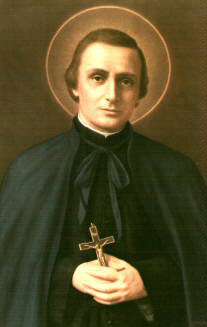 St. Peter Chanel: Saint of the Day for Sunday, April 28, 2024
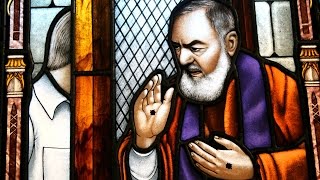
 Prayer before a Crucifix: Prayer of the Day for Sunday, April 28, 2024
We ask you, humbly: don't scroll away.
Hi readers, it seems you use Catholic Online a lot; that's great! It's a little awkward to ask, but we need your help. If you have already donated, we sincerely thank you. We're not salespeople, but we depend on donations averaging $14.76 and fewer than 1% of readers give. If you donate just $5.00, the price of your coffee, Catholic Online School could keep thriving. Thank you.Help Now >


Copyright 2024 Catholic Online. All materials contained on this site, whether written, audible or visual are the exclusive property of Catholic Online and are protected under U.S. and International copyright laws, © Copyright 2024 Catholic Online. Any unauthorized use, without prior written consent of Catholic Online is strictly forbidden and prohibited.
Catholic Online is a Project of Your Catholic Voice Foundation, a Not-for-Profit Corporation. Your Catholic Voice Foundation has been granted a recognition of tax exemption under Section 501(c)(3) of the Internal Revenue Code. Federal Tax Identification Number: 81-0596847. Your gift is tax-deductible as allowed by law.
