We have one question for you.
Has Catholic Online given you $5 worth of value this year? Maybe you came here for a prayer. Maybe you read today's Mass readings. Maybe you researched a saint. Maybe you needed an answer about the Catholic Faith. Maybe your child used Catholic Online School. If the answer is no, you don't owe us anything. Keep using Catholic Online. But if the answer is yes, we're asking you to give $5 today.
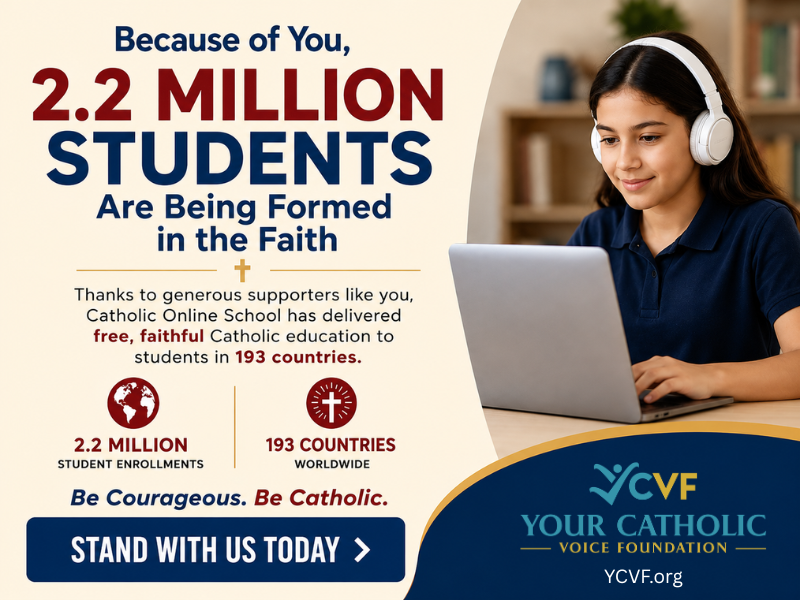
Catholic Online School has served 2.2 million student enrollments in 193 countries, and we continue working to make Catholic education available regardless of a family's financial circumstances. We don't need every reader to give. We need the readers who recognize the value of what they've received to stand behind it. Is Catholic Online worth $5 to you?
GIVE TODAY >>Blessed Joanna of Portugal
FREE Catholic Classes
Born at Lisbon, 16 February, 1452; died at Aveiro, 12 may, 1490; the daughter of Alfonso V, King of Portugal, and his wife Elizabeth. She was chiefly remarkable for the courage and persistency with which she opposed all attempts on the part of her father and brother to make her marry. She had resolved from childhood to be the spouse of Christ and, when possible to enter the religious state; but being the next heir to the throne in default of male issue, her wish was particularly obnoxious to her family and to the country. Joanna was very beautiful and her hand was sought by several princes. Once, in her father's absence, she had to act as regent of the kingdom, and in that office is said to have shown great capacity.
After many struggles, she entered the Dominican house called the Convent of Jesus, at Aveiro, where the rule was severe and very strictly kept. For a time she was compelled, for political reasons, to leave it and go back to Court. Finally, however, she was professed ; and her life in the convent was so penitential, holy, and heroically humble, that she died in the odour of sanctity, and miracles followed her decease.
Come Grow With Us
Sign up and walk the Catholic journey with millions around the world.
Receive inspiring emails on saints, daily readings, and free faith-building resources—no cost, ever.
Catholic Online Is Free. But We Need Your Help.
Please Watch
- 7 Morning Prayers
- Mysteries of the Rosary
- Litany of the Bl. Virgin Mary
- Popular Saints
- Popular Prayers
- Female Saints
- Saint Feast Days by Month
- Stations of the Cross
- St. Francis of Assisi
- St. Michael the Archangel
- The Apostles' Creed
- Unfailing Prayer to St. Anthony
- Pray the Rosary






Copyright 2026 Catholic Online. All materials contained on this site, whether written, audible or visual are the exclusive property of Catholic Online and are protected under U.S. and International copyright laws, © Copyright 2026 Catholic Online. Any unauthorized use, without prior written consent of Catholic Online is strictly forbidden and prohibited.
Catholic Online is a Project of Your Catholic Voice Foundation, a Not-for-Profit Corporation. Your Catholic Voice Foundation has been granted a recognition of tax exemption under Section 501(c)(3) of the Internal Revenue Code. Federal Tax Identification Number: 81-0596847. Your gift is tax-deductible as allowed by law.