 Hi readers, it seems you use Catholic Online a lot; that's great! It's a little awkward to ask, but we need your help. If you have already donated, we sincerely thank you. We're not salespeople, but we depend on donations averaging $14.76 and fewer than 1% of readers give. If you donate just $5.00, the price of your coffee, Catholic Online School could keep thriving. Thank you. Help Now >
Internuncio
FREE Catholic Classes
( Latin inter , between; nuntius , messenger.)
The name given in the Roman Curia to a diplomatic agent who, though not belonging to the five highest classes of the papal diplomatic service ( legatus a latere , nuncio with full powers of a legatus a latere , legate, nuncio of the first class, and nuncio of the second class), is, nevertheless, chief of a legation ( chef de mission ). He may have several subordinates, and, on the other hand, his household may consist only of a private secretary. The nomination of internuncios follows no fixed rule; they have been, and still are, accredited indiscriminately to countries differing widely in ecclesiastical importance, e.g. Luxemburg, Chile, Holland, Brazil. Formerly the powers of an internuncio were necessarily extensive, owing to the lack of telegraph service and the slow postal deliveries; they are now almost entirely confined to routine work. In exceptional cases extraordinary powers are given to the internuncio, when important affairs are in question. As conditions in the various countries to which internuncios are ordinarily sent differ considerably, their general powers are regulated accordingly; in consequence, no general statement of the duties of an internuncio is possible.
Nor can the ecclesiastical dignity or position at court of the internuncio be determined with more exactitude. It is safe to say that they are always domestic prelates or titular archbishops. The simple prelature has always been the rule for the internuncios of Holland and Luxemburg, the last of whom was Mgr. Tarnassi. The internuncios accredited to South America in the last century were mostly titular archbishops. At present (summer of 1909), the only internuncios are those in Argentina and Chile, and both are titular archbishops. The earlier arrangement, that internuncios should bear the title of Apostolic delegate and envoy extraordinary, no longer obtains. The last case of the kind occurred in Portugal about the middle of the nineteenth century.

Internuncios, when promoted, are appointed nuncios ; in rare instances they become Apostolic delegates. Too much confidence must not be placed in earlier works on papal diplomacy, apropos of this office; according to the requirements of the moment, the Curia increases or diminishes both its scope and its powers.


Join the Movement
When you sign up below, you don't just join an email list - you're joining an entire movement for Free world class Catholic education.


-

-
Mysteries of the Rosary
-
St. Faustina Kowalska
-
Litany of the Blessed Virgin Mary
-
Saint of the Day for Wednesday, Oct 4th, 2023
-
Popular Saints
-
St. Francis of Assisi
-
Bible
-
Female / Women Saints
-
7 Morning Prayers you need to get your day started with God
-
Litany of the Blessed Virgin Mary


Sacrifices of Faith: The Pro-Life Legacies of St. Gianna and Jessica Hanna
-
How to love God by caring for our bodies
-
Pope Francis calls for negotiations to End Russia-Ukraine War
-
Pope Francis Contemplates Return to U.S. for United Nations Assembly Address
-
Pope Francis Calls on Faithful to Embrace Faith, Hope, and Charity in New Teaching Series

Daily Catholic
- Daily Readings for Sunday, April 28, 2024
- St. Peter Chanel: Saint of the Day for Sunday, April 28, 2024
- Prayer before a Crucifix: Prayer of the Day for Sunday, April 28, 2024
- Daily Readings for Saturday, April 27, 2024
- St. Zita: Saint of the Day for Saturday, April 27, 2024
- Prayer for the Dead # 2: Prayer of the Day for Saturday, April 27, 2024
 Daily Readings for Sunday, April 28, 2024
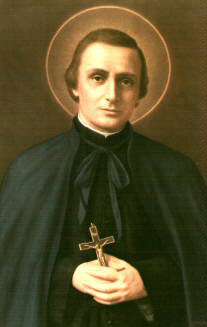 St. Peter Chanel: Saint of the Day for Sunday, April 28, 2024
 Prayer before a Crucifix: Prayer of the Day for Sunday, April 28, 2024
Hi readers, it seems you use Catholic Online a lot; that's great! It's a little awkward to ask, but we need your help. If you have already donated, we sincerely thank you. We're not salespeople, but we depend on donations averaging $14.76 and fewer than 1% of readers give. If you donate just $5.00, the price of your coffee, Catholic Online School could keep thriving. Thank you. Help Now >
Prayer before a Crucifix: Prayer of the Day for Sunday, April 28, 2024
Hi readers, it seems you use Catholic Online a lot; that's great! It's a little awkward to ask, but we need your help. If you have already donated, we sincerely thank you. We're not salespeople, but we depend on donations averaging $14.76 and fewer than 1% of readers give. If you donate just $5.00, the price of your coffee, Catholic Online School could keep thriving. Thank you. Help Now >

We ask you, humbly: don't scroll away.
Hi readers, it seems you use Catholic Online a lot; that's great! It's a little awkward to ask, but we need your help. If you have already donated, we sincerely thank you. We're not salespeople, but we depend on donations averaging $14.76 and fewer than 1% of readers give. If you donate just $5.00, the price of your coffee, Catholic Online School could keep thriving. Thank you.Help Now >

Copyright 2024 Catholic Online. All materials contained on this site, whether written, audible or visual are the exclusive property of Catholic Online and are protected under U.S. and International copyright laws, © Copyright 2024 Catholic Online. Any unauthorized use, without prior written consent of Catholic Online is strictly forbidden and prohibited.
Catholic Online is a Project of Your Catholic Voice Foundation, a Not-for-Profit Corporation. Your Catholic Voice Foundation has been granted a recognition of tax exemption under Section 501(c)(3) of the Internal Revenue Code. Federal Tax Identification Number: 81-0596847. Your gift is tax-deductible as allowed by law.