We ask you, humbly: don't scroll away.
Hi readers, it seems you use Catholic Online a lot; that's great! It's a little awkward to ask, but we need your help. If you have already donated, we sincerely thank you. We're not salespeople, but we depend on donations averaging $14.76 and fewer than 1% of readers give. If you donate just $5.00, the price of your coffee, Catholic Online School could keep thriving. Thank you.Help Now >
St. Gerald
FREE Catholic Classes
Bishop of Mayo, an English monk, date of birth unknown; died 13 March, 731; followed St. Colman, after the Synod of Whitby (664), to Ireland, and settled in Innisboffin, in 668. Dissensions arose, after a time, between the Irish and the English monks, and St. Colman decided to found a separate monastery for the thirty English brethren. Thus arose the Mayo ( Magh Eo , the yew plain), known as "Mayo of the Saxons", with St. Gerald as the first abbot, in 670. St. Bede writes: "This monastery is to this day (731) occupied by English monks... and contains an exemplary body who gathered there from England, and live by the labour of their own hands (after the manner of the early Fathers), under a rule and canonical abbot, leading chaste and single lives." Although St. Gerald was a comparatively young man, he proved a wise ruler, and governed May until 697, when, it is said, he resigned in favour of St. Adamnan. Some authors hold that St. Adamnan celebrated the Roman Easter at Mayo, in 703, and then went to Skreen, in Hy Fiachrach, and that after his departure the monks prevailed on St. Gerald to resume the abbacy. The Saxon saint continued to govern the Abbey and Diocese of Mayo till his death. His feast is celebrated on 13 March. Mayo, though merged in Tuam for a time, remained a separate see until 1579.


Join the Movement
When you sign up below, you don't just join an email list - you're joining an entire movement for Free world class Catholic education.


-

-
Mysteries of the Rosary
-
St. Faustina Kowalska
-
Litany of the Blessed Virgin Mary
-
Saint of the Day for Wednesday, Oct 4th, 2023
-
Popular Saints
-
St. Francis of Assisi
-
Bible
-
Female / Women Saints
-
7 Morning Prayers you need to get your day started with God
-
Litany of the Blessed Virgin Mary

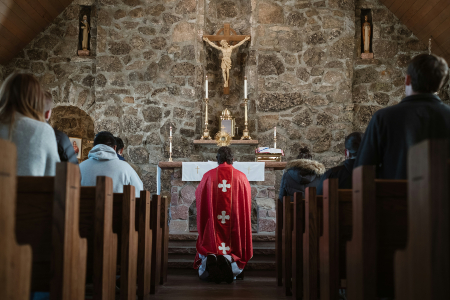
U.S. Catholic Parishes Experience Resurgence of Traditional Practices
-
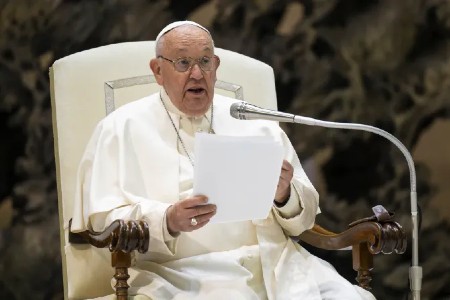
Pope Francis Urges Faith and Prayers for Peace
-
Florida Welcomes Volunteer Chaplains to Public Schools
-
10 Fascinating Details About St. Joseph the Worker: Celebrating His Feast Day - May 1
-
St. Joseph the Worker: Model for Men, Young and Old

Daily Catholic
- Daily Readings for Thursday, May 02, 2024
- St. Athanasius: Saint of the Day for Thursday, May 02, 2024
- The Our Father: Prayer of the Day for Thursday, May 02, 2024
- Daily Readings for Wednesday, May 01, 2024
- St. Marculf: Saint of the Day for Wednesday, May 01, 2024
- To Saint Peregrine: Prayer of the Day for Wednesday, May 01, 2024
 Daily Readings for Thursday, May 02, 2024
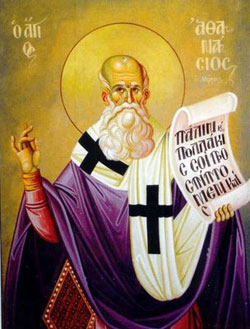 St. Athanasius: Saint of the Day for Thursday, May 02, 2024
 The Our Father: Prayer of the Day for Thursday, May 02, 2024
 Hi readers, it seems you use Catholic Online a lot; that's great! It's a little awkward to ask, but we need your help. If you have already donated, we sincerely thank you. We're not salespeople, but we depend on donations averaging $14.76 and fewer than 1% of readers give. If you donate just $5.00, the price of your coffee, Catholic Online School could keep thriving. Thank you. Help Now >



Copyright 2024 Catholic Online. All materials contained on this site, whether written, audible or visual are the exclusive property of Catholic Online and are protected under U.S. and International copyright laws, © Copyright 2024 Catholic Online. Any unauthorized use, without prior written consent of Catholic Online is strictly forbidden and prohibited.
Catholic Online is a Project of Your Catholic Voice Foundation, a Not-for-Profit Corporation. Your Catholic Voice Foundation has been granted a recognition of tax exemption under Section 501(c)(3) of the Internal Revenue Code. Federal Tax Identification Number: 81-0596847. Your gift is tax-deductible as allowed by law.