We ask you, humbly: don't scroll away.
Hi readers, it seems you use Catholic Online a lot; that's great! It's a little awkward to ask, but we need your help. If you have already donated, we sincerely thank you. We're not salespeople, but we depend on donations averaging $14.76 and fewer than 1% of readers give. If you donate just $5.00, the price of your coffee, Catholic Online School could keep thriving. Thank you.Help Now >
Fredegis of Tours
FREE Catholic Classes
(Fridugisus or Fredegisus).
A ninth-century monk, teacher, and writer. Fredegis was an Anglo-Saxon, born in England towards the end of the eighth century; died at Tours in 834. He was a pupil of Alcuin, first at York and afterwards at the court of Charlemagne. The proximate date of his birth is determined by a reference to him as "a boy" ( puer ) in a letter of Alcuin dated 798. He was a favourite pupil of Alcuin and was one of the group of distinguished scholars who formed the Schola palatina , in which he was known by the name Nathaniel. At that time he was a deacon. When, in 796, Alcuin became Abbot of Tours Fredegis seems to have remained at the court. According to some authorities he was Alcuin's successor as Master of the Palace School. This is, however, improbable. In 804 he succeeded his teacher as Abbot of Tours, retaining at the same time his relations with the emperor. Among his contemporaries he enjoyed a reputation for great learning. He composed several poems and a short treatise in epistolary form, which deals with the nature of nothing and darkness, "De nihilo et tenebris". The epistle was written probably during the author's residence at Tours. It is addressed "to all the faithful and to those who dwell in the sacred Palace of the most serene prince Charles".
The occasion of the discussion of a problem which to the modern mind seems childish, namely, Are nothing and darkness real things? was doubtless the Biblical use of the words in the first chapter of Genesis. If the Bible uses the words nothing and darkness, it seemed in that naively realistic age that there must be things corresponding to those words. Fredegis accepts the realistic answer and defends it both by arguments from authority and by arguments from reason. That his solution, however, was not generally accepted is clear from the opening words of the treatise, in which he refers to the long prevailing divergence of opinion in the matter. The importance of the treatise lies in the use which it makes of the dialectical method which was afterwards developed into the scholastic method by Abelard, Alexander of Hales, and St. Thomas.


Join the Movement
When you sign up below, you don't just join an email list - you're joining an entire movement for Free world class Catholic education.
-

-
Mysteries of the Rosary
-
St. Faustina Kowalska
-
Litany of the Blessed Virgin Mary
-
Saint of the Day for Wednesday, Oct 4th, 2023
-
Popular Saints
-
St. Francis of Assisi
-
Bible
-
Female / Women Saints
-
7 Morning Prayers you need to get your day started with God
-
Litany of the Blessed Virgin Mary

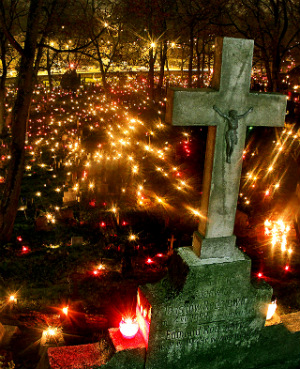
All Saints' Day, Halloween and All Souls' Day: What's the difference?
-
Should Christians Celebrate Halloween?
-
Since when did Halloween become a Christian holiday?
-
ADORABLE: A Little Boy's Heartfelt Lunchtime Prayer
-
Scientists Decode 3,000-Year-Old Babylonian Tablet, Revealing Potential Location of Noah's Ark

Daily Catholic
- Daily Readings for Friday, November 01, 2024
- St. Valentine Berrio-Ochoa: Saint of the Day for Friday, November 01, 2024
- Litany of the Saints: Prayer of the Day for Friday, November 01, 2024
- Daily Readings for Thursday, October 31, 2024
- St. Wolfgang: Saint of the Day for Thursday, October 31, 2024
- Memorare: Prayer of the Day for Thursday, October 31, 2024
 Daily Readings for Friday, November 01, 2024
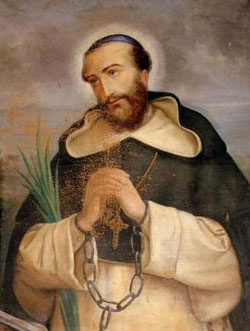 St. Valentine Berrio-Ochoa: Saint of the Day for Friday, November 01, 2024
 Litany of the Saints: Prayer of the Day for Friday, November 01, 2024


Copyright 2024 Catholic Online. All materials contained on this site, whether written, audible or visual are the exclusive property of Catholic Online and are protected under U.S. and International copyright laws, © Copyright 2024 Catholic Online. Any unauthorized use, without prior written consent of Catholic Online is strictly forbidden and prohibited.
Catholic Online is a Project of Your Catholic Voice Foundation, a Not-for-Profit Corporation. Your Catholic Voice Foundation has been granted a recognition of tax exemption under Section 501(c)(3) of the Internal Revenue Code. Federal Tax Identification Number: 81-0596847. Your gift is tax-deductible as allowed by law.