We ask you, humbly: don't scroll away.
Hi readers, it seems you use Catholic Online a lot; that's great! It's a little awkward to ask, but we need your help. If you have already donated, we sincerely thank you. We're not salespeople, but we depend on donations averaging $14.76 and fewer than 1% of readers give. If you donate just $5.00, the price of your coffee, Catholic Online School could keep thriving. Thank you.Help Now >
Henry Fitzalan
FREE Catholic Classes
Twelfth Earl of Arundel, b. about 1511; d. in London, 24 Feb., 1580 (O.S. 1579). Son of William, eleventh earl, and Lady Anne Percy, he was godson to Henry VIII, in whose palace he was educated. From 1540 he was governor of Calais till 1543, when he succeeded to the earldom. In 1544 he beseiged and took Boulogne, being made lord-chamberlain as a reward. In the reign of Edward VI he opposed Protector Somerset and supported Warwick, who eventually unjustly accused him of peculation and removed him from the council. On the death of Edward he abandoned the cause of Lady Jane Grey and proclaimed Mary as queen. Throughout her reign he was in favour as lord-steward and was employed in much diplomatic business. Even under Elizabeth he at first retained his offices and power though distrusted by her ministers. Yet he was too powerful to attack, and, being a widower, was considered as a possible consort for the queen. But in 1564 he fell into disgrace, and Elizabeth did not again employ him till 1568. Being the leader of the Catholic party, he desired a marriage between Mary, Queen of Scots, and his son-in-law, the Duke of Norfolk, but was too cautious to commit himself, so that even after the futile northern rebellion of 1569 he was recalled to the council. But the discovery of the Ridolfi conspiracy, in 1571, again led to his confinement, and he spent the rest of his life in retirement.


Join the Movement
When you sign up below, you don't just join an email list - you're joining an entire movement for Free world class Catholic education.
-

-
Mysteries of the Rosary
-
St. Faustina Kowalska
-
Litany of the Blessed Virgin Mary
-
Saint of the Day for Wednesday, Oct 4th, 2023
-
Popular Saints
-
St. Francis of Assisi
-
Bible
-
Female / Women Saints
-
7 Morning Prayers you need to get your day started with God
-
Litany of the Blessed Virgin Mary

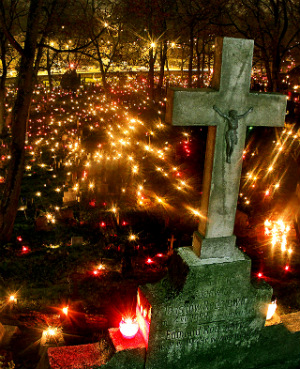
All Saints' Day, Halloween and All Souls' Day: What's the difference?
-
Should Christians Celebrate Halloween?
-
Since when did Halloween become a Christian holiday?
-
ADORABLE: A Little Boy's Heartfelt Lunchtime Prayer
-
Scientists Decode 3,000-Year-Old Babylonian Tablet, Revealing Potential Location of Noah's Ark

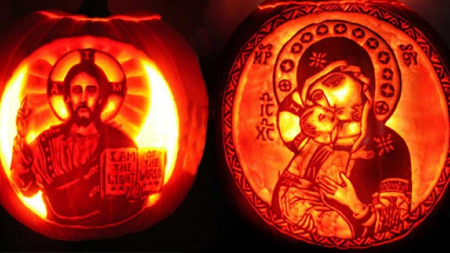
Daily Catholic
- Daily Readings for Friday, November 01, 2024
- St. Valentine Berrio-Ochoa: Saint of the Day for Friday, November 01, 2024
- Litany of the Saints: Prayer of the Day for Friday, November 01, 2024
- Daily Readings for Thursday, October 31, 2024
- St. Wolfgang: Saint of the Day for Thursday, October 31, 2024
- Memorare: Prayer of the Day for Thursday, October 31, 2024
 Daily Readings for Friday, November 01, 2024
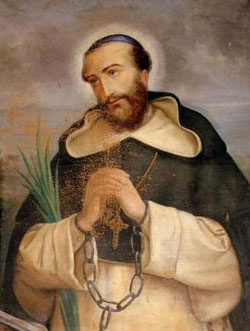 St. Valentine Berrio-Ochoa: Saint of the Day for Friday, November 01, 2024
 Litany of the Saints: Prayer of the Day for Friday, November 01, 2024


Copyright 2024 Catholic Online. All materials contained on this site, whether written, audible or visual are the exclusive property of Catholic Online and are protected under U.S. and International copyright laws, © Copyright 2024 Catholic Online. Any unauthorized use, without prior written consent of Catholic Online is strictly forbidden and prohibited.
Catholic Online is a Project of Your Catholic Voice Foundation, a Not-for-Profit Corporation. Your Catholic Voice Foundation has been granted a recognition of tax exemption under Section 501(c)(3) of the Internal Revenue Code. Federal Tax Identification Number: 81-0596847. Your gift is tax-deductible as allowed by law.