We ask you, humbly: don't scroll away.
Hi readers, it seems you use Catholic Online a lot; that's great! It's a little awkward to ask, but we need your help. If you have already donated, we sincerely thank you. We're not salespeople, but we depend on donations averaging $14.76 and fewer than 1% of readers give. If you donate just $5.00, the price of your coffee, Catholic Online School could keep thriving. Thank you.Help Now >
Bernal Díaz del Castillo
FREE Catholic Classes
(Corruption of Bernardo), Spanish historian, one of the chief chroniclers of the conquest of Mexico by the Spaniards, b. at Medina del Campo, Spain, c. 1498; d. after 1568. Born of poor parents, he began his military career as a common soldier. In 1514, he went to America with Pedrarias Dávila who had shortly before been appointed governor of Darien. Thence he betook himself to Cuba and enlisted in the expedition to Yucatán under Francisco de Córdoba in 1517. He proceeded to Mexico with Grijalva in 1518 and returning to Cuba, set out a third time for Mexico under the banner of Hernando Cortés . He took part, he tells us, in 119 battles, and was present at the surrender of the city of Mexico im 1521. As a reward for distinguished services he received a commission as regidor or governor of Santiago de los Caballeros in Guatemala, where he made his home. In 1552, Gómara, secretary and chaplain to Cortés, published at Saragossa his "Crónica de la Conquista de Nueva España", in which Díaz thought he gave undue credit to Cortés. Díaz, therefore, in 1568 undertook to write his "Verdadera Historia de la Conquista de Nueva España", and though despairing of his ability to equal Gómara's literary polish, he determined to write a faithful narrative of the stirring events in which he had taken part, in order to correct the gross inaccuracies of Gómara, who had never even been in America, and to vindicate the valour of himself and others who had been completely overshadowed by the exaggerated reputation of Cortés. The work lay neglected and unpublished until, in 1632, Father Alonso Remón of the Order of Our Lady of Mercy, found it in a private library and had it published at Madrid. The work is crude and devoid of style, and shows the ignorance and vanity of the author, but it will always be read with interest as being the work of an eyewitness and participant in the events described.
 Hi readers, it seems you use Catholic Online a lot; that's great! It's a little awkward to ask, but we need your help. If you have already donated, we sincerely thank you. We're not salespeople, but we depend on donations averaging $14.76 and fewer than 1% of readers give. If you donate just $5.00, the price of your coffee, Catholic Online School could keep thriving. Thank you. Help Now >
In 1689, Francisco de Fuentes, in his history of Guatemala, set forth his claim to be a descendant of Díaz, and gave certain facts concerning him and his work that had been until then unknown. It would seem that, although poor, the family of Díaz was noble and distinguished, for his father was regidor of the important town of Medina del Campo. Fuentes also declared that the work was not published as written by Díaz, as it was not printed from the original manuscript but from an unauthorized copy in the library of one Ramírez del Prado which fell into the hands of Father Remón. The original manuscript, he claims, was in his own possession. "La Biblioteca de Autores Espanoles" (1848-86) of Rivadeneira contains the entire works of Díaz. A German translation by P.J. de Rehfues-Bonn-Marcas was published in 1838.
We ask you, humbly: don't scroll away.
Hi readers, it seems you use Catholic Online a lot; that's great! It's a little awkward to ask, but we need your help. If you have already donated, we sincerely thank you. We're not salespeople, but we depend on donations averaging $14.76 and fewer than 1% of readers give. If you donate just $5.00, the price of your coffee, Catholic Online School could keep thriving. Thank you.Help Now >

Join the Movement
When you sign up below, you don't just join an email list - you're joining an entire movement for Free world class Catholic education.


-

-
Mysteries of the Rosary
-
St. Faustina Kowalska
-
Litany of the Blessed Virgin Mary
-
Saint of the Day for Wednesday, Oct 4th, 2023
-
Popular Saints
-
St. Francis of Assisi
-
Bible
-
Female / Women Saints
-
7 Morning Prayers you need to get your day started with God
-
Litany of the Blessed Virgin Mary


Sacrifices of Faith: The Pro-Life Legacies of St. Gianna and Jessica Hanna
-
How to love God by caring for our bodies
-
Pope Francis calls for negotiations to End Russia-Ukraine War
-
Pope Francis Contemplates Return to U.S. for United Nations Assembly Address
-
Pope Francis Calls on Faithful to Embrace Faith, Hope, and Charity in New Teaching Series


Daily Catholic
- Daily Readings for Sunday, April 28, 2024
- St. Peter Chanel: Saint of the Day for Sunday, April 28, 2024
- Prayer before a Crucifix: Prayer of the Day for Sunday, April 28, 2024
- Daily Readings for Saturday, April 27, 2024
- St. Zita: Saint of the Day for Saturday, April 27, 2024
- Prayer for the Dead # 2: Prayer of the Day for Saturday, April 27, 2024
 Daily Readings for Sunday, April 28, 2024
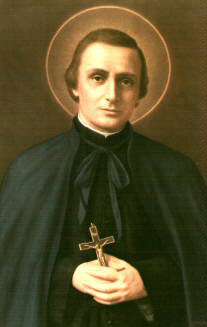 St. Peter Chanel: Saint of the Day for Sunday, April 28, 2024
 Prayer before a Crucifix: Prayer of the Day for Sunday, April 28, 2024

We ask you, humbly: don't scroll away.
Hi readers, it seems you use Catholic Online a lot; that's great! It's a little awkward to ask, but we need your help. If you have already donated, we sincerely thank you. We're not salespeople, but we depend on donations averaging $14.76 and fewer than 1% of readers give. If you donate just $5.00, the price of your coffee, Catholic Online School could keep thriving. Thank you.Help Now >

Copyright 2024 Catholic Online. All materials contained on this site, whether written, audible or visual are the exclusive property of Catholic Online and are protected under U.S. and International copyright laws, © Copyright 2024 Catholic Online. Any unauthorized use, without prior written consent of Catholic Online is strictly forbidden and prohibited.
Catholic Online is a Project of Your Catholic Voice Foundation, a Not-for-Profit Corporation. Your Catholic Voice Foundation has been granted a recognition of tax exemption under Section 501(c)(3) of the Internal Revenue Code. Federal Tax Identification Number: 81-0596847. Your gift is tax-deductible as allowed by law.