We ask you, humbly: don't scroll away.
Hi readers, it seems you use Catholic Online a lot; that's great! It's a little awkward to ask, but we need your help. If you have already donated, we sincerely thank you. We're not salespeople, but we depend on donations averaging $14.76 and fewer than 1% of readers give. If you donate just $5.00, the price of your coffee, Catholic Online School could keep thriving. Thank you.Help Now >
Ludwig Babenstuber
FREE Catholic Classes
A German philosopher and theologian ; vice-chancellor of the University of Salzburg ; born 1660 at Teining in Bavaria ; died 5 April, 1726, at the Benedictine monastery of Ettal. Having completed his early studies he entered the novitiate of the Order of St. Benedict, at Ettal in 1681, made his religious profession in 1682, and thereafter devoted the greater part of his life to teaching. At the commencement of his studies he had given no promise of brilliancy, but by his untiring application and industry he shortly acquired so vast a store of knowledge, that he soon came to be regarded as one of the most learned men of his day -- vir comsummatae in omni genere dictrinae et probitatis , as he is styled in Dom Egger's "Idea ordinis Hierarchico-Benedictini", and in the "History of the University of Salzburg ". Until 1690 Babenstuber was Director of the scholasticate of his order at Salzburg, taught philosophy there from 1690 to 1693, then went to Schlehdoft to teach theology in the monastery of the canons regular.
Returning to Salzburg in 1695, the took up successively the professorships of moral theology, dogmatic theology, and exegesis, in the celebrated Benedictine university of that city. He remained at Salzburg for twenty-two years, during which period he held the office of vice-rector for three years, and that of vice-chancellor of the university for six. In 1717 he returned to his monastery at Ettal, where he spent the remainder of his days. In dogmatic theology Babenstuber was a pronounced Thomist ; in moral, a vigorous defender of probabilism. He maintained, among other things, that a single author, if he were "beyond contradiction" ( omni exceptione major ), could, of his own authority, render an opinion probably, even against general opinion. In matters of faith, however, he rejected the principle of probabilism absolutely. In one of his disquisitions he had also stated that it was allowable to celebrate Mass privately on Maundy Thursday and Holy Saturday, but before his "Ethica Supernaturalis" had issued from the press, he learned that the Roman tribunals forbade it, and so he promptly corrected that assertion. Babenstuber's published works include a wide range of subjects, mainly philosophical and theological. The most important are: "Philosophia Thomistica" (4 vols., Salzburg, 1704); "Ethica Supernaturalis" (Augsburg, 1718).



Join the Movement
When you sign up below, you don't just join an email list - you're joining an entire movement for Free world class Catholic education.


-

-
Mysteries of the Rosary
-
St. Faustina Kowalska
-
Litany of the Blessed Virgin Mary
-
Saint of the Day for Wednesday, Oct 4th, 2023
-
Popular Saints
-
St. Francis of Assisi
-
Bible
-
Female / Women Saints
-
7 Morning Prayers you need to get your day started with God
-
Litany of the Blessed Virgin Mary


Sacrifices of Faith: The Pro-Life Legacies of St. Gianna and Jessica Hanna
-
How to love God by caring for our bodies
-
Pope Francis calls for negotiations to End Russia-Ukraine War
-
Pope Francis Contemplates Return to U.S. for United Nations Assembly Address
-
Pope Francis Calls on Faithful to Embrace Faith, Hope, and Charity in New Teaching Series


Daily Catholic
- Daily Readings for Sunday, April 28, 2024
- St. Peter Chanel: Saint of the Day for Sunday, April 28, 2024
- Prayer before a Crucifix: Prayer of the Day for Sunday, April 28, 2024
- Daily Readings for Saturday, April 27, 2024
- St. Zita: Saint of the Day for Saturday, April 27, 2024
- Prayer for the Dead # 2: Prayer of the Day for Saturday, April 27, 2024
 Daily Readings for Sunday, April 28, 2024
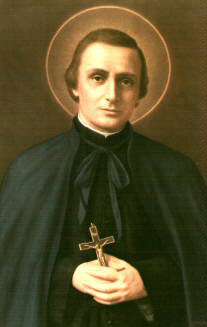 St. Peter Chanel: Saint of the Day for Sunday, April 28, 2024
 Prayer before a Crucifix: Prayer of the Day for Sunday, April 28, 2024
We ask you, humbly: don't scroll away.
Hi readers, it seems you use Catholic Online a lot; that's great! It's a little awkward to ask, but we need your help. If you have already donated, we sincerely thank you. We're not salespeople, but we depend on donations averaging $14.76 and fewer than 1% of readers give. If you donate just $5.00, the price of your coffee, Catholic Online School could keep thriving. Thank you.Help Now >



Copyright 2024 Catholic Online. All materials contained on this site, whether written, audible or visual are the exclusive property of Catholic Online and are protected under U.S. and International copyright laws, © Copyright 2024 Catholic Online. Any unauthorized use, without prior written consent of Catholic Online is strictly forbidden and prohibited.
Catholic Online is a Project of Your Catholic Voice Foundation, a Not-for-Profit Corporation. Your Catholic Voice Foundation has been granted a recognition of tax exemption under Section 501(c)(3) of the Internal Revenue Code. Federal Tax Identification Number: 81-0596847. Your gift is tax-deductible as allowed by law.
