 Hi readers, it seems you use Catholic Online a lot; that's great! It's a little awkward to ask, but we need your help. If you have already donated, we sincerely thank you. We're not salespeople, but we depend on donations averaging $14.76 and fewer than 1% of readers give. If you donate just $5.00, the price of your coffee, Catholic Online School could keep thriving. Thank you. Help Now >
Aymará
FREE Catholic Classes
Also Aymara (etymology unknown as yet).
A numerous tribe of sedentary Indians inhabiting the northern sections of Bolivia, part of the eastern declivities of the Andes of that republic, and the sections of Peru bordering upon Lake Titicaca, except its northern extremity, which is held by Quichua-speaking Indians. It is not safe as yet to give their numbers, since white blood has been liberally introduced during three centuries, while on the eastern slopes, in the so-called Yungas, mixture with Negroes has been frequent. Still there are certainly several thousands of them, counting in such mestizos (Cholos) as live according to Indian customs. The name "Aymará" rather applies to the language, which seems allied to the Quichua, or prevailing Indian idiom of the Peruvian mountains and of the southern part of the Bolivian highlands. The Aymará are chiefly mountaineers, inhabiting the elevated table land, or Puna , between the eastern Cordillera and the volcanic coast chain. Limited agriculture, the raising of potatoes and kindred tubers, of quinua (chenopodium quinua) , maize, in the few places where it will thrive at the general altitude of over 12,000 feet of the table land. The raising of the llama and alpaca and of some cattle and donkeys, are their chief occupations, also service in the cities as journey men, and on the lake-shore as stevedores. They live in tribal communities ( estancias ), autonomous, and with executive officers ( hilacata and alcalde ) whom they choose after the indications of their chief medicine-men, to be afterwards confirmed by the civil authorities of Bolivia. Duration of office is mostly one year. They pay a per capita tax, are not subject to military duty in theory, and are seldom required to perform any. Many of these Indians, while apparently indigent, possess no little wealth, chiefly in coin. Some of them are also artisans. They are nominally Catholics, but preserve a remnant of ancient idolatry, with its rituals and ceremonies, carefully hidden from outsiders. In appearance stolid and humble, they are in fact a cruel, treacherous stock, averse to every attempt at progress, hostile to the whites, particularly to foreigners. But they sometimes make good house servants. They were first visited by the Spaniards in the last days of 1533, whom they received well, owing to their hatred of the Inca tribe of Cuzco. The latter had overrun most of the Lake territory in the course of the fifteenth century and established themselves on the Islands of Titicaca and Koati (see articles) and at Copacavana on the mainland. The relations between the Kollas—as the Quichua call the Aymará, to this day (see KOLLAO)—and the Incas were not friendly. The Spaniards were at first treated with hospitality, but as soon as they returned in greater numbers the western and southwestern Aymará rose in arms and had to be repressed by force. During the civil wars (1538 to 1554) the Aymará, remained passive and suffered (like the rest of the Peruvian Indians) from the consequences. Uprisings of Aymará groups against the Spaniards began in 1629, and local disturbances (in many of which the Indians were at fault) continued. In 1780 a general uprising began among the Aymará, of western Bolivia, but there was no concerted action, and although there were terrible massacres, and the investment of La Paz by the Aymará almost ended in the capture of that city, the Indians were finally subdued in 1782. Since then they have remained comparatively quiet. While a necessary and important element as land-tillers and freighters, journeymen and house servants, they would be, on account of their numbers, a steady menace to Bolivia, were it not for their incapacity for united efforts, their adherence to primitive customs preventing any submission to a common leader. With the coming introduction of railways in Bolivia, the Aymará will have to submit, and modify their habits and customs.


We ask you, humbly: don't scroll away.
Hi readers, it seems you use Catholic Online a lot; that's great! It's a little awkward to ask, but we need your help. If you have already donated, we sincerely thank you. We're not salespeople, but we depend on donations averaging $14.76 and fewer than 1% of readers give. If you donate just $5.00, the price of your coffee, Catholic Online School could keep thriving. Thank you.Help Now >
Join the Movement
When you sign up below, you don't just join an email list - you're joining an entire movement for Free world class Catholic education.


-

-
Mysteries of the Rosary
-
St. Faustina Kowalska
-
Litany of the Blessed Virgin Mary
-
Saint of the Day for Wednesday, Oct 4th, 2023
-
Popular Saints
-
St. Francis of Assisi
-
Bible
-
Female / Women Saints
-
7 Morning Prayers you need to get your day started with God
-
Litany of the Blessed Virgin Mary

Sacrifices of Faith: The Pro-Life Legacies of St. Gianna and Jessica Hanna
-
How to love God by caring for our bodies
-
Pope Francis calls for negotiations to End Russia-Ukraine War
-
Pope Francis Contemplates Return to U.S. for United Nations Assembly Address
-
Pope Francis Calls on Faithful to Embrace Faith, Hope, and Charity in New Teaching Series

Daily Catholic
- Daily Readings for Sunday, April 28, 2024
- St. Peter Chanel: Saint of the Day for Sunday, April 28, 2024
- Prayer before a Crucifix: Prayer of the Day for Sunday, April 28, 2024
- Daily Readings for Saturday, April 27, 2024
- St. Zita: Saint of the Day for Saturday, April 27, 2024
- Prayer for the Dead # 2: Prayer of the Day for Saturday, April 27, 2024
 Daily Readings for Sunday, April 28, 2024
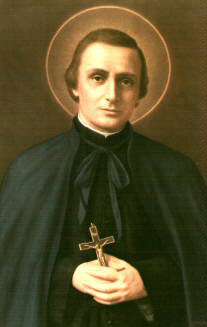 St. Peter Chanel: Saint of the Day for Sunday, April 28, 2024
 Prayer before a Crucifix: Prayer of the Day for Sunday, April 28, 2024
We ask you, humbly: don't scroll away.
Hi readers, it seems you use Catholic Online a lot; that's great! It's a little awkward to ask, but we need your help. If you have already donated, we sincerely thank you. We're not salespeople, but we depend on donations averaging $14.76 and fewer than 1% of readers give. If you donate just $5.00, the price of your coffee, Catholic Online School could keep thriving. Thank you.Help Now >


Copyright 2024 Catholic Online. All materials contained on this site, whether written, audible or visual are the exclusive property of Catholic Online and are protected under U.S. and International copyright laws, © Copyright 2024 Catholic Online. Any unauthorized use, without prior written consent of Catholic Online is strictly forbidden and prohibited.
Catholic Online is a Project of Your Catholic Voice Foundation, a Not-for-Profit Corporation. Your Catholic Voice Foundation has been granted a recognition of tax exemption under Section 501(c)(3) of the Internal Revenue Code. Federal Tax Identification Number: 81-0596847. Your gift is tax-deductible as allowed by law.