 Hi readers, it seems you use Catholic Online a lot; that's great! It's a little awkward to ask, but we need your help. If you have already donated, we sincerely thank you. We're not salespeople, but we depend on donations averaging $14.76 and fewer than 1% of readers give. If you donate just $5.00, the price of your coffee, Catholic Online School could keep thriving. Thank you. Help Now >
Leopold Auenbrugger
FREE Catholic Classes
( Or von Auenbrugg).
An Austrian physician, born 19 November, 1722; died 17 May, 1807. He was the inventor of percussion in physical diagnosis and is considered one of the small group of men to whose original genius modern medicine owes its present position. He was a native of Graz in Styria, an Austrian province. His father, a hotel-keeper, gave his son every opportunity for an excellent preliminary education in his native town and then sent him to Vienna to complete his studies at the university. Auenbrugger was graduated as a physician at the age of twenty-two and then entered the Spanish military Hospital of Vienna where he spent ten years this observations and experimental studies enabled him to discover that by tapping on the chest with the finger much important information with regard to diseased conditions within the chest might be obtained.
Ordinarily, the lungs wheel percussed, give a sound like a drum over which a heavy cloth has been placed. When the lung is consolidated, as in pneumonia then the sound produced by the tapping of the finger is the same as when the fleshy part of the thigh is taped. Auenbrugger found that the area over the heart gave a modified, dull sound, and that in this way the limits of heart-dullness could be determined. This gave the first definite information with regard to pathological changes in the heart. During his ten years of patient study, Auenbrugger confirmed these observations by comparison with post-mortem specimens, and besides made a number of experimental researches on dead bodies. He injected fluid into the pleural cavity, and showed that it was perfectly possible by percussion to tell exactly the limits of the fluid present, and thus to decide when and where efforts should be made for its removal.

His later sudies this ten-year were devoted to tuberculosis. He pointed out how to detect cavities of the lungs, and how their location and size might be determined by percussion. He also recognized that informatiom with regard to the contents of cavities in the lungs, and conditions of lung tissue might be obtained by placing the hand on the chest and noting the vibration, or fremitus , produced by the voice and the breath. There observations were published in a little book now considered one of the most important classics of medicine. It was called "Inventum Novum", the full English title running, "A New Discovery that Enables the Physician from the Percussion of the Human Thorax to Detect the Diseases Hidden Within the Chest".
Like most medical discoveries Auenbrugger's method of diagnosis at first met with neglect. Before his death, however, it had aroused the attention of Laennec, who, following up the ideas suggested by it, discovered auscultation. Since then, Auenbrugger has been considered one of the great founders of modern medicine. He lived to a happy old age, especially noted for hls cordial relations the younger members of his profession and for his kindness to the poor and to these suffering from tuberculosis. He is sometimes said to have died in the typhus epidemic of 1798, but the burial register of the parish church in Vienna, of which he had been for half a century a faithful member, shows that he did not die until 1807.
We ask you, humbly: don't scroll away.
Hi readers, it seems you use Catholic Online a lot; that's great! It's a little awkward to ask, but we need your help. If you have already donated, we sincerely thank you. We're not salespeople, but we depend on donations averaging $14.76 and fewer than 1% of readers give. If you donate just $5.00, the price of your coffee, Catholic Online School could keep thriving. Thank you.Help Now >
We ask you, humbly: don't scroll away.
Hi readers, it seems you use Catholic Online a lot; that's great! It's a little awkward to ask, but we need your help. If you have already donated, we sincerely thank you. We're not salespeople, but we depend on donations averaging $14.76 and fewer than 1% of readers give. If you donate just $5.00, the price of your coffee, Catholic Online School could keep thriving. Thank you.Help Now >
Join the Movement
When you sign up below, you don't just join an email list - you're joining an entire movement for Free world class Catholic education.


-

-
Mysteries of the Rosary
-
St. Faustina Kowalska
-
Litany of the Blessed Virgin Mary
-
Saint of the Day for Wednesday, Oct 4th, 2023
-
Popular Saints
-
St. Francis of Assisi
-
Bible
-
Female / Women Saints
-
7 Morning Prayers you need to get your day started with God
-
Litany of the Blessed Virgin Mary

Sacrifices of Faith: The Pro-Life Legacies of St. Gianna and Jessica Hanna
-
How to love God by caring for our bodies
-
Pope Francis calls for negotiations to End Russia-Ukraine War
-
Pope Francis Contemplates Return to U.S. for United Nations Assembly Address
-
Pope Francis Calls on Faithful to Embrace Faith, Hope, and Charity in New Teaching Series

Daily Catholic
- Daily Readings for Sunday, April 28, 2024
- St. Peter Chanel: Saint of the Day for Sunday, April 28, 2024
- Prayer before a Crucifix: Prayer of the Day for Sunday, April 28, 2024
- Daily Readings for Saturday, April 27, 2024
- St. Zita: Saint of the Day for Saturday, April 27, 2024
- Prayer for the Dead # 2: Prayer of the Day for Saturday, April 27, 2024
 Daily Readings for Sunday, April 28, 2024
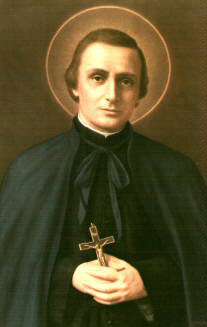 St. Peter Chanel: Saint of the Day for Sunday, April 28, 2024
 Prayer before a Crucifix: Prayer of the Day for Sunday, April 28, 2024
Hi readers, it seems you use Catholic Online a lot; that's great! It's a little awkward to ask, but we need your help. If you have already donated, we sincerely thank you. We're not salespeople, but we depend on donations averaging $14.76 and fewer than 1% of readers give. If you donate just $5.00, the price of your coffee, Catholic Online School could keep thriving. Thank you. Help Now >
Prayer before a Crucifix: Prayer of the Day for Sunday, April 28, 2024
Hi readers, it seems you use Catholic Online a lot; that's great! It's a little awkward to ask, but we need your help. If you have already donated, we sincerely thank you. We're not salespeople, but we depend on donations averaging $14.76 and fewer than 1% of readers give. If you donate just $5.00, the price of your coffee, Catholic Online School could keep thriving. Thank you. Help Now >



Copyright 2024 Catholic Online. All materials contained on this site, whether written, audible or visual are the exclusive property of Catholic Online and are protected under U.S. and International copyright laws, © Copyright 2024 Catholic Online. Any unauthorized use, without prior written consent of Catholic Online is strictly forbidden and prohibited.
Catholic Online is a Project of Your Catholic Voice Foundation, a Not-for-Profit Corporation. Your Catholic Voice Foundation has been granted a recognition of tax exemption under Section 501(c)(3) of the Internal Revenue Code. Federal Tax Identification Number: 81-0596847. Your gift is tax-deductible as allowed by law.