We ask you, humbly: don't scroll away.
Hi readers, it seems you use Catholic Online a lot; that's great! It's a little awkward to ask, but we need your help. If you have already donated, we sincerely thank you. We're not salespeople, but we depend on donations averaging $14.76 and fewer than 1% of readers give. If you donate just $5.00, the price of your coffee, Catholic Online School could keep thriving. Thank you.Help Now >
Diocese of Saint Thomas
FREE Catholic Classes
(SANCTI THOMAE IN INSULA)
The Diocese of Saint Thomas, comprising the Islands of São Thomé and Principe, in the Gulf of Guinea, was erected on 23 November, 1584, as suffragan of Lisbon ; in 1676 it was made subject to the Metropolitan of San Salvador, Brazil, and in 1844 to Lisbon once more. The last bishop, Bartolomeo de Martyribus, a Carmelite of Sandomir, was preconized on 8 March, 1816, and died in 1847. The see then remained vacant. Since 1865 it has been ruled as a vicariate. São Thomé, lying one hundred and fifty miles off the African mainland at 0°28' N. lat. and 6°42" E .long., has an area of three hundred and fifty-eight square miles and a population of 37,776 inhabitants (in 1900). It is very fertile, and is noted for its cocoa. The capital, São Thomé, situated on the Bay of Santa Anna, contains 6000 inhabitants. The island, when discovered on 21 December, 1470, by João de Santarem, was uninhabited; in 1485 João de Paiva and in 1493 Pereira attempted to colonize it. Most of the present inhabitants are of African slave origin. About 1544 a ship carrying a cargo of Angolares was wrecked at Sete Pedras and 3000 of their descendants still live in the south-west. The Capuchins arrived in 1659 and established a definite mission in 1688. Principe, lying ninety miles north-east of São Thomé and discovered in 1471, had an area of 42 square miles and a population of 4327. Its chief town is São Antonio. The diocese contains 8 parishes and 22,000 Catholics. Owing to the development of the cocoa trade in recent years the population, recruited chiefly from Africa, is estimated to have increased by over 20,000 since the last official census (1910).


Join the Movement
When you sign up below, you don't just join an email list - you're joining an entire movement for Free world class Catholic education.


-

-
Mysteries of the Rosary
-
St. Faustina Kowalska
-
Litany of the Blessed Virgin Mary
-
Saint of the Day for Wednesday, Oct 4th, 2023
-
Popular Saints
-
St. Francis of Assisi
-
Bible
-
Female / Women Saints
-
7 Morning Prayers you need to get your day started with God
-
Litany of the Blessed Virgin Mary

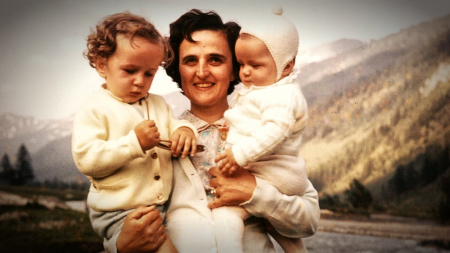
Sacrifices of Faith: The Pro-Life Legacies of St. Gianna and Jessica Hanna
-
How to love God by caring for our bodies
-
Pope Francis calls for negotiations to End Russia-Ukraine War
-
Pope Francis Contemplates Return to U.S. for United Nations Assembly Address
-
Pope Francis Calls on Faithful to Embrace Faith, Hope, and Charity in New Teaching Series


Daily Catholic
- Daily Readings for Sunday, April 28, 2024
- St. Peter Chanel: Saint of the Day for Sunday, April 28, 2024
- Prayer before a Crucifix: Prayer of the Day for Sunday, April 28, 2024
- Daily Readings for Saturday, April 27, 2024
- St. Zita: Saint of the Day for Saturday, April 27, 2024
- Prayer for the Dead # 2: Prayer of the Day for Saturday, April 27, 2024
 Daily Readings for Sunday, April 28, 2024
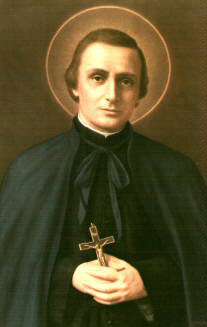 St. Peter Chanel: Saint of the Day for Sunday, April 28, 2024
 Prayer before a Crucifix: Prayer of the Day for Sunday, April 28, 2024

Copyright 2024 Catholic Online. All materials contained on this site, whether written, audible or visual are the exclusive property of Catholic Online and are protected under U.S. and International copyright laws, © Copyright 2024 Catholic Online. Any unauthorized use, without prior written consent of Catholic Online is strictly forbidden and prohibited.
Catholic Online is a Project of Your Catholic Voice Foundation, a Not-for-Profit Corporation. Your Catholic Voice Foundation has been granted a recognition of tax exemption under Section 501(c)(3) of the Internal Revenue Code. Federal Tax Identification Number: 81-0596847. Your gift is tax-deductible as allowed by law.