A Lenten Must Read: Interview With Fr Dwight Longenecker on The Gargoyle Code
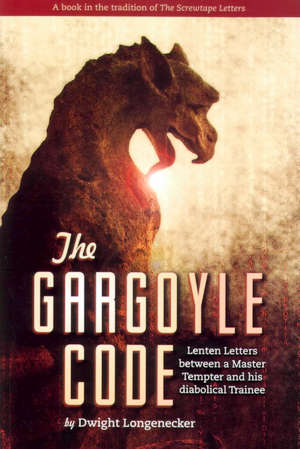
Following C.S.Lewis' idea of letters from a senior demon to his trainee, Fr. Longenecker has added a few twists. The Gargoyle Code is updated and written for Catholics. With one letter for every day in Lent from Shrove Tuesday to Easter Monday, this is a must read for the Lenten season. As a Deacon of the Church, I highly recommend it to our global readership.
Highlights
Catholic Online (https://www.catholic.org)
3/23/2017 (9 years ago)
Published in Lent / Easter
Keywords: Lent, GargoyleCode, Book Review, CS Lewis, Anglican ordinariate, Spiritual warfare, fasting, penece, almsgiving, Fr Dwight Lonegenecker, Deacon Keith Fournier
GREENVILLE,SC (Catholic Online) - I had the privilege of interviewing one of the great writers and converts of our age, Fr. Dwight Longenecker, concerning a great Lenten Treasure. Fr Dwight Longenecker's book, Gargoyle Code is already becoming a classic read for Lent.
Following C.S.Lewis' idea of letters from a senior demon to his trainee, Fr. Longenecker has added a few twists. The Gargoyle Code is updated and written for Catholics. With one letter for every day in Lent from Shrove Tuesday to Easter Monday, this is a must read for the Lenten season. As a Deacon of the Church, I highly recommend it to our global readership. I caught up with Fr. Longenecker for an author interview: CO: Fr Longenecker, what prompted you to write The Gargoyle Code? FDL: I have always been a fan of C.S.Lewis, and a few years ago during Lent I tried writing a few Screwtape-type letters for my blog. They were popular, so that summer I sat down to write a few more. I then had the idea that the book would be a good read during Lent, so structured the letters to make it a Lent book. CO: Who is the book written for? FDL: I wrote the book with a large Catholic audience in mind. The junior tempter, named Dogwart, is in charge of a college aged, lukewarm Catholic, while Slubgrip--the writer of the letters--has to look after an older, traditionalist Catholic. So the book should appeal to young and old, and to every type and condition of Catholic. CO: What was difficult about writing The Gargoyle Code? FDL: C.S.Lewis complained that writing Screwtape Letters got him a bit down. He had to continually look at the world back to front in order to get into the skin of the demons. It didn't have that effect on me. Once my imagination got going the process was creative and fun. However, there were some moments when my own conscience was poked by the process. That's really the point of the whole book--to help us examine our consciences and probe areas that we thought were okay, or areas of our life that we never knew existed. CO: Could you be more specific? FDL: Sure. One of the areas that religious people need to check out is self righteousness. We like to assume that the way we "do religion" is the right way and everyone else is wrong. Many Catholics get stuck on this one big time. The mistake the infallibility of the church with their own understanding of Catholicism. In The Gargoyle Code the demons try to get the religious people to stay stuck in their prejudices, set ways and legalism. The book makes an attempt to challenge both sides of the Catholic culture--traditionalist and 'modern'. CO: So you've managed to offend everyone have you? FDL: (Laughs) I guess so! I've always liked that little saying, "Christianity is not doing its job if it is not subversive." I like the Jesus who turns over the tables in the temple. CO: Why should a Catholic read The Gargoyle Code for Lent? FDL: St Benedict said every monk should read a good book during Lent, and it is a long standing Catholic tradition to read a "Lent Book". However, many Catholics have never heard of such a tradition, and wouldn't know where to start. I've tried to write a book that is popular, entertaining and yet still a great challenge during the time of Lent-- a time when we go deeper into our faith and try to learn more about the difficult path of repentance and following Christ. The Gargoyle Code just helps to put some sugar on the pill and make that process enjoyable. CO: What do you say to those who blame you for stealing C.S.Lewis' idea? FDL: I think it was T.S.Eliot who said something like, "A bad poet borrows. A good poet steals." In other words, every writer is influenced by someone greater than himself. What I've done is take Lewis' idea and expand on it, update it and apply it to a different audience. Writers of all sorts do this all the time. Consider Shakespeare's plays. He took story ideas from many different sources and made them his own. Unfortunately, I'm not in the same league as Lewis or Shakespeare, but leap frogging from an author you admire to do your own work has a good precedent. CO: What are you attempting to accomplish with The Gargoyle Code? FDL: My blog is called Standing on My Head. This references a quote by G.K.Chesterton that the world is sometimes seen more accurately when you are standing on your head. The gospel is forever radical. It turns our world upside down, and yet so often we use our religion to affirm our conventional lives and shore up our worldly point of view. The gospel does exactly the opposite. It stands everything upside down. By getting into the skin of the tempters I am trying to get my readers to see themselves and their world from a new perspective. This is the task of all good literature--whether it is poetry or novels or articles or screenplays. Good writing should help us to look at the world aslant--to see things we've never seen before--to have one of those 'aha!' moments of enlightenment. So The Gargoyle Code is about more than inspiration during Lent or examining our consciences. It is also about breaking the mould and seeing everything in a new way. CO: The Gargoyle Code is billed as 'hilarious'. What do you think is the role of humor in religion? FDL: That's a good question. It's really the same thing that I've just been explaining. Humor also helps us see things in a fresh way. I once did a course on the structure and theory behind jokes. Comedians know that surprise is one of the key elements of humor. A good comedy writer has a gift for seeing the world in a fresh and funny way. He sees connections nobody else sees. When that connection is made a joke is sparked. We like the juxtaposition of unlike things. Seeing the world upside down is a funny business, but the point of the joke is serious. The humor is also an attempt to jar our prejudices and shake us up in order to view everything in a new way and glimpse a reality we have never seen before. CO: What are your favorite funny parts of The Gargoyle Code? FDL: Am I allowed to laugh at my own jokes? I like the running joke about the demons being punished by being "invited for dinner" Which means they are going to be served up as the first course rather than eating they will be eaten. "Going to the banqueting hall below" therefore has a gruesomely ominous meaning... CO: Where can we get a copy of The Gargoyle Code? FDL: You can but the Gargoyle Code Here. They were available through Amazon and the main bookstores, but that distribution channel has been discontinued, and they are only available now direct from my web page. CO: Are you working on any other writing projects? FDL: The new edition of my book Adventures in Orthodoxy is published this Fall with a new cover and a new title: The Quest for the Creed. I've just finished the sequel to The Quest for the Creed. It's called The Romance of Religion, and this summer I hope to get time to finish the sequel to The Gargoyle Code called Slubgrip Instructs. CO: What's that about? FDL: Slubgrip the demon has been condemned to teaching Pop Culture 101 to the the freshman worms at Bowelbages University in the seventh circle of hell. CO: That sounds like devilishly good fun. When does that come out? FDL: It should be out for Lent next year. CO: How do you manage to produce so much writing in addition to being a parish priest, a husband father, blogger and speaker? FDL: Quantity not Quality I'm afraid... CO: Thanks for talking with Catholic Online Fr Longenecker FDL: My pleasure!
-----
Fr Dwight Longenecker is parish priest of Our Lady of the Rosary Church in Greenville, South Carolina. He is a prolific author, blogger and sought after speaker. Visit his website and blog at dwightlongenecker.com You may purchase the Gargoyle Code Here http://dwightlongenecker.com/shop/the-gargoyle-code/
---'Help Give every Student and Teacher FREE resources for a world-class Moral Catholic Education'
Copyright 2021 - Distributed by Catholic Online

Come Grow With Us
Sign up and walk the Catholic journey with millions around the world.
Receive inspiring emails on saints, daily readings, and free faith-building resources—no cost, ever.
URGENT: Catholic Online School needs your help NOW.
- 7 Morning Prayers
- Mysteries of the Rosary
- Litany of the Bl. Virgin Mary
- Popular Saints
- Popular Prayers
- Female Saints
- Saint Feast Days by Month
- Stations of the Cross
- St. Francis of Assisi
- St. Michael the Archangel
- The Apostles' Creed
- Unfailing Prayer to St. Anthony
- Pray the Rosary










Copyright 2026 Catholic Online. All materials contained on this site, whether written, audible or visual are the exclusive property of Catholic Online and are protected under U.S. and International copyright laws, © Copyright 2026 Catholic Online. Any unauthorized use, without prior written consent of Catholic Online is strictly forbidden and prohibited.
Catholic Online is a Project of Your Catholic Voice Foundation, a Not-for-Profit Corporation. Your Catholic Voice Foundation has been granted a recognition of tax exemption under Section 501(c)(3) of the Internal Revenue Code. Federal Tax Identification Number: 81-0596847. Your gift is tax-deductible as allowed by law.