We ask you, urgently: don't scroll past this
Dear readers, Catholic Online was de-platformed by Shopify for our pro-life beliefs. They shut down our Catholic Online, Catholic Online School, Prayer Candles, and Catholic Online Learning Resources essential faith tools serving over 1.4 million students and millions of families worldwide. Our founders, now in their 70's, just gave their entire life savings to protect this mission. But fewer than 2% of readers donate. If everyone gave just $5, the cost of a coffee, we could rebuild stronger and keep Catholic education free for all. Stand with us in faith. Thank you.Help Now >
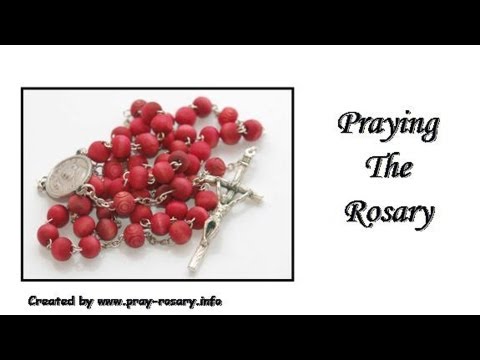
Praying the Rosary in the Year of Faith: The Luminous Mysteries or Mysteries of Light
FREE Catholic Classes
In 2002, Blessed John Paul II released an apostolic letter on the "Rosary of the Virgin Mary" (RVM) in which he referred to the Rosary as a "compendium of the Gospel". He also proposed that the practice of praying the rosary would be enhanced by additional "mysteries of light" for reflection.

Highlights
Catholic Online (https://www.catholic.org)
1/2/2013 (1 decade ago)
Published in Year of Faith
Keywords: Rosary, Holy Rosary, Mysteries, Blessed John Paul II, Mary, Marian, Hail Mary, Prayer, Holiness, Deacon Keith Fournier
P>CHESAPEAKE, VA (Catholic Online) - In 2002, Blessed John Paul II released an apostolic letter on the "Rosary of the Virgin Mary" (RVM) in which he referred to the Rosary as a "compendium of the Gospel". He also proposed that the practice of praying the rosary would be enhanced by additional "mysteries of light" for reflection. "Moving on from the infancy and the hidden life in Nazareth to the public life of Jesus, our contemplation brings us to those mysteries which may be called in a special way "mysteries of light". Certainly the whole mystery of Christ is a mystery of light. He is the "light of the world" (Jn 8:12).
"Yet this truth emerges in a special way during the years of his public life, when he proclaims the Gospel of the Kingdom. In proposing to the Christian community five significant moments - "luminous" mysteries - during this phase of Christ's life, I think that the following can be fittingly singled out: "(1) his Baptism in the Jordan, (2) his self-manifestation at the wedding of Cana, (3) his proclamation of the Kingdom of God, with his call to conversion, (4) his Transfiguration, and finally, (5) his institution of the Eucharist, as the sacramental expression of the Paschal Mystery. Each of these mysteries is a revelation of the Kingdom now present in the very person of Jesus."
The Mysteries of Light" or "Luminous Mysteries" are now placed between the Joyful and Sorrowful mysteries in our recitation of the Rosary on a sequential basis. Each of these mysteries points the believer to the central meaning of the Mission of the Redeemer, Jesus Christ.
First Mystery of Light: The Baptism of the Lord in the Jordan
"Then Jesus came from Galilee to the Jordan to be baptized by John. 14 But John tried to deter him, saying, "I need to be baptized by you, and do you come to me?" Jesus replied, "Let it be so now; it is proper for us to do this to fulfill all righteousness." Then John consented. As soon as Jesus was baptized, he went up out of the water. At that moment heaven was opened, and he saw the Spirit of God descending like a dove and lighting on him. And a voice from heaven said, "This is my Son, whom I love; with him I am well pleased." (Mt 3,13-17)
"The Baptism in the Jordan is first of all a mystery of light. Here, as Christ descends into the waters, the innocent one who became "sin" for our sake (cf. 2Cor 5:21), the heavens open wide and the voice of the Father declares him the beloved Son (cf. Mt 3:17 and parallels), while the Spirit descends on him to invest him with the mission which he is to carry out." (Blessed John Paul II, RVM 21)
REFLECTION
From antiquity, the Christian church has pointed to the Baptism of the Lord in the river of Jordan, as the event wherein the full plan of God for His Church and the entirety of creation itself is made manifest. It is not only the beginning of the Lord's public ministry; it is the beginning of the new creation, re-constituted in Him.
The beloved disciple John wrote in His first letter: "See what love the Father has bestowed on us that we may be called the children of God. Yet so we are. The reason the world does not know us is that it did not know him. Beloved, we are God's children now; what we shall be has not yet been revealed. We do know that when it is revealed we shall be like him, for we shall see him as he is. Everyone who has this hope based on him makes himself pure, as He is pure. (1 John 3:1-3)
We shall be like Him for we shall "see" Him as He is? How? When we live in Him, we grow in holiness and manifest His glory for others. This process of conversion and transformation begins at our Baptism. He initiates the relationship, and it continues through our communion with Him in prayer, His Word, the sacraments and our life in the Church.
Through our own baptism we are incorporated into Christ. We enter into His Mystical Body, the Church. We live in Him for the sake of the world. We begin to see Him as He is and in the continuing encounter which that mystery entails, we become "like Him" for others. We become a "manifestation", an "epiphany" of God in a world stumbling along in the darkness of sin. We also become immersed in God.
The word "Epiphany" is not often used in Eastern Christianity, Orthodox or Catholic. It is replaced by the word "Theophany", which in Greek literally means the "manifestation of God." The Theophany speaks to the vocation of the whole Church and of every Christian to be immersed in God and bring the whole human race and the world along with us.
The Apostle Peter writes in his second letter to the dispersed early Christians that we become "partakers of the divine nature". (2 Peter 1:4) The Baptism of Jesus reveals the Holy Trinity to the world. The heavens open, the voice of the Father speaks to the Son and the Spirit descends! We are invited into a participation in that life of the Trinity beginning now, through our Baptism into Jesus Christ!
The waters of the Jordan are sanctified by the Son. In the first creation, God created the heavens and the earth through the Son. Now, that Son come among us as a man goes down into those waters and re-creates the world. From antiquity, the Church has found a deeper meaning in this Baptism in the River Jordan. Symbolically, all water is sanctified when God the Son is immersed into it. Just as the Spirit hovered over the waters of the original creation, the Spirit now hovers over these waters when the Son, through whom the entire universe was made, is immersed. (Genesis 1:9/ St. John 1:1-5)
In Eastern Churches, when this feast is celebrated, waters are blessed. In the Orthodox and Eastern Catholic Churches the clergy lead the faithful to rivers and bless the waters. Into these waters, through which the people of Israel were once delivered, the entire human race is now invited to follow Jesus in every Baptismal Font, in every Church, for all eternity.
In Christ, all water has been sanctified. What was once the means of God's judgment at the time of Noah has become the fountain where men and women are delivered from sin and made new! The heavens open and the Holy Spirit appears as a sign of the beginning of the new creation in each new life. Through Christ's Baptism the waters of the whole earth have been sanctified and the Church is given new water for her saving and sanctifying mission.
In the waters of the Jordan, the Trinity, the Communion of Divine persons, in perfect unity, is revealed. In the great liturgical prayer of the East the Church proclaims: "When Thou, O Lord was baptized in the Jordan, the worship of the Trinity was made manifest. O Christ our God who has appeared and enlightened the world, Glory to Thee."
The waters of Baptism now flow with mercy. The Creator who spoke those waters into being through the Son, in Him condescended to take on our humanity and be immersed in the waters of the Jordan! Once, the Spirit hovered over the waters. Now the Word Incarnate descends into Jordan's water making it holy. In this Baptism, Jesus begins the re-creation of the universe. We who are now baptized into Him are called to share in this work. The public mission and ministry of Jesus began at the waters of Jordan. It continues now through His Church.
Second Mystery of light: The Self-revelation of the Lord at the Wedding Feast of Cana
"On the third day a wedding took place at Cana in Galilee. Jesus' mother was there, and Jesus and his disciples had also been invited to the wedding. When the wine was gone, Jesus' mother said to him, "They have no more wine." "Dear woman, why do you involve me?" Jesus replied, "My time has not yet come." His mother said to the servants, "Do whatever he tells you."
Nearby stood six stone water jars, the kind used by the Jews for ceremonial washing, each holding from twenty to thirty gallons. Jesus said to the servants, "Fill the jars with water"; so they filled them to the brim. Then he told them, "Now draw some out and take it to the master of the banquet." They did so, and the master of the banquet tasted the water that had been turned into wine. He did not realize where it had come from, though the servants who had drawn the water knew.
Then he called the bridegroom aside and said, "Everyone brings out the choice wine first and then the cheaper wine after the guests have had too much to drink; but you have saved the best till now." This, the first of his miraculous signs, Jesus performed in Cana of Galilee. He thus revealed his glory, and his disciples put their faith in him." (Jn 2,1-12)
"Apart from the miracle at Cana, the presence of Mary remains in the background. The Gospels make only the briefest reference to her occasional presence at one moment or other during the preaching of Jesus (cf. Mk 3:31-5; John 2:12), and they give no indication that she was present at the Last Supper and the institution of the Eucharist.
Yet the role she assumed at Cana in some way accompanies Christ throughout his ministry. The revelation made directly by the Father at the Baptism in the Jordan and echoed by John the Baptist is placed upon Mary's lips at Cana, and it becomes the great maternal counsel which Mary addresses to the Church of every age: "Do whatever he tells you." (Jn. 2:5) This counsel is a fitting introduction to the words and signs of Christ's public ministry - and it forms the Marian foundation of all the 'mysteries of light'. (Blessed John Paul II, RVM 21)"
REFLECTION
It is no accident that the first miracle the Lord performed during his earthly ministry occurred in the context of a Wedding. The Nuptial mystery at the heart of marriage reveals the meaning of human existence. The Sacrament of Marriage is a sign of Christ's love for the Church which is His bride. It is also no accident that the first miracle of turning water into wine occurred at the request of the Mother of the Lord. The prayers of a Mother are powerful.
There is a nuptial meaning to life. Our destiny is prefigured prophetically in Christian marriage. God fashioned us out of love and for love. We have been created, - spiritually as well as physically - for the gift of ourselves to the other. Through that gift we also give ourselves to God in Christ - for the sake of the world.
This is why St Paul's letter to the Ephesians is such a fertile ground for instruction on Christian marriage. Its singular intent is to communicate the profound "mystery" of Christian marriage - God thought first of the spousal union of Christ and His bride, the Church, and He then made husband and wife look like it!
In the order of creation, something of this "plan hidden from the ages" (Ephesians 3:8-9) is revealed. However in Christian Marriage, through its participation in and with Jesus Christ, it is all elevated and transformed. The good of the human relationship of marriage becomes a real, substantial participation in Trinitarian Love! God's eternal plan is to "marry" the Church.
Christian Marriage is a model, a mystery and a mission. It reveals the unfolding of Gods plan for the entire human race. Nature is for grace and the order of creation is transformed by the order of redemption. The married couple lives their vocation now "in Christ" and participates in His very life and action with His bride, the Church. This is the great "mystery" Paul so profoundly alludes to in his text.
The nuptial mystery also lies at the heart of the Christian vocation to consecrated celibacy. But whereas the participation in this mystery called Christian Marriage is mediated through a spouse, in the life to come it will be unmediated! The Scriptures make it clear; there will be no specific marriages in heaven. Rather, we will be "like the angels." (St. Matthew 22:30)
Marriage is the eschatological destiny of all Christians, because we will be married to Christ. It is within this understanding that consecrated celibacy is a prophetic and eschatological participation in that eternal union. It is the "immediate" or "unmediated" spousal love of God, in Christ, made possible in the here and now by grace.
Third Luminous Mystery: The Lord Jesus Proclaims the Coming of the Kingdom
"The time has come," he said. "The kingdom of God is near. Repent and believe the good news!" (Mk 1, 15) The preaching by which Jesus proclaims the coming of the Kingdom of God, calls to conversion (cf. Mk 1:15) and forgives the sins of all who draw near to him in humble trust (cf. Mk 2:3-13; Lk 7:47- 48): the inauguration of that ministry of mercy which he continues to exercise until the end of the world, particularly through the Sacrament of Reconciliation which he has entrusted to his Church (cf. Jn 20:22-23). (Blessed John Paul II, RVM 21)

REFLECTION
Throughout the pontificate of Blessed John Paul II he called for a "New Evangelization." Pope Benedict XVI has made this a central pillar of his pontificate. He erected a Pontifical Council for the New Evangelization tasked with evangelizing countries where the Gospel was announced centuries ago, but where its presence in peoples' daily life seems to be all but lost.
When Blessed John Paul visited the Americas he wrote a letter "To the Church in America" in which we find these words: "The new Evangelization calls for a clearly conceived, serious, and well organized effort to evangelize culture. The Son of God, by taking upon Himself our human nature, became incarnate within a particular people, even though His redemptive death brought redemption to all people, of every culture, race and condition. The gift of His Spirit and His love are meant for each and every people and culture, in order to bring them all into unity after the perfect unity existing in the Triune God." (Pope John Paul II, Ecclesia in America, 70)
This call to New Evangelization invites each of us to live our baptismal vocation, no matter what our state in life, completely given over to the work of the Lord. It also calls each of us to proclaim the Gospel in word and deed. We continue the proclamation of Jesus to the world.Since the Second Vatican Council in the Catholic Church we have been constantly reminded that the Church is by nature missionary and that every baptized Christian participates in her missionary activity. The New Evangelization means taking this truth to heart and living differently.
The New Evangelization requires an authentic renewal of the Church so that she can undertake such a new missionary outreach to the world. These two aspects of the one call are intricately connected. Only a Church fully alive in the Lord and filled with His Spirit can carry out such an evangelical mission. The Church is Christ's plan for the entire world. The early Fathers called her the "world reconciled." There is no "plan B" through which He will save this world. She is a universal sign, sacrament and seed of the kingdom of God. The early Christians would have never understood the notion in some contemporary Christian circles that anyone could follow Jesus and not "need" the Church.
Saint Cyprian (A.D. 258) wrote, "He who has turned his back on the Church of Christ shall not come to the rewards of Christ; he is an alien, a worldling, an enemy. You cannot have God for your Father if you have not the Church for your mother. Our Lord warns us when He says: `he that is not with Me is against Me, and he that gathereth not with Me scattereth.' Whosoever breaks the peace and harmony of Christ acts against Christ; whoever gathers elsewhere than in the Church scatters the Church of Christ." (On The Unity of the Catholic Church)
We are called to love the Church with the affection of sons and daughters; she is our "mother." We were reborn in the fount of Baptism as through a second womb. We live our Christian life now always as a part of the Church. To belong to the Head means to be a member of His Body. The Church is not some-thing, but Some-One, in whom we now live and breathe and have our being.
Christianity can never be kept "private." It must be given away in love. The Incarnation of God in Jesus Christ is profoundly public. Only a holy, faith filled Catholic Church can bring the current culture of death, use and darkness to a conversion and transformation. This is the task of the "New Evangelization."
The Lord of the harvest is calling workers to the New Evangelization of His Church. Then, as loyal sons and daughters of that Church, He is calling us into the fields of contemporary culture which are ripe and ready for harvest.
Fourth Luminous Mystery: The Transfiguration of Our Lord
About eight days after saying this, he took Peter, John, and James, and went up onto a mountain to pray. While he was praying, his face changed in appearance and his clothes became dazzling white. Suddenly two men were talking with him, Moses and Elijah. They appeared in glory and spoke of his passage, which he was about to fulfill in Jerusalem. Peter and those with him had fallen into a deep sleep; but awakening, they saw his glory and likewise saw the two men who were standing with him. When these were leaving, Peter said to Jesus, "Master, how good it is for us to be here. Let us set up three booths, one for you, one for Moses, and one for Elijah." (He did not really know what he was saying.) While he was speaking, a cloud came and overshadowed them, and the disciples grew fearful as they entered it.
Then from the cloud came a voice which said, "This is my Son, my Chosen One. Listen to him." When the voice fell silent, Jesus was there alone. The disciples kept quiet, telling nothing of what they had seen at that time to anyone. The mystery of light par excellence is the Transfiguration, traditionally believed to have taken place on Mount Tabor. The glory of the Godhead shines forth from the face of Christ as the Father commands the astonished Apostles to 'listen to him' (cf. Lk 9:35 and parallels) and to prepare to experience with him the agony of the Passion, so as to come with him to the joy of the Resurrection and a life transfigured by the Holy Spirit. (Blessed John Paul II, RVM 21)
REFLECTION
Christians of the Eastern Church, Catholic and Orthodox, not only celebrate the importance of the Transfiguration liturgically, but they have held on to the ancient Christian understanding of its significance in our own lives. We will all be transfigured, as the Lord Himself was transfigured, when our redemption is complete in the Resurrection of the Body.
From the earliest centuries, the Christian Church emphasized the centrality of the Transfiguration of the Lord. Our experience of our life in the Lord - and in His Church - is only the beginning of what is to come in the kingdom. Our life is already a participation in that new reality.
The Church, in the words of the Fathers of the Second Vatican Council, is a "seed of the kingdom" to come. Our life within the Church is a participation in the eternal realities of the life to come in a new heaven and a new earth - but it begins in the here and now.
This event on the Mountain was meant to strengthen the faith of these three disciples. They were about to witness the events that would lead their Lord and Master along what would appear to be an ignominious path, up Golgotha´s lonely hill, to be crucified, a fate reserved for common criminals. Their own faith would be shaken, tested and tried. He loved all who were His own in this world (John 13:1). Yes, as so many beautiful writings in the Tradition remind us, the Lord wanted to encourage them - and to encourage us.
However, this One who came from eternity and took upon Himself the limitations of time, was about to open the portal of eternity to all of us who are being re-created in Him. He would reveal to Peter, James and John the eternal now of His own glory. He was doing so much more than simply encouraging them. He was showing them who He was - and who they would become in Him. He was revealing to them what had already begun; and giving them a vision that would forever change the way they viewed themselves, their daily lives and their mission, after He would return to the Father.
As they lived their lives no longer for themselves but for Him they began to undergo their own trials and walked the way to their own transfiguration. This is the path of all who bear His name. We entered through the waters of the womb of Holy Baptism into the life of the Church which is His Body. We are members of His Body now and through the Sacraments and our participation in the life of grace, he communicates His energy, His Divine Life to us.
We who bear the name Christian are "in process", works "in progress", being re-created and transfigured in Him. He has brought heaven to earth and earth to heaven, through the Paschal mystery. On that Mountain, Jesus revealed before mortal eyes the Transcendent Truth of who He is - and who Peter, James and John ...and each one of us - will become in Him. They were invited to exercise their freedom and embrace the path that He had prepared. So are we, right now.
He was grounding them in the eternal Truth, and opening up for the countless millions who would hear this story from their faithful witness a glimpse of the Glory that is to come as we also choose Him in our daily lives. Peter would later write of this experience:
"His divine power has bestowed on us everything that makes for life and devotion, through the knowledge of him who called us by his own glory and power. Through these, he has bestowed on us the precious and very great promises, so that through them you may come to share in the divine nature, after escaping from the corruption that is in the world because of evil desire. For this very reason, make every effort to supplement your faith with virtue, virtue with knowledge, knowledge with self-control, self-control with endurance, endurance with devotion, devotion with mutual affection, mutual affection with love.
"We did not follow cleverly devised myths when we made known to you the power and coming of our Lord Jesus Christ, but we had been eyewitnesses of his majesty. For he received honor and glory from God the Father when that unique declaration came to him from the majestic glory, "This is my Son, my beloved, with whom I am well pleased." We ourselves heard this voice come from heaven while we were with him on the holy mountain." (2 Peter 1)
The Christian vocation is really a "participation in the Divine Nature." We are being transfigured in Christ. This transfiguration will only be complete when the entire person, including the body, is fully redeemed and transformed. The effects of the transfiguration involve the entire created order; it too will finally be reconstituted in Jesus Christ and handed back to the Father. The followers of Jesus, the Transfigured One, now walk in His Way and are being transformed into His likeness.
The Beloved Disciple John used this event of the Transfiguration as a "hermeneutic", a lens through which he gave the early Christians a deeper insight into their difficulties, struggles and mission. In his first Letter to the early Churches, he encouraged them to persevere and live differently by referring to the event that occurred on that Mountain. He encouraged them to not be surprised or discouraged that the "world" did not recognize them, but rather to persevere in love through holding the vision of a transfigured life before them:
"See what love the Father has bestowed on us that we may be called the children of God. Yet so we are. The reason the world does not know us is that it did not know him. Beloved, we are God's children now; what we shall be has not yet been revealed. We do know that when it is revealed we shall be like him, for we shall see him as he is. Everyone who has this hope based on him makes himself pure, as he is pure." (1 John 3)
The Lord Jesus has shown us the way up the mountain. He has invited us into a new way of living in Him through living within the communion of the Church. Living in that Church we are invited to go into the world and invite all men and women, through the waters of the womb of Baptism, into the new communion of love where they can begin the process of conversion and transfiguration. Born again, we are all invited to join with Peter, James and John and cry out in our day: "It is good for us to be here."
As we reflect on the Transfiguration of Jesus, let us enter more deeply into the mystery it reveals by living in the Transfiguration now. It truly is good for us to be here. Let us draw encouragement from the account of the Transfiguration of Jesus Christ and respond to the invitations of grace in our daily lives in order to grow more fully into the Image and likeness of Jesus Christ our Savior and Lord revealing His Transfigured glory to a world waiting to be born anew. We are being called into an ongoing transformation in Jesus Christ, beginning right now.
Fifth Luminous Mystery: The Institution of the Eucharist
"During the meal Jesus took bread, blessed it, broke it, and gave it to his disciples. "Take this and eat it," he said. "This is my body." Then he took a cup, gave thanks, and gave it to them. "All of you must drink from it," he said, "for this is my blood, the blood of the covenant, to be poured out in behalf of many for the forgiveness of sins. I tell you, I will not drink this fruit of the vine from now until the day when I drink it new with you in my Father's reign." Then, after singing songs of praise, they walked out to the Mount of Olives. A final mystery of light is the institution of the Eucharist, in which Christ offers his body and blood as food under the signs of bread and wine, and testifies 'to the end' his love for humanity (Jn 13:1), for whose salvation he will offer himself in sacrifice." (Blessed John Paul II, RVM, 21)
"Then the LORD said to Moses, "I will now rain down bread from heaven for you. Each day the people are to go out and gather their daily portion; thus will I test them, to see whether they follow my instructions or not. and in the morning you shall have your fill of bread, so that you may know that I, the LORD, am your God." (Exodus 16)
REFLECTION
Jesus connects this Old Testament account in the Gospel lesson from St. John. Here is a portion: "Our ancestors ate manna in the desert, as it is written: 'He gave them bread from heaven to eat.'" So Jesus said to them, "Amen, amen, I say to you, it was not Moses who gave the bread from heaven; my Father gives you the true bread from heaven. For the bread of God is that which comes down from heaven and gives life to the world." So they said to him, "Sir, give us this bread always." Jesus said to them, "I am the bread of life; whoever comes to me will never hunger, and whoever believes in me will never thirst. I myself am the living bread which has come down from heaven. If anyone eats this bread he shall live forever; and the bread which I shall give is my flesh for the life of the world."
(John 6: 31-35, 51)
God met His people Israel in the desert of their despair. Out of His love He fed their physical hunger. After hearing their cry, he miraculously intervened by providing "manna". Yet, sadly, these same people who had received this provision soon began to murmur and complain to Moses about God's provision.
At a place called Taberah, they cried out "But now we are famished; we see nothing before us but this manna." (Numbers, 11:6). Gods' miraculous provision had not changed, the people had. Their hearts had turned away from God and they fell out of communion. The blessing of heaven soon became their cause for complaint. That can happen to us when we fail to cultivate our relationship with the Lord who now gives us Bread from Heaven.
However, God continued to love the people of Israel. It was His design to manifest through them His saving plan for the whole world. God so loved the whole world that he gave His Only Son, Jesus Christ. (John 3:16) God's love is a Love of Gift. He reached out to embrace a world lost in the desert of sin and separation by sending us One like us who could do for us what we could never do for ourselves. The Cross became the bridge which rejoined heaven and earth. In the Incarnation of Jesus Christ, creation began anew. The Word became flesh and through His saving Life, Death, Resurrection and Ascension, everything and everyone was changed.
The Bread Jesus gives is His flesh for the Life of the world. This is the Living Bread which satisfies every hunger. In His outstretched arms, the Savior gathered the world to Himself on the Second Tree of the Cross where creation began anew. On that Altar of Divine Love on Golgotha, the place of the skull, death was defeated through death. Jesus Christ was freely given for the Life of the whole world.
He birthed the New Israel of the Church from the blood and water which flowed from His wounded side. The Second Adam was pierced and His bride the Church was drawn from His wounded heart. The God who had fed His chosen people Israel manna, satisfying their physical hunger, now offered Jesus Christ, the Living Bread from heaven, to satisfy the deepest spiritual hunger of every man, woman and child.
In the Holy Eucharist we sacramentally receive the Lord Himself as eternal food for our journey through this life and into the life of the world to come. This same Jesus offered on the Cross, Raised from the dead, Ascended to the Father. that very same Jesus comes to us, Body, Blood, Soul and Divinity and takes up residence within us. We are invited to live our lives now in communion with the Father and in the Holy Spirit through Him. Through Baptism into Him we are joined with one another now in His Body, the Church. Living in that Church, which the Fathers called "the world reconciled" and the seed of the coming Kingdom, we are sent out for the sake of the world.
The Angelic Doctor, St. Thomas Aquinas once wrote: "Material food first of all turns itself into the person who eats it, and as a consequence, restores his losses and increases his vital energies. Spiritual food, on the other hand, turns the person who eats it into Itself, and thus the proper effect of this sacrament is the conversion of man into Christ, so that he may no longer live for himself, but that Christ may live in Him. And as a consequence it has the double effect of restoring the spiritual losses caused by sins and defects and of increasing the power of the virtues".
The great Bishop of Hippo, St. Augustine, recorded similar words which he heard in the Spirit from the Lord. We find them in the account of his conversion, the Confession: "I am the food of grown men. Grow, and you shall feed upon me. You will not change me into yourself, as you change food into your flesh, but you will be changed into me!"
Our participation in the Eucharistic Liturgy and reception of this Living bread and saving Cup is an invitation into the very inner life of God, the communion of love which is the Holy Trinity. It is also a continuing call to conversion and transformation as St. Paul reminds us in the second reading of our liturgy this morning. Here we receive the divine life, the grace we need to ".put away the old self of your former way of life, corrupted through deceitful desires, and be renewed in the spirit of your minds, and put on the new self, created in God's way in righteousness and holiness of truth" (Eph 4:20,21).
When we feed on this heavenly food, the Lord Jesus comes to dwell within us and make us like Himself. We are invited to exercise our freedom, to choose to give thanks by living our lives differently, beginning right now. That is what the word Eucharist means, thanksgiving. Let us be a Eucharistic people, always giving thanks in the way we live. Let us be a people living in communion, through Him, with Him in the Unity and power of the Holy Spirit. We have received the fullness of the gift of God, the Bread of Life, the Holy Eucharist. Let us become what we consume.
---
'Help Give every Student and Teacher FREE resources for a world-class Moral Catholic Education'
Copyright 2021 - Distributed by Catholic Online
Come Grow With Us
Sign up and walk the Catholic journey with millions around the world.
Receive inspiring emails on saints, daily readings, and free faith-building resources—no cost, ever.
Sister Sara Has One Message for Every Catholic Family This June
- Easter / Lent
- 5 Lenten Prayers
- Ash Wednesday
- 7 Morning Prayers
- Mysteries of the Rosary
- Litany of the Bl. Virgin Mary
- Popular Saints
- Popular Prayers
- Female Saints
- Saint Feast Days by Month
- Stations of the Cross
- St. Francis of Assisi
- St. Michael the Archangel
- The Apostles' Creed
- Unfailing Prayer to St. Anthony
- Pray the Rosary









Copyright 2026 Catholic Online. All materials contained on this site, whether written, audible or visual are the exclusive property of Catholic Online and are protected under U.S. and International copyright laws, © Copyright 2026 Catholic Online. Any unauthorized use, without prior written consent of Catholic Online is strictly forbidden and prohibited.
Catholic Online is a Project of Your Catholic Voice Foundation, a Not-for-Profit Corporation. Your Catholic Voice Foundation has been granted a recognition of tax exemption under Section 501(c)(3) of the Internal Revenue Code. Federal Tax Identification Number: 81-0596847. Your gift is tax-deductible as allowed by law.