We ask you, urgently: don't scroll past this
Dear readers, Catholic Online was de-platformed by Shopify for our pro-life beliefs. They shut down our Catholic Online, Catholic Online School, Prayer Candles, and Catholic Online Learning Resources essential faith tools serving over 1.4 million students and millions of families worldwide. Our founders, now in their 70's, just gave their entire life savings to protect this mission. But fewer than 2% of readers donate. If everyone gave just $5, the cost of a coffee, we could rebuild stronger and keep Catholic education free for all. Stand with us in faith. Thank you.Help Now >
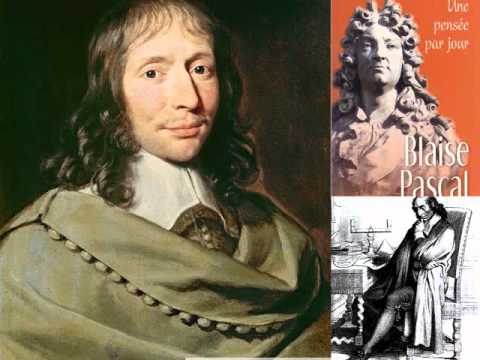
Converging and Convincing Proof of God: Blaise Pascal, Our Lost Glory and the Need for God
FREE Catholic Classes
Is there some sort of part within man's soul beckoning us to God even when the fire of love of God is out? There is a proof that is serviceable precisely when the fire of charity--the love of God--is out. And for that proof we might turn to the insights of the philosopher Blaise Pascal. It was the "peculiar achievement" of Blaise Pascal, according to Aidan Nichols in his A Grammar of Consent, "to show that the existence of God is somehow implicated in human aspirations," even those short of mysticism.

Highlights
Catholic Online (https://www.catholic.org)
11/20/2012 (1 decade ago)
Published in Year of Faith
Keywords: existence of God, proofs of God, Pensees, Pascal, Reasons of the heart, Andrew M. Greenwell, Esq.
CORPUS CHRISTI, TX (Catholic Online) - "The mind has mountains," wrote Gerard Manley Hopkins, "cliffs of fall. Frightful, sheer, no-man-fathomed. Hold them cheap may who ne'er hung there." This is not altogether true, for there are some who have dared to fathom the "cliffs of fall" within man, and since they have "hung there," did not "hold them cheap."
One such internal mountaineer was the philosopher and mathematician Blaise Pascal, and the method he used to clamber into the mystery of man's depths, might be called the "method of relative immanence." It serves to provide us another of our converging and convincing proofs of God.
In our last article in this series, we spoke of the proof of God that we might derive from mysticism. In the mystic, the fire of love between a man or woman and God is ablaze. There is a communion between man and God that transforms the human subject, and leads to say: "If Teresa, then God; if St. John of the Cross, then God," and so forth with any "pure" soul.
But what of man if these fires of love are out?
Is there a part within man's soul beckoning us to God even when the fire of contemplative love of God is out?
There is a proof that is serviceable precisely when the fire of charity--the love of God--is out. And for that proof we might turn to the insights of Blaise Pascal. It was the "peculiar achievement" of Pascal, according to Aidan Nichols in his A Grammar of Consent, "to show that the existence of God is somehow implicated in human aspirations," even those short of mysticism.
Without God, Pascal came to learn, man faced "an extraordinary uncertainty of judgment," to borrow the words of Carl G. Jung in his book The Undiscovered Self. Without God, Pascal learned, "man is an enigma to himself."
This was Pascal's starting point.
In other words, man without God had to discover himself, and as he sought to discover himself he had to uncover himself, and by uncovering himself he learned of some paradoxical truths which bespoke of former glory, current tragedy, and possible calling.
What the detritus of man's former glory suggested is that the only way for man to explain himself is for man to recognize he was made for God and he needs God.
Before Pascal discovered this truth, he had to ask the question: What am I?
This was the adventure upon which Pascal embarked by introspection and reason alone. But this reason was something other than the reason of the scientific method, since Pascal knew, as Aidan Nichols puts it, that the "inwardness of things escapes the net of scientific method, which of its nature must prescind from consciousness."
What Pascal learned through the introspective climb down the "cliffs of fall" of his own being was that man was in one sense both greater than all of nature and yet in another sense lower than all nature.
"Man is but a reed, the most feeble thing in nature, but he is a thinking reed. The entire universe need not arm itself to crush him. A vapour, a drop of water, suffices to kill him. But if the universe were to crush him, man would still be nobler than that which the universe has over him; the universe knows nothing of this." (Pensée, 220)
"What sort of freak then is man! How novel, how monstrous, how chaotic, how paradoxical, how prodigious! Judge of all things, feeble earthworm, repository of truth, sink of doubt and error, glory and refuse of the universe." (Pensée, 131)
As he peered within himself, Pascal saw that there was something rotten in the state of man, yet at the same time, there were remnants of a sort of past glory or perhaps also remnants which spoke of the possibility of a future one. Even our miseries were evidences of prior greatness, the remnants of a palace of "a grand seigneur, a displaced king," (Pensée, 122) perhaps one who would one day again mount his throne.
When he looked within himself, Pascal discovered, in the words of Aidan Nichols, that "we are not merely a riddle; we are a tragedy."
It was as if Pascal, within the most interior parts of his being, had stumbled upon an ancient, abandoned and forgotten temple, sort of like a mysterious interior Stonehenge, and within its perimeter a cold altar stone with signs of ash: an ancient fire had been put out. We might call it the temple of obediential potency.
Pascal realized that the cold altar was the altar where self-love reigned. He realized that any fire on the altar could only be of one kind. It had to be a fire, not of self-love, but a fire of charity, a fire of the love of God.
"The will of man is divided between two principles: cupidity and charity," Pascal wrote. "Cupidity makes use of God and delights in the world, while charity does just the opposite." (Pensée, 148)

It was one of two choices that lay at the center of man: self-love or charity. And this fundamental choice led to subsidiary questions: Were we made only for earth, or for heaven? Are we creatures only of time, or are we made for eternity? Are we made to be worms of nature, or Lords of glory? But all these questions were answerable by answering the first, most fundamental question: self-love or charity.
It was apparent to Pascal that reason's strength failed in providing an answer.
The best he could come up with was his famous "wager." Perhaps, Pascal argued, we are made for eternity, for heaven, for God. Perhaps not. Reason is inadequate to tell. But reason could say that it was the better bet to throw away all this short life in the gamble that eternity was true. Gamble seventy or eighty years of life for the prospect of eternity seemed a good bet.
Ultimately, the reasoning is laughable. In the standard act of contrition we pray that we are sorry because we dread the loss of heaven and the pains of hell, but most of all because our sins offend the all good God. Confession based on a bet does not even make it to the level of attrition. One is not invited into the house of the Lord by hedging bets. "Lord, I'm sorry . . . because it is a good bet," does not make the cut.
Pascal, a man of intense spirituality, knew this. The weakness of the "wager" argument was intentional. What Pascal wanted to communicate according to Aidan Nichols was that looking to reason for guidance beyond this point was fruitless. Reason only left us "staring into the yawning hold of its failure." The "wager" argument "symbolizes a crisis, but the resolution of the crisis is not blind faith (or passional self-determination) but intellectual day."
The "intellectual day," however, is not ours to give to ourselves; it is procured by a turn to God in faith in an act of will moved by grace. To accept the grace of faith requires the jettisoning of pride and concupiscence, and a turning toward God. Shed of pride and of concupiscence, one will hear God say: "Only I can make you understand what you are." (Pensée, 149)
Pascal realized that we are more than superficial reason of the mind, what, were we to use the insights of the medieval thinkers, we might call ratio. He realized that there was a deeper, more fundamental reason, which he called the reason of the heart, what, in the terms of the medieval thinkers, we might identify as intellectus.
"For the nub of Pascal's thought," observes Aidan Nichols, "is found in just such an awareness of the contrasts in existence, above all the contrast between human greatness and human misery, presented by Pascal as the most important of all antinomies. The paradox of reality is not incapable of resolution: but its resolution is found only by moving into another order of investigation, the order of charity, or of the reasons of the heart."
It was on November 23, 1654, Pascal himself, using the order of reason, stumbled upon this interior temple with its cold altar and its trace of ashes, and, by faith was able to relight its fires and entered into the order of charity. He had a marvelous event of grace, a conversion.
"The heart has its reason of which the reason knows nothing," Pascal famously wrote in Pensée 423. Pascal had left, without abandoning, the order of the mind. But he had entered, in a manner which enriched the order of the mind immeasurably, the order of charity.
The experience of that day transformed his life, and he documented its significance in a paper scrap known as his "Memorial" which he sewed into the lining of his jacket, and was found upon him at the time of his death:
Fire.
"God of Abraham, God of Isaac, God of Jacob," not of philosophers and scholars.
Certainty, certainty, heartfelt joy, peace. God of Jesus Christ."
Reason, with a little bit of tough interior cliff hanging, will bring you to the cold altar and the destroyed temple in your innermost. But it stops there. Only the fire of charity, moved by grace and the act of faith, can light the sacred precinct of the soul and warm the altar stone, and restore man to his glory.
Only God can restore man's greatness. Without God, man is doomed to misery, to "an extraordinary uncertainty of judgment," to living an insoluble "enigma," one which leads to despair. There is only one way out of this despair: God.
Pray that the fires be lit. But pray not to that false Baal of self-love to light the fires, for he will not answer. Pray, rather, to the God of Abraham, Isaac, and Jacob, the God of Jesus Christ, who is himself Love. For it is He, the one and only God, whose fire will light the altar in your soul, and make you whole. (1 Kings 18:38)
-----

Andrew M. Greenwell is an attorney licensed to practice law in Texas, practicing in Corpus Christi, Texas. He is married with three children. He maintains a blog entirely devoted to the natural law called Lex Christianorum. You can contact Andrew at agreenwell@harris-greenwell.com.
---
'Help Give every Student and Teacher FREE resources for a world-class Moral Catholic Education'
Copyright 2021 - Distributed by Catholic Online

Come Grow With Us
Sign up and walk the Catholic journey with millions around the world.
Receive inspiring emails on saints, daily readings, and free faith-building resources—no cost, ever.
Sister Sara Has One Message for Every Catholic Family This June
- Easter / Lent
- 5 Lenten Prayers
- Ash Wednesday
- 7 Morning Prayers
- Mysteries of the Rosary
- Litany of the Bl. Virgin Mary
- Popular Saints
- Popular Prayers
- Female Saints
- Saint Feast Days by Month
- Stations of the Cross
- St. Francis of Assisi
- St. Michael the Archangel
- The Apostles' Creed
- Unfailing Prayer to St. Anthony
- Pray the Rosary









Copyright 2026 Catholic Online. All materials contained on this site, whether written, audible or visual are the exclusive property of Catholic Online and are protected under U.S. and International copyright laws, © Copyright 2026 Catholic Online. Any unauthorized use, without prior written consent of Catholic Online is strictly forbidden and prohibited.
Catholic Online is a Project of Your Catholic Voice Foundation, a Not-for-Profit Corporation. Your Catholic Voice Foundation has been granted a recognition of tax exemption under Section 501(c)(3) of the Internal Revenue Code. Federal Tax Identification Number: 81-0596847. Your gift is tax-deductible as allowed by law.