 Hi readers, it seems you use Catholic Online a lot; that's great! It's a little awkward to ask, but we need your help. If you have already donated, we sincerely thank you. We're not salespeople, but we depend on donations averaging $14.76 and fewer than 1% of readers give. If you donate just $5.00, the price of your coffee, Catholic Online School could keep thriving. Thank you. Help Now >
Papal Q-and-A Session With Priests - Part 1
FREE Catholic Classes
On Conscience, Pastoral Organization and Immigrants
VATICAN CITY, AUG. 19, 2007 (Zenit) - Here is the first part of a Vatican translation of Benedict XVI's July 24 question-and-answer session with priests from the dioceses of Belluno-Feltre and Treviso, Italy, during the Pope's vacation.
Parts 2 and 3 will be published on Wednesday and Thursday.
* * *
MEETING OF THE HOLY FATHER BENEDICT XVI WITH THE CLERGY OF THE DIOCESES OF BELLUNO-FELTRE AND TREVISO
Church of St Justin Martyr, Auronzo di Cadore
Tuesday, 24 July 2007
Your Holiness, I am Fr Claudio. The question I wanted to ask you is about the formation of conscience, especially in young people, because today it seems more and more difficult to form a consistent conscience, an upright conscience. Good and evil are often confused with having good and bad feelings, the more emotive aspect. So I would like to hear your advice. Thank you.
Benedict XVI: Your Excellency, dear Brothers, I would like first of all to express my joy and gratitude for this beautiful meeting. I thank the two Pastors, Bishop Andrich and Bishop Mazzocato, for their invitation. I offer my heartfelt thanks to all of you who have come here in such large numbers during the holiday season. To see a church full of priests is encouraging because it shows us that there are priests. The Church is alive, despite the increasing problems in our day and especially in the Western hemisphere. The Church is still alive and has priests who truly desire to proclaim the Kingdom of God; she is growing and standing up to these complications that we perceive in our cultural situation today. Now, to a certain extent, this first question reflects a problem of Western culture, since in the last two centuries the concept of "conscience" has undergone a profound transformation. Today, the idea prevails that only what is quantifiable can be rational, which stems from reason. Other things, such as the subjects of religion and morals, should not enter into common reason because they cannot be proven or, rather, put to the "acid test", so to speak. In this situation, where morals and religion are as it were almost expelled from reason, the subject is the only ultimate criterion of morality and also of religion, the subjective conscience which knows no other authority. In the end, the subject alone decides, with his feelings and experience, on the possible criteria he has discovered. Yet, in this way the subject becomes an isolated reality and, as you said, the parameters change from one day to the next. In the Christian tradition, "conscience", "con-scientia", means "with knowledge": that is, ourselves, our being is open and can listen to the voice of being itself, the voice of God. Thus, the voice of the great values is engraved in our being and the greatness of the human being is precisely that he is not closed in on himself, he is not reduced to the material, something quantifiable, but possesses an inner openness to the essentials and has the possibility of listening. In the depths of our being, not only can we listen to the needs of the moment, to material needs, but we can also hear the voice of the Creator himself and thus discern what is good and what is bad. Of course, this capacity for listening must be taught and encouraged. The commitment to the preaching that we do in church consists of precisely this: developing this very lofty capacity with which God has endowed human beings for listening to the voice of truth and also the voice of values. I would say, therefore, that a first step would be to make people aware that our very nature carries in itself a moral message, a divine message that must be deciphered. We can become increasingly better acquainted with it and listen to it if our inner hearing is open and developed. The actual question now is how to carry out in practice this education in listening, how to make human beings capable of it despite all the forms of modern deafness, how to ensure that this listening, the Ephphatha of Baptism, the opening of the inner senses, truly takes place. In taking stock of the current situation, I would propose the combination of a secular approach and a religious approach, the approach of faith. Today, we all see that man can destroy the foundations of his existence, his earth, hence, that we can no longer simply do what we like or what seems useful and promising at the time with this earth of ours, with the reality entrusted to us. On the contrary, we must respect the inner laws of creation, of this earth, we must learn these laws and obey these laws if we wish to survive. Consequently, this obedience to the voice of the earth, of being, is more important for our future happiness than the voices of the moment, the desires of the moment. In short, this is a first criterion to learn: that being itself, our earth, speaks to us and we must listen if we want to survive and to decipher this message of the earth. And if we must be obedient to the voice of the earth, this is even truer for the voice of human life. Not only must we care for the earth, we must respect the other, others: both the other as an individual person, as my neighbour, and others as communities who live in the world and have to live together. And we see that it is only with full respect for this creature of God, this image of God which man is, and with respect for our coexistence on this earth, that we can develop. And here we reach the point when we need the great moral experiences of humanity. These experiences are born from the encounter with the other, with the community. We need the experience that human freedom is always a shared freedom and can only function if we share our freedom with respect for the values that are common to us all. It seems to me that with these steps it will be possible to make people see the need to obey the voice of being, to respect the dignity of the other, to accept the need to live our respective freedom together as one freedom, and through all this to recognize the intrinsic value that can make a dignified communion of life possible among human beings. Thus, as has been said, we come to the great experiences of humanity in which the voice of being is expressed. We especially come to the experiences of this great historical pilgrimage of the People of God that began with Abraham. In him, not only do we find the fundamental human experiences but also, we can hear through these experiences the voice of the Creator himself, who loves us and has spoken to us. Here, in this context, respecting the human experiences that point out the way to us today and in the future, I believe that the Ten Commandments always have a priority value in which we see the important signposts on our way. The Ten Commandments reinterpreted, relived in the light of Christ, in the light of the life of the Church and of her experiences, point to certain fundamental and essential values. Together, the Fourth and Sixth Commandments suggest the importance of our body, of respecting the laws of the body and of sexuality and love, the value of faithful love, of the family; the Fifth Commandment points to the value of life and also the value of community life; the Seventh Commandment regards the value of sharing the earth's goods and of a fair distribution of these goods and of the stewardship of God's creation; the Eighth Commandment points to the great value of truth. If, therefore, in the Fourth, Fifth and Sixth Commandments we have love of neighbour, in the Seventh we have the truth. None of this works without communion with God, without respect for God and God's presence in the world. In any case, a world without God becomes an arbitrary and egoistic world. There is light and hope only if God appears. Our life has a meaning which we must not produce ourselves but which precedes us and guides us. In this sense, therefore, I would say that together, we should take the obvious routes which today even the lay conscience can easily discern. We should therefore seek to guide people to the deepest voices, to the true voice of the conscience that is communicated through the great tradition of prayer, of the moral life of the Church. Thus, in a process of patient education, I think we can all learn to live and to find true life.
We ask you, humbly: don't scroll away.
Hi readers, it seems you use Catholic Online a lot; that's great! It's a little awkward to ask, but we need your help. If you have already donated, we sincerely thank you. We're not salespeople, but we depend on donations averaging $14.76 and fewer than 1% of readers give. If you donate just $5.00, the price of your coffee, Catholic Online School could keep thriving. Thank you.Help Now >
I am Fr Mauro. Your Holiness, in exercising our pastoral ministry we are increasingly burdened by many duties. Our tasks in the management and administration of parishes, pastoral organization and assistance to people in difficulty are piling up. I ask you, what are the priorities we should aim for in our ministry as priests and parish priests to avoid fragmentation on the one hand and on the other, dispersion? Thank you.
Benedict XVI: That is a very realistic question, is it not? I am also somewhat familiar with this problem, with all the daily procedures, with all the necessary audiences, with all that there is to do. Yet, it is necessary to determine the right priorities and not to forget the essential: the proclamation of the Kingdom of God. On hearing your question, I remembered the Gospel of two weeks ago on the mission of the 70 disciples. For this first important mission which Jesus had them undertake, the Lord gave them three orders which on the whole I think express the great priorities in the work of a disciple of Christ, a priest, in our day too. The three imperatives are: to pray, to provide care, to preach. I think we should find the balance between these three basic imperatives and keep them ever present as the heart of our work. Prayer: which is to say, without a personal relationship with God nothing else can function, for we cannot truly bring God, the divine reality or true human life to people unless we ourselves live them in a deep, true relationship of friendship with God in Jesus Christ. Hence, the daily celebration of the Holy Eucharist is a fundamental encounter where the Lord speaks to me and I speak to the Lord who gives himself through my hands. Without the prayer of the Hours, in which we join in the great prayer of the entire People of God beginning with the Psalms of the ancient people who are renewed in the faith of the Church, and without personal prayer, we cannot be good priests for we would lose the essence of our ministry. The first imperative is to be a man of God, in the sense of a man in friendship with Christ and with his Saints. Then comes the second command. Jesus said: tend the sick, seek those who have strayed, those who are in need. This is the Church's love for the marginalized and the suffering. Rich people can also be inwardly marginalized and suffering. "To take care of" refers to all human needs, which are always profoundly oriented to God. Thus, as has been said, it is necessary for us to know our sheep, to be on good terms with the people entrusted to us, to have human contact and not to lose our humanity, because God was made man and consequently strengthened all dimensions of our being as humans. However, as I said, the human and the divine always go hand in hand. To my mind, the sacramental ministry is also part of this "tending" in its multiple forms. The ministry of Reconciliation is an act of extraordinary caring which the person needs in order to be perfectly healthy. Thus, this sacramental care begins with Baptism, which is the fundamental renewal of our life, and extends to the Sacrament of Reconciliation and the Anointing of the Sick. Of course, all the other sacraments and also the Eucharist involve great care for souls. We have to care for people but above all -- this is our mandate -- for their souls. We must think of the many illnesses and moral and spiritual needs that exist today and that we must face, guiding people to the encounter with Christ in the sacrament, helping them to discover prayer and meditation, being silently recollected in church with this presence of God. And then, preaching. What do we preach? We proclaim the Kingdom of God. But the Kingdom of God is not a distant utopia in a better world which may be achieved in 50 years' time, or who knows when. The Kingdom of God is God himself, God close to us who became very close in Christ. This is the Kingdom of God: God himself is near to us and we must draw close to this God who is close for he was made man, remains man and is always with us in his Word, in the Most Holy Eucharist and in all believers. Therefore, proclaiming the Kingdom of God means speaking of God today, making present God's words, the Gospel which is God's presence and, of course, making present the God who made himself present in the Holy Eucharist. By interweaving these three priorities and, naturally, taking into account all the human aspects, including our own limitations that we must recognize, we can properly fulfil our priesthood. This humility that recognizes the limitations of our own strength is important as well. All that we cannot do, the Lord must do. And there is also the ability to delegate and to collaborate. All this must always go with the fundamental imperatives of praying, tending and preaching.
We ask you, humbly: don't scroll away.
Hi readers, it seems you use Catholic Online a lot; that's great! It's a little awkward to ask, but we need your help. If you have already donated, we sincerely thank you. We're not salespeople, but we depend on donations averaging $14.76 and fewer than 1% of readers give. If you donate just $5.00, the price of your coffee, Catholic Online School could keep thriving. Thank you.Help Now >
My name is Fr Daniele. Your Holiness, the Veneto is an area with a steady influx of immigrants where a sizable number of non-Christians are present. This situation confronts our dioceses with a new, internal task of evangelization. Moreover, this represents a certain difficulty since we have to reconcile the needs of Gospel proclamation with those of a respectful dialogue with other religions. What pastoral instructions can you suggest? Thank you.
Benedict XVI: You are naturally in close touch with this situation. And in this regard, I may be unable to give you much practical advice, but I can say that in all the ad limina visits, whether the Bishops come from Asia, Africa, Latin America or every part of Italy, I am always confronted with such situations. A uniform world no longer exists. All the other continents, the other religions, the other ways of living human life are present especially in the West. We are living a permanent encounter where we resemble the ancient Church because she experienced the same situation. Christians formed a tiny minority, a mustard seed that began to sprout, surrounded by very different religions and ways of life. We must learn once again, therefore, all that the first generations of Christians experienced. In his First Letter, St Peter said: "Always be prepared to make a defence to anyone who calls you to account for the hope that is in you" (3:15). Thus, he formulated for the ordinary person of that time, for the ordinary Christian, the need to combine proclamation and dialogue. He did not say formally: "Proclaim the Gospel to everyone". He said: "You must be able, ready, to account for the hope that is in you". I think that this is the necessary synthesis between dialogue and proclamation. The first point is that the reason for our hope must be ever present within us. We must be people who live faith and think faith, people with an inner knowledge of it. So it is that faith becomes reason within us, it becomes reasonable. Meditation on the Gospel and in this case, proclamation, the homily and catechesis to enable people to ponder faith, already constitute fundamental elements in this web of dialogue and proclamation. We ourselves must think faith, live faith and, as priests, find different ways to make faith present so that our Christian Catholics can find the conviction, readiness and ability to account for their faith. This proclamation which transmits the faith to today's conscience must have many forms. The homily and catechesis are indisputably two of its principal forms, but there are also many ways of meeting, such as seminars on faith, lay movements, etc., where people talk about faith and learn the faith. All this makes us capable, first of all, of truly living as the neighbours of non-Christians -- here, mainly Orthodox Christians, Protestants and also exponents of other religions, Muslims and others. The first aspect is to live beside them, recognizing with them their neighbour, our neighbour; thus, living love of neighbour on the front line as an expression of our faith. I think that this is already a very powerful witness and also a form of proclamation: truly living love of neighbour with these others, recognizing the latter, recognizing them as our neighbour so that they can see: this "love of neighbour" is for me. If this happens, we will be able to more easily present the source of our behaviour, in other words, that love of neighbour is an expression of our faith. Thus, our dialogue cannot move on suddenly to the great mysteries of faith, although Muslims have a certain knowledge of Christ that denies his divinity but at least recognizes him as a great Prophet. They love Our Lady. These are consequently elements that we have in common, even in faith, and are starting points for dialogue. A perception of fundamental understanding on the values we should live is practical, feasible and above all necessary. Here too, we have a treasure in common because Muslims come from the religion of Abraham, reinterpreted and relived in ways to be studied and to which we should finally respond. Yet, the great substantial experience of the Ten Commandments is present and this seems to me a point that requires further investigation. Moving on to the great mysteries seems to me to be moving to a level that is far from easy and impossible to attain at large meetings. Perhaps the seed should enter hearts, so that here and there the response of faith in a more specific dialogue may mature. But what we can and must do is to seek a consensus on the fundamental values expressed in the Ten Commandments, summed up in love of neighbour and love of God, and which can thus be interpreted in the various life contexts. We are at least on a common journey towards the God of Abraham, Isaac and Jacob, the God who is ultimately the God with the human face, the God present in Jesus Christ. But if the latter step is to be made in intimate, personal encounters or small groups, the journey towards this God, from which derives these values that make life in common possible, I think this is feasible also at larger meetings. As a result, in my opinion a humble, patient form of proclamation should be undertaken here, which awaits but already realizes our life in accordance with knowledge enlightened by God.

© Copyright 2007 -- Libreria Editrice Vaticana
Contact
Catholic Online
https://www.catholic.org
CA, US
Catholic Online - Publisher, 661 869-1000
info@yourcatholicvoice.org
Keywords
Pope, Benedict, Priests, Conscience, Pastoral, Immigrants

More Catholic PRWire
Showing 1 - 50 of 4,716
A Recession Antidote
Randy Hain
Monaco & The Vatican: Monaco's Grace Kelly Exhibit to Rome--A Review of Monegasque-Holy See Diplomatic History
Dna. Maria St. Catherine Sharpe, t.o.s.m., T.O.SS.T.
The Why of Jesus' Death: A Pauline Perspective
Jerom Paul
A Royal Betrayal: Catholic Monaco Liberalizes Abortion
Dna. Maria St.Catherine De Grace Sharpe, t.o.s.m., T.O.SS.T.
Embrace every moment as sacred time
Mary Regina Morrell
My Dad
JoMarie Grinkiewicz
Letting go is simple wisdom with divine potential
Mary Regina Morrell
Father Lombardi's Address on Catholic Media
Catholic Online
Pope's Words to Pontifical Latin American College
Catholic Online
Prelate: Genetics Needs a Conscience
Catholic Online
State Aid for Catholic Schools: Help or Hindrance?
Catholic Online
Scorsese Planning Movie on Japanese Martyrs
Catholic Online
2 Nuns Kidnapped in Kenya Set Free
Catholic Online
Holy See-Israel Negotiation Moves Forward
Catholic Online
Franchising to Evangelize
Catholic Online
Catholics Decry Anti-Christianity in Israel
Catholic Online
Pope and Gordon Brown Meet About Development Aid
Catholic Online
Pontiff Backs Latin America's Continental Mission
Catholic Online
Cardinal Warns Against Anti-Catholic Education
Catholic Online
Full Circle
Robert Gieb
Three words to a deeper faith
Paul Sposite
Relections for Lent 2009
chris anthony
Wisdom lies beyond the surface of life
Mary Regina Morrell
World Food Program Director on Lent
Catholic Online
Moral Clarity
DAN SHEA
Pope's Lenten Message for 2009
Catholic Online
A Prayer for Monaco: Remembering the Faith Legacy of Prince Rainier III & Princess Grace and Contemplating the Moral Challenges of Prince Albert II
Dna. Maria St. Catherine Sharpe
Keeping a Lid on Permissiveness
Sally Connolly
Glimpse of Me
Sarah Reinhard
The 3 stages of life
Michele Szekely
Sex and the Married Woman
Cheryl Dickow
A Catholic Woman Returns to the Church
Cheryl Dickow
Modernity & Morality
Dan Shea
Just a Minute
Sarah Reinhard
Catholic identity ... triumphant reemergence!
Hugh McNichol
Edging God Out
Paul Sposite
Burying a St. Joseph Statue
Cheryl Dickow
George Bush Speaks on Papal Visit
Catholic Online
Sometimes moving forward means moving the canoe
Mary Regina Morrell
Action Changes Things: Teaching our Kids about Community Service
Lisa Hendey
 Hi readers, it seems you use Catholic Online a lot; that's great! It's a little awkward to ask, but we need your help. If you have already donated, we sincerely thank you. We're not salespeople, but we depend on donations averaging $14.76 and fewer than 1% of readers give. If you donate just $5.00, the price of your coffee, Catholic Online School could keep thriving. Thank you. Help Now >
Easter... A Way of Life
Paul Spoisite
Papal initiative...peace and harmony!
Hugh McNichol
Proclaim the mysteries of the Resurrection!
Hugh McNichol
Jerusalem Patriarch's Easter Message
Catholic Online
Good Friday Sermon of Father Cantalamessa
Catholic Online
Papal Address at the End of the Way of the Cross
Catholic Online
Cardinal Zen's Meditations for Via Crucis
Catholic Online
Interview With Vatican Aide on Jewish-Catholic Relations
Catholic Online
Pope Benedict XVI On the Easter Triduum
Catholic Online
Holy Saturday...anticipation!
Hugh McNichol
Join the Movement
When you sign up below, you don't just join an email list - you're joining an entire movement for Free world class Catholic education.



 Daily Readings for Wednesday, April 24, 2024
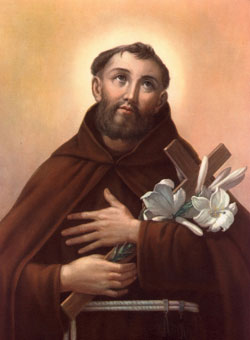 St. Fidelis of Sigmaringen: Saint of the Day for Wednesday, April 24, 2024
 A Prayer for Special Intentions: Prayer of the Day for Wednesday, April 24, 2024