We ask you, humbly: don't scroll away.
Hi readers, it seems you use Catholic Online a lot; that's great! It's a little awkward to ask, but we need your help. If you have already donated, we sincerely thank you. We're not salespeople, but we depend on donations averaging $14.76 and fewer than 1% of readers give. If you donate just $5.00, the price of your coffee, Catholic Online School could keep thriving. Thank you.Help Now >
Vatican Address to U.N. on Religious Tolerance
FREE Catholic Classes
"Meet Others on the Plane of Reason and Mutual Respect"
NEW YORK, MAY 13, 2007 (Zenit) - Here is the address Mary Ann Glendon, president of the Pontifical Academy of Social Sciences, delivered May 10 to the U.N. General Assembly panel on religion in contemporary society. Her intervention was entitled "Prospects for Cross-cultural and Interreligious Relations in Contemporary Society."
* * *
This afternoon's panelists have been asked to discuss the challenge of promoting a culture of mutual respect and tolerance in contemporary societies. In theory, the accelerated movement of people and ideas in today's world might be expected to foster cooperation rather than conflict, mutual understanding rather than mutual suspicion. And to some extent it has, especially as people get to know each other on a personal level. The problem is how to seize the available opportunities and to reduce the incidence of misunderstandings, tensions and violence.
For those who would like to take a hopeful view, I suggest that we need not look far to find an encouraging example of a cross-cultural dialogue that overcame enormous obstacles to yield one of the U.N.'s most enduring contributions to peace.
I am referring to the debates that led up to the 1948 Universal Declaration of Human Rights. Today, many have forgotten that that historic document was the product of an impressively multicultural collaboration. Nor do many remember how deep were the divisions that had to be overcome by a drafting group that included a Confucian scholar from China, Muslims from Egypt and Iran, a French Zionist, an Indian woman of Hindu origin, members of various Christian denominations, and four devout Marxists.

Hardly anyone thought that group would be able to agree on a few basic principles of human decency. But the declaration -- with its affirmation that we all belong to one human family -- remains a beacon of inspiration for everyone who holds hopes for cross-cultural collaboration. At the same time, it is a sober reminder that, while high-level dialogue has an important role to play, its role is a limited one -- an element in a never-ending process that must be nourished within the capillaries of society.
Therein, of course, lies a challenge for religious and cultural leaders -- that of motivating their followers to meet others on the plane of reason and mutual respect, while remaining true to themselves and their own beliefs.
Why has it been so difficult to meet that challenge? For one thing, religion has often been exploited for political purposes. But many obstacles cannot be blamed on outside forces. They include not only misunderstandings about the faith of others, but also a poor grounding in one's own faith. Thus, another crucial task for leaders and educators is to find resources within their own traditions for promoting respect and tolerance, and to draw upon those resources as they transmit their traditions to their followers.
Such efforts at the local level may well prove decisive, for religious communities have great potential to help heal wounds, to build bridges, and to band together against extremists who would manipulate religion to promote hatred and violence. What Eleanor Roosevelt once wrote about bringing human rights to life applies equally to creating a culture of mutual respect among peoples. "Where," she asked, "do human rights begin? In small places, close to home -- so close and small that they cannot be seen on any maps of the world. ... Unless these rights have meaning there, they have little meaning anywhere."
That wise observation, I venture to suggest, provides grounds to be cautiously hopeful about our present situation. For, increasingly, religious and cultural pluralism is a fact of life. More and more people are getting to know members of other cultures and religions. Many, especially young people, are building lasting friendships -- in schools, neighborhoods and workplaces. In "small places" like these, people are beginning to move beyond mere tolerance. They are beginning to learn from one another, and to have their horizons enlarged by one another. As Pope John Paul II put it in his 1995 address to the United Nations, "The 'difference' which some find so threatening can, through respectful dialogue, become the source of a deeper understanding of the mystery of human existence."
To be sure, the path beyond tolerance will be strewn with obstacles. But there really is no alternative if human beings are to improve the chances for peace on our increasingly interdependent, yet conflict-ridden planet. To give up on the possibility of meaningful "dialogue with all those seriously concerned for humanity and for the world in which we live" (Benedict XVI, "Deus Cartitas Est," 27) would be to give up on the dreams of the men and women who created the great organization where we meet today.
[Original text: English; text adapted]
Contact
Catholic Online
https://www.catholic.org
CA, US
Catholic Online - Publisher, 661 869-1000
info@yourcatholicvoice.org
Keywords
Vatican, Religion, Tolerence, U.N., Glendon, Society, Freedom
 Hi readers, it seems you use Catholic Online a lot; that's great! It's a little awkward to ask, but we need your help. If you have already donated, we sincerely thank you. We're not salespeople, but we depend on donations averaging $14.76 and fewer than 1% of readers give. If you donate just $5.00, the price of your coffee, Catholic Online School could keep thriving. Thank you. Help Now >
More Catholic PRWire
Showing 1 - 50 of 4,716
A Recession Antidote
Randy Hain
Monaco & The Vatican: Monaco's Grace Kelly Exhibit to Rome--A Review of Monegasque-Holy See Diplomatic History
Dna. Maria St. Catherine Sharpe, t.o.s.m., T.O.SS.T.
The Why of Jesus' Death: A Pauline Perspective
Jerom Paul
A Royal Betrayal: Catholic Monaco Liberalizes Abortion
Dna. Maria St.Catherine De Grace Sharpe, t.o.s.m., T.O.SS.T.
Embrace every moment as sacred time
Mary Regina Morrell
My Dad
JoMarie Grinkiewicz
Letting go is simple wisdom with divine potential
Mary Regina Morrell
Father Lombardi's Address on Catholic Media
Catholic Online
Pope's Words to Pontifical Latin American College
Catholic Online
Prelate: Genetics Needs a Conscience
Catholic Online
State Aid for Catholic Schools: Help or Hindrance?
Catholic Online
Scorsese Planning Movie on Japanese Martyrs
Catholic Online
2 Nuns Kidnapped in Kenya Set Free
Catholic Online
Holy See-Israel Negotiation Moves Forward
Catholic Online
Franchising to Evangelize
Catholic Online
Catholics Decry Anti-Christianity in Israel
Catholic Online
Pope and Gordon Brown Meet About Development Aid
Catholic Online
Pontiff Backs Latin America's Continental Mission
Catholic Online
Cardinal Warns Against Anti-Catholic Education
Catholic Online
Full Circle
Robert Gieb
We ask you, humbly: don't scroll away.
Hi readers, it seems you use Catholic Online a lot; that's great! It's a little awkward to ask, but we need your help. If you have already donated, we sincerely thank you. We're not salespeople, but we depend on donations averaging $14.76 and fewer than 1% of readers give. If you donate just $5.00, the price of your coffee, Catholic Online School could keep thriving. Thank you.Help Now >
Three words to a deeper faith
Paul Sposite
Relections for Lent 2009
chris anthony
Wisdom lies beyond the surface of life
Mary Regina Morrell
World Food Program Director on Lent
Catholic Online
Moral Clarity
DAN SHEA
Pope's Lenten Message for 2009
Catholic Online
A Prayer for Monaco: Remembering the Faith Legacy of Prince Rainier III & Princess Grace and Contemplating the Moral Challenges of Prince Albert II
Dna. Maria St. Catherine Sharpe
Keeping a Lid on Permissiveness
Sally Connolly
Glimpse of Me
Sarah Reinhard
The 3 stages of life
Michele Szekely
Sex and the Married Woman
Cheryl Dickow
A Catholic Woman Returns to the Church
Cheryl Dickow
Modernity & Morality
Dan Shea
Just a Minute
Sarah Reinhard
Catholic identity ... triumphant reemergence!
Hugh McNichol
Edging God Out
Paul Sposite
Burying a St. Joseph Statue
Cheryl Dickow
George Bush Speaks on Papal Visit
Catholic Online
Sometimes moving forward means moving the canoe
Mary Regina Morrell
Action Changes Things: Teaching our Kids about Community Service
Lisa Hendey

Easter... A Way of Life
Paul Spoisite
Papal initiative...peace and harmony!
Hugh McNichol
Proclaim the mysteries of the Resurrection!
Hugh McNichol
Jerusalem Patriarch's Easter Message
Catholic Online
Good Friday Sermon of Father Cantalamessa
Catholic Online
Papal Address at the End of the Way of the Cross
Catholic Online
Cardinal Zen's Meditations for Via Crucis
Catholic Online
Interview With Vatican Aide on Jewish-Catholic Relations
Catholic Online
Pope Benedict XVI On the Easter Triduum
Catholic Online
Holy Saturday...anticipation!
Hugh McNichol
We ask you, humbly: don't scroll away.
Hi readers, it seems you use Catholic Online a lot; that's great! It's a little awkward to ask, but we need your help. If you have already donated, we sincerely thank you. We're not salespeople, but we depend on donations averaging $14.76 and fewer than 1% of readers give. If you donate just $5.00, the price of your coffee, Catholic Online School could keep thriving. Thank you.Help Now >
Join the Movement
When you sign up below, you don't just join an email list - you're joining an entire movement for Free world class Catholic education.

 Daily Readings for Wednesday, April 24, 2024
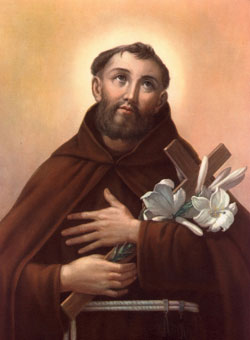 St. Fidelis of Sigmaringen: Saint of the Day for Wednesday, April 24, 2024
 A Prayer for Special Intentions: Prayer of the Day for Wednesday, April 24, 2024