We ask you, humbly: don't scroll away.
Hi readers, it seems you use Catholic Online a lot; that's great! It's a little awkward to ask, but we need your help. If you have already donated, we sincerely thank you. We're not salespeople, but we depend on donations averaging $14.76 and fewer than 1% of readers give. If you donate just $5.00, the price of your coffee, Catholic Online School could keep thriving. Thank you.Help Now >
'Quality of Life' -- Its Bioethical Downside
FREE Catholic Classes
Interview With Philosopher José Serrano
MADRID, Spain, JAN. 11, 2006 (Zenit) - "Quality of life" is not the same as "dignity of the person," a juridical challenge that bioethics must elucidate, says a philosopher of law.
José Miguel Serrano Ruiz-Calderón has written a book on this subject entitled "Juridical Challenges of Bioethics" (Eunsa), in which he addresses the moral challenges posed by biotechnology.
The author is professor of philosophy of law at Madrid's Complutense University and academic director of the Institute of Marketing Studies. He was an adviser of the Spanish Ministry of Justice and a member of his country's delegation to the U.N. agreement on cloning.
Q: What is bioethics greatest juridical challenge today?
Serrano: Perhaps the greatest challenge is to articulate a juridical answer to bioethical questions that guarantees the values of our common tradition.
It is a question of keeping the essence of law as object of justice that guarantees human dignity -- avoiding the use of man as a means -- and equality -- preventing definitions of person that distinguish some human beings from others.
In this connection, over the last 30 years the radical agenda has made an enormous effort to impose laws that do not recognize that all men are persons in the juridical sense. They quickly forget the lessons of the past, just 20 years after the end of World War II.

It is well known that contrary to what happened with totalitarianism, the "deconstructions" of human dignity to reverse this acquisition make use of alleged subjective rights. Thus every deed carried out against a human group is justified by a subjective right and a liberation.
Abortion was imposed given the mother's "privacy," the reduction of the embryo to an object given the desire for paternity-maternity, the homicide of the defective given the autonomous desire for a dignified death, the systematic destruction of embryos given the hope of alleged groups of patients and so on.
Q: The sacredness of human life is called into question. Is it possible to come to an agreement on this point with the hardest scientists?
Serrano: No. I doubt that such an agreement ever existed. In all ages there are ideological currents that deny the sacredness of human life. In the 20th century itself, the greater part of the world was dominated by ideologies that expressly denied it.
Of course, there is a common tradition that expresses this principle in a very adequate way and, in postwar legislations, precisely through the juridical recognition of the notion of dignity, it was forcefully affirmed.
However, it is well known that every time there has been a strong interest in denying this right to some group, generally through a restrictive definition of humanity, false argumentations have been made with this end in mind.
We can say that there is a combination between the two causes of corruption of justice that St. Thomas Aquinas pointed out: the false prudence of the wise man and the abuse of the powerful. At present a radical scientific spirit along with a certain utilitarianism are the theoretical positions that more forcefully threaten the sacredness of human life.
A moral absolute, such as "you shall not kill the innocent," cannot be understood from a consequential ethic. This, we must clarify, is not a "defect" of the formulation of the moral absolute but a proof of the incapacity of consequential ethics to account for human action.
Q: What is the distinction between quality of life and dignity of the person?
Serrano: Every person is really worthy and cannot be reduced to the condition of a means, as a carrot is that is life.
The claim of some is that not every human being has a personal condition; that is why they say that human rights must be replaced by the rights of the person. What is important is to affirm that every human being, members of the species, no matter what his degree of development or qualities, is worthy and is entitled to juridical protection.
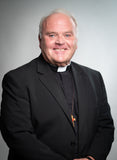 Hi readers, it seems you use Catholic Online a lot; that's great! It's a little awkward to ask, but we need your help. If you have already donated, we sincerely thank you. We're not salespeople, but we depend on donations averaging $14.76 and fewer than 1% of readers give. If you donate just $5.00, the price of your coffee, Catholic Online School could keep thriving. Thank you. Help Now >
The height of cynicism is found in the tendency to deny the "rights of man" to affirm the "rights of the person," another change of terms that has ideological intentions.
Q: Why is the term "quality of life" destructive, bioethically speaking?
Serrano: It is the instrument used to deprive dignity of meaning. In the beginning the term referred to the surpassing of certain standards of living, seeking a way that was more in keeping with human nature which was not merely productive.
Reinterpreted by a certain bioethics it means that whoever does not comply with certain minimums of productive capacity and enjoyment -- let us not forget that we are in brutally hedonist societies -- does not have a worthwhile life.
It allows for distinctions in the unborn, the newborn, the sick, the dying and, consequently, denies the strict right to life. It is carried out cynically for the good of the one eliminated.
It is very revealing that to redefine the concept of lives lacking vital value, which appeared in the brutally eugenic work of Binding and Hoche, this apparently more sophisticated concept is constructed but which leads to the same conclusion: Under certain levels the "quality" of human life is not worth living nor -- let us not forget it -- is it worth respecting.
Contact
Catholic Online
https://www.catholic.org
CA, US
Catholic Online - Publisher, 661 869-1000
info@yourcatholicvoice.org
Keywords
Life, Bioethics, Serrano

More Catholic PRWire
Showing 1 - 50 of 4,716
A Recession Antidote
Randy Hain
Monaco & The Vatican: Monaco's Grace Kelly Exhibit to Rome--A Review of Monegasque-Holy See Diplomatic History
Dna. Maria St. Catherine Sharpe, t.o.s.m., T.O.SS.T.
The Why of Jesus' Death: A Pauline Perspective
Jerom Paul
A Royal Betrayal: Catholic Monaco Liberalizes Abortion
Dna. Maria St.Catherine De Grace Sharpe, t.o.s.m., T.O.SS.T.
Embrace every moment as sacred time
Mary Regina Morrell
My Dad
JoMarie Grinkiewicz
Letting go is simple wisdom with divine potential
Mary Regina Morrell
Father Lombardi's Address on Catholic Media
Catholic Online
Pope's Words to Pontifical Latin American College
Catholic Online
Prelate: Genetics Needs a Conscience
Catholic Online
State Aid for Catholic Schools: Help or Hindrance?
Catholic Online
Scorsese Planning Movie on Japanese Martyrs
Catholic Online
2 Nuns Kidnapped in Kenya Set Free
Catholic Online
Holy See-Israel Negotiation Moves Forward
Catholic Online
Franchising to Evangelize
Catholic Online
Catholics Decry Anti-Christianity in Israel
Catholic Online
Pope and Gordon Brown Meet About Development Aid
Catholic Online
Pontiff Backs Latin America's Continental Mission
Catholic Online
Cardinal Warns Against Anti-Catholic Education
Catholic Online
Full Circle
Robert Gieb

Three words to a deeper faith
Paul Sposite
Relections for Lent 2009
chris anthony
Wisdom lies beyond the surface of life
Mary Regina Morrell
World Food Program Director on Lent
Catholic Online
Moral Clarity
DAN SHEA
Pope's Lenten Message for 2009
Catholic Online
A Prayer for Monaco: Remembering the Faith Legacy of Prince Rainier III & Princess Grace and Contemplating the Moral Challenges of Prince Albert II
Dna. Maria St. Catherine Sharpe
Keeping a Lid on Permissiveness
Sally Connolly
Glimpse of Me
Sarah Reinhard
The 3 stages of life
Michele Szekely
Sex and the Married Woman
Cheryl Dickow
A Catholic Woman Returns to the Church
Cheryl Dickow
Modernity & Morality
Dan Shea
Just a Minute
Sarah Reinhard
Catholic identity ... triumphant reemergence!
Hugh McNichol
Edging God Out
Paul Sposite
Burying a St. Joseph Statue
Cheryl Dickow
George Bush Speaks on Papal Visit
Catholic Online
Sometimes moving forward means moving the canoe
Mary Regina Morrell
Action Changes Things: Teaching our Kids about Community Service
Lisa Hendey
We ask you, humbly: don't scroll away.
Hi readers, it seems you use Catholic Online a lot; that's great! It's a little awkward to ask, but we need your help. If you have already donated, we sincerely thank you. We're not salespeople, but we depend on donations averaging $14.76 and fewer than 1% of readers give. If you donate just $5.00, the price of your coffee, Catholic Online School could keep thriving. Thank you.Help Now >
Easter... A Way of Life
Paul Spoisite
Papal initiative...peace and harmony!
Hugh McNichol
Proclaim the mysteries of the Resurrection!
Hugh McNichol
Jerusalem Patriarch's Easter Message
Catholic Online
Good Friday Sermon of Father Cantalamessa
Catholic Online
Papal Address at the End of the Way of the Cross
Catholic Online
Cardinal Zen's Meditations for Via Crucis
Catholic Online
Interview With Vatican Aide on Jewish-Catholic Relations
Catholic Online
Pope Benedict XVI On the Easter Triduum
Catholic Online
Holy Saturday...anticipation!
Hugh McNichol

Join the Movement
When you sign up below, you don't just join an email list - you're joining an entire movement for Free world class Catholic education.




 Daily Readings for Tuesday, April 16, 2024
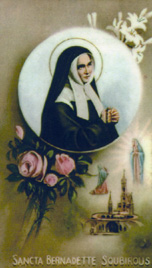 St. Bernadette: Saint of the Day for Tuesday, April 16, 2024
 Prayer for our Family #1: Prayer of the Day for Tuesday, April 16, 2024