We ask you, urgently: don't scroll past this
Dear readers, Catholic Online was de-platformed by Shopify for our pro-life beliefs. They shut down our Catholic Online, Catholic Online School, Prayer Candles, and Catholic Online Learning Resources essential faith tools serving over 1.4 million students and millions of families worldwide. Our founders, now in their 70's, just gave their entire life savings to protect this mission. But fewer than 2% of readers donate. If everyone gave just $5, the cost of a coffee, we could rebuild stronger and keep Catholic education free for all. Stand with us in faith. Thank you.Help Now >
Holy See Addresses U.N. Council on Debt Reduction
FREE Catholic Classes
Hopes for the Group of Eight Summit in Scotland
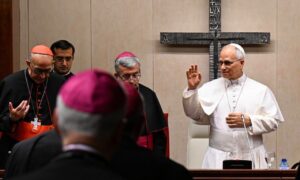
NEW YORK, JULY 6, 2005 (Zenit) - Here is the address delivered Friday before the U.N. Economic and Social Council "high-level segment," by the Holy See's permanent observer to the United Nations, Archbishop Celestino Migliore.
The topic was "Achieving the Internationally Agreed Development Goals, Including Those Contained in the Millennium Declaration, as well as Implementing the Outcomes of the Major United Nations Conferences and Summits: Progress Made, Challenges and Opportunities."
* * *
Mr. President,
The Holy See is pleased to associate itself with those who support the accord reached in London recently by the G-8 finance ministers to cancel the debts of 18 heavily indebted poor countries (HIPC). In these last decades, the Holy See has been among the most outspoken advocates of this kind of step, as expressed by the late Pope John Paul II, who often raised his voice in favor of debt cancellation for the world's poorest countries.
For now, the London accord remains only a proposal. The G-8 leaders, meeting at Gleneagles [Scotland] on 6-8 July next, must now pay attention to the demands of their own people and of civil society, and place before their respective legislatures bills that will lead to the immediate fulfillment of the accord's promises. In order to consolidate these achievements and convert them into a kind of launch pad we have to put them in perspective.
It cannot be ignored that, while countries are quick to defend and promote whatever is perceived as in their own interests, there is often a marked contrast with international financial measures on behalf of the world's poorest countries. It must also be acknowledged that the actual sums involved here are modest compared with the vast military expenditure throughout the world and the subsidies that the industrialized countries pay to sectors in their own economies, when often those very subsidies are responsible for severe distortions in the world's poorest countries.
The Secretary-General's Report In Larger Freedom and the draft declaration for the forthcoming U.N. summit of heads of state in September 2005 both recall that the true guarantee of world security is to be found in the development of the world's poorest countries and in that of the more marginalized sectors in each of those countries. In other words, it is a question of working at both inequality within individual countries and inequality between different States.
The debt remission measures which one hopes to see effectively adopted by the multilateral financial institutions are just the start of that path, first of all because the measure in question needs to be extended to some 38 HIPC countries. Secondly, if debt remission were implemented by diverting financial resources from other aid programs and if there were no significant increase in real ODA, the world would end up facing a situation worse than before the measures adopted at Gleneagles.
The upcoming G8 meeting must show the world the magnanimity and breadth of vision of its leaders, something which could serve as a solid and effective basis for a broad consensus at the forthcoming Millennium+5 summit in September.
This year will also see the sixth ministerial conference of the WTO taking place in Hong Kong in December. Debt remission and the increase in ODA necessarily must be complemented by the creation of an international trade system that is at the very least friendly towards the most indebted countries, in the terms delineated at Doha. The obligations undertaken by countries which are either very poor or have grave structural deficiencies, for their part, must become flexible enough to promote at home an economic development which is fully responsive to local social requirements. Thus, the most industrialized countries -- along with emerging economies and more recent industrial powers -- should not hesitate in allowing, even favoring, concessions and privileges for extremely poor countries.
Finally, when talking of financing for development, one cannot fail to mention the lack of financing for basic scientific research and for the industrial development of pharmaceutical products to combat the major tropical diseases such as malaria, as well as the lack of research in favor of agriculture in poorer regions. There would appear to be no point in waiting for private financing to invest in such fields, since these are problems which do not concern directly the public of the countries where the resources exist. What is needed is a generous provision of public monies in favor of the many existing initiatives, like the Global Fund for example, to promote an intensive and broad participation of the world's scientific research institutes.
The multilateral political events of the second half of this year, starting with this session of ECOSOC, could become an international turning point, in which the financing of international development converts itself into the highest international priority, if world leaders were able to move their Governments and peoples. Thus all countries, developed and poor ones alike, would be able to play their true part in the achievement of the MDGs.
Thank you, Mr. President.
Contact
Catholic Online
https://www.catholic.org
CA, US
Catholic Online - Publisher, 661 869-1000
info@yourcatholicvoice.org
Keywords
Africa, Debt, Relief, Bishops, Aid, Money

More Catholic PRWire
Showing 1 - 50 of 4,716
A Recession Antidote
Randy Hain
Monaco & The Vatican: Monaco's Grace Kelly Exhibit to Rome--A Review of Monegasque-Holy See Diplomatic History
Dna. Maria St. Catherine Sharpe, t.o.s.m., T.O.SS.T.
The Why of Jesus' Death: A Pauline Perspective
Jerom Paul
A Royal Betrayal: Catholic Monaco Liberalizes Abortion
Dna. Maria St.Catherine De Grace Sharpe, t.o.s.m., T.O.SS.T.
Embrace every moment as sacred time
Mary Regina Morrell
My Dad
JoMarie Grinkiewicz
Letting go is simple wisdom with divine potential
Mary Regina Morrell
Father Lombardi's Address on Catholic Media
Catholic Online
Pope's Words to Pontifical Latin American College
Catholic Online
Prelate: Genetics Needs a Conscience
Catholic Online
State Aid for Catholic Schools: Help or Hindrance?
Catholic Online
Scorsese Planning Movie on Japanese Martyrs
Catholic Online
2 Nuns Kidnapped in Kenya Set Free
Catholic Online
Holy See-Israel Negotiation Moves Forward
Catholic Online
Franchising to Evangelize
Catholic Online
Catholics Decry Anti-Christianity in Israel
Catholic Online
Pope and Gordon Brown Meet About Development Aid
Catholic Online
Pontiff Backs Latin America's Continental Mission
Catholic Online
Cardinal Warns Against Anti-Catholic Education
Catholic Online
Full Circle
Robert Gieb

Three words to a deeper faith
Paul Sposite
Relections for Lent 2009
chris anthony
Wisdom lies beyond the surface of life
Mary Regina Morrell
World Food Program Director on Lent
Catholic Online
Moral Clarity
DAN SHEA
Pope's Lenten Message for 2009
Catholic Online
A Prayer for Monaco: Remembering the Faith Legacy of Prince Rainier III & Princess Grace and Contemplating the Moral Challenges of Prince Albert II
Dna. Maria St. Catherine Sharpe
Keeping a Lid on Permissiveness
Sally Connolly
Glimpse of Me
Sarah Reinhard
The 3 stages of life
Michele Szekely
Sex and the Married Woman
Cheryl Dickow
A Catholic Woman Returns to the Church
Cheryl Dickow
Modernity & Morality
Dan Shea
Just a Minute
Sarah Reinhard
Catholic identity ... triumphant reemergence!
Hugh McNichol
Edging God Out
Paul Sposite
Burying a St. Joseph Statue
Cheryl Dickow
George Bush Speaks on Papal Visit
Catholic Online
Sometimes moving forward means moving the canoe
Mary Regina Morrell
Action Changes Things: Teaching our Kids about Community Service
Lisa Hendey

Easter... A Way of Life
Paul Spoisite
Papal initiative...peace and harmony!
Hugh McNichol
Proclaim the mysteries of the Resurrection!
Hugh McNichol
Jerusalem Patriarch's Easter Message
Catholic Online
Good Friday Sermon of Father Cantalamessa
Catholic Online
Papal Address at the End of the Way of the Cross
Catholic Online
Cardinal Zen's Meditations for Via Crucis
Catholic Online
Interview With Vatican Aide on Jewish-Catholic Relations
Catholic Online
Pope Benedict XVI On the Easter Triduum
Catholic Online
Holy Saturday...anticipation!
Hugh McNichol

Come Grow With Us
Sign up and walk the Catholic journey with millions around the world.
Receive inspiring emails on saints, daily readings, and free faith-building resources—no cost, ever.
Sister Sara Has One Message for Every Catholic Family This June
- Easter / Lent
- 5 Lenten Prayers
- Ash Wednesday
- 7 Morning Prayers
- Mysteries of the Rosary
- Litany of the Bl. Virgin Mary
- Popular Saints
- Popular Prayers
- Female Saints
- Saint Feast Days by Month
- Stations of the Cross
- St. Francis of Assisi
- St. Michael the Archangel
- The Apostles' Creed
- Unfailing Prayer to St. Anthony
- Pray the Rosary








Copyright 2026 Catholic Online. All materials contained on this site, whether written, audible or visual are the exclusive property of Catholic Online and are protected under U.S. and International copyright laws, © Copyright 2026 Catholic Online. Any unauthorized use, without prior written consent of Catholic Online is strictly forbidden and prohibited.
Catholic Online is a Project of Your Catholic Voice Foundation, a Not-for-Profit Corporation. Your Catholic Voice Foundation has been granted a recognition of tax exemption under Section 501(c)(3) of the Internal Revenue Code. Federal Tax Identification Number: 81-0596847. Your gift is tax-deductible as allowed by law.