We ask you, humbly: don't scroll away.
Hi readers, it seems you use Catholic Online a lot; that's great! It's a little awkward to ask, but we need your help. If you have already donated, we sincerely thank you. We're not salespeople, but we depend on donations averaging $14.76 and fewer than 1% of readers give. If you donate just $5.00, the price of your coffee, Catholic Online School could keep thriving. Thank you.Help Now >
Without Truth, Freedom Remains Imprisoned
FREE Catholic Classes
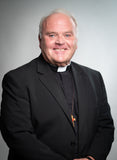
Interview with Msgr. Vitaliano Mattioli
ROME, NOV. 15, 2004 (Zenit) - A well-know theologian warns that when freedom does not take truth into account, the former ends by being imprisoned.
This is the central concept expressed by Msgr. Vitaliano Mattioli, professor of the Pontifical Urban University and vice president of the Pontifical Institute of St. Apollinare, in his latest book entitled "Imprisoned Freedom" ("Liberta Imprigionata"), published this year by Segno Publishers.
In this interview with us, Msgr. Mattioli explains the main topic of his book, the relationship between truth and freedom.
Q: Why did you choose this title for your book?
Msgr. Mattioli: For some years I have wished to write something on this argument. I am noticing in people a tendency to make negative choices that imprison them. By considering human freedom as "anarchy," the individual does not free himself but chains himself: he imprisons his freedom.
Man is no longer "lord" of himself; his erroneous conception of life and existence leads to his destruction. I analyze some of these symbolic chains in the central part of the book. In the end, they all stem from a position that is not new, but that reappears every now and then throughout the centuries: to go about life as if God did not exist.
We ask you, humbly: don't scroll away.
Hi readers, it seems you use Catholic Online a lot; that's great! It's a little awkward to ask, but we need your help. If you have already donated, we sincerely thank you. We're not salespeople, but we depend on donations averaging $14.76 and fewer than 1% of readers give. If you donate just $5.00, the price of your coffee, Catholic Online School could keep thriving. Thank you.Help Now >
Hence the sub-title: "Essay on Human Self-Destruction." How can this disaster be avoided? Immediately, the figure of Christ emerges, the only one capable of giving back to man his original freedom.
Q: In "Veritatis Splendor," the Holy Father stresses that there is no freedom without truth, an affirmation that the Church's Magisterium repeats continually. What can you tell us in this respect?
Msgr. Mattioli: Man has severed the binomial "freedom/truth." He has desired to obfuscate the truth about God, no longer considering him the Creator and the origin of all good, the principle of being, and the giver of all existence.
By removing the transcendent God, Promethean man emerges. Another truth is negated here: the truth about man. Being a creature, he feels himself creator. By denying a creator God, he has set himself to manufacture man. Negating a legislator God, man has become his own law. Hence the ethical State.
By denying these truths, freedom has also been abrogated, not only from the individual but also from the political point of view. When the human person stands on a pedestal, after having dethroned the divinity, the person is considered god, but not a God father, but a God master, the dictator. Human rights are no longer taken into account. Man reduces himself to life in a great prison. Thus, he also loses his existential freedom.
By abrogating God, man considers himself absolved and then abandons himself to his own passions. He himself, no longer acts but his unhealthy whims and appetites are the ones that dominate and control him. Having reached this point, man is capable of any aberration.
The reason the Church's Magisterium insists so much on the defense of this binomial is not only because it wishes to indicate a Christian view of life, but to prevent man, any man, from destroying himself.
Q: The present situation in Europe is an example of the contradiction between truth and freedom. In the name of greater respect for the secular state and religious freedom, reference to the Christian roots of Europe was rejected. What are your thoughts on this?
Msgr. Mattioli: In my book, when speaking of a third chain, the "secularist mentality," I analyze the difference between the secular state and the secularist state. Already Pius XII was not afraid to accept without reservations "a healthy secularism of the state." Secularism accepts religious pluralism and sees it as an enrichment.

In a speech in Assisi (Oct. 15, 2004), Marcello Pera, president of the Italian Senate, said that "secularism is a principle of autonomy, tolerance, respect for confessions, creeds, and philosophies."
Instead a state that denies the religious reality, or considers that it belongs only to the subjective sphere, is a secularist state. Hence the fact that religious life has no citizenship in the secularist state, which necessarily transforms itself into an ethical state.
Europe would like to consider itself secular although in fact it is becoming secularist. This is the reason for its obstinacy in not recognizing the Christian roots in the constitutional preamble.
According to Marcello Pera, "secularism is the opposite. At times, an ideology becomes a religion that can even become a blind, obtuse, and dogmatic." Perhaps, this secularist religion, more than all else, explains the neglect of the Christian roots of Europe in the Preamble of the Treaty." On this point, Europe is beginning to manifest an intolerance that is worrying.
Q: In the name of a freer concept of the family, we are witnessing a desire to extend the latter also to homosexual couples, allowing them even to adopt children. What is your opinion?
Msgr. Mattioli: A premise I wish to insist on: absolute respect towards people who are in these situations. Having said this, the recognition of homosexual couples is one of the consequences of having opted for a secularist State.
When anarchy replaces freedom (possibility to act in conformity with right reason), everything is licit. I am my own law and I must succeed in having the state justify, legislatively, my desires.
The family has always been considered a union between a person of the masculine sex and one of the feminine sex, recognized by society. The objection is not about the individual option of two persons but about the pressure on legislative institution to make this choice natural and, therefore, legitimate.
Even more so if it is about the adoption of children by these couples. All of psychology does no more than confirm the urgency of the masculine and feminine figure in the child's education. Here, instead, it is about obliging the legislator to take a direction that goes against all the healthy principles of nature and the most obvious conclusions of science, in regard to the balanced development of the human being.
Whim also prevails here. The unconditional satisfaction of any desire, fruit of egoism and the lack of seeking the good of the other.
We ask you, humbly: don't scroll away.
Hi readers, it seems you use Catholic Online a lot; that's great! It's a little awkward to ask, but we need your help. If you have already donated, we sincerely thank you. We're not salespeople, but we depend on donations averaging $14.76 and fewer than 1% of readers give. If you donate just $5.00, the price of your coffee, Catholic Online School could keep thriving. Thank you.Help Now >
Contact
Catholic Online
https://www.catholic.org
CA, US
Catholic Online - Publisher, 661 869-1000
info@yourcatholicvoice.org
Keywords
Truth, Freedom, God

More Catholic PRWire
Showing 1 - 50 of 4,716
A Recession Antidote
Randy Hain
Monaco & The Vatican: Monaco's Grace Kelly Exhibit to Rome--A Review of Monegasque-Holy See Diplomatic History
Dna. Maria St. Catherine Sharpe, t.o.s.m., T.O.SS.T.
The Why of Jesus' Death: A Pauline Perspective
Jerom Paul
A Royal Betrayal: Catholic Monaco Liberalizes Abortion
Dna. Maria St.Catherine De Grace Sharpe, t.o.s.m., T.O.SS.T.
Embrace every moment as sacred time
Mary Regina Morrell
My Dad
JoMarie Grinkiewicz
Letting go is simple wisdom with divine potential
Mary Regina Morrell
Father Lombardi's Address on Catholic Media
Catholic Online
Pope's Words to Pontifical Latin American College
Catholic Online
Prelate: Genetics Needs a Conscience
Catholic Online
State Aid for Catholic Schools: Help or Hindrance?
Catholic Online
Scorsese Planning Movie on Japanese Martyrs
Catholic Online
2 Nuns Kidnapped in Kenya Set Free
Catholic Online
Holy See-Israel Negotiation Moves Forward
Catholic Online
Franchising to Evangelize
Catholic Online
Catholics Decry Anti-Christianity in Israel
Catholic Online
Pope and Gordon Brown Meet About Development Aid
Catholic Online
Pontiff Backs Latin America's Continental Mission
Catholic Online
Cardinal Warns Against Anti-Catholic Education
Catholic Online
Full Circle
Robert Gieb
Three words to a deeper faith
Paul Sposite
Relections for Lent 2009
chris anthony
Wisdom lies beyond the surface of life
Mary Regina Morrell
World Food Program Director on Lent
Catholic Online
Moral Clarity
DAN SHEA
Pope's Lenten Message for 2009
Catholic Online
A Prayer for Monaco: Remembering the Faith Legacy of Prince Rainier III & Princess Grace and Contemplating the Moral Challenges of Prince Albert II
Dna. Maria St. Catherine Sharpe
Keeping a Lid on Permissiveness
Sally Connolly
Glimpse of Me
Sarah Reinhard
The 3 stages of life
Michele Szekely
Sex and the Married Woman
Cheryl Dickow
A Catholic Woman Returns to the Church
Cheryl Dickow
Modernity & Morality
Dan Shea
Just a Minute
Sarah Reinhard
Catholic identity ... triumphant reemergence!
Hugh McNichol
Edging God Out
Paul Sposite
Burying a St. Joseph Statue
Cheryl Dickow
George Bush Speaks on Papal Visit
Catholic Online
Sometimes moving forward means moving the canoe
Mary Regina Morrell
Action Changes Things: Teaching our Kids about Community Service
Lisa Hendey
Easter... A Way of Life
Paul Spoisite
Papal initiative...peace and harmony!
Hugh McNichol
Proclaim the mysteries of the Resurrection!
Hugh McNichol
Jerusalem Patriarch's Easter Message
Catholic Online
Good Friday Sermon of Father Cantalamessa
Catholic Online
Papal Address at the End of the Way of the Cross
Catholic Online
Cardinal Zen's Meditations for Via Crucis
Catholic Online
Interview With Vatican Aide on Jewish-Catholic Relations
Catholic Online
Pope Benedict XVI On the Easter Triduum
Catholic Online
Holy Saturday...anticipation!
Hugh McNichol

Join the Movement
When you sign up below, you don't just join an email list - you're joining an entire movement for Free world class Catholic education.



 Daily Readings for Saturday, April 20, 2024
 St. Marian: Saint of the Day for Saturday, April 20, 2024
 Children's Prayer For Parents: Prayer of the Day for Saturday, April 20, 2024