We ask you, humbly: don't scroll away.
Hi readers, it seems you use Catholic Online a lot; that's great! It's a little awkward to ask, but we need your help. If you have already donated, we sincerely thank you. We're not salespeople, but we depend on donations averaging $14.76 and fewer than 1% of readers give. If you donate just $5.00, the price of your coffee, Catholic Online School could keep thriving. Thank you.Help Now >
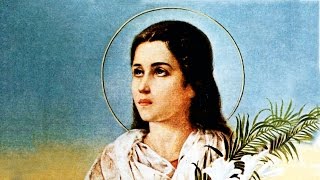
Marie-Marguérite d'Youville
FREE Catholic Classes
( née Dufrost de Lajemmerais).
Foundress of the Gray Nuns, or Sisters of Charity, born at Varennes, near Montreal, 15 October, 1701, of Christophe-D. de L. and Renee de Varennes, the sister of Laverendrye, discoverer of the Rocky Mountains; d. 23 December, 1771. After studying two years with the Ursulines at Quebec, she shared, at the age of twelve, in the housework of her widowed mother. She married (1722) M. d'Youville, who treated her with indifference, and eight years later left her a widow with three children and a heavy debt. She was forced to carry on a small trade in order to meet her obligations. The only two of her sons who reached manhood became priests. Out of her own poverty, she helped the needy. Mother d'Youville conceived an ardent devotion to the Eternal Father, which was to be the keynote of her life. xxyyyk.htm">Providence destined her to rescue from debt and ruin the hospital, founded (1694) by M. Charon, ad hitherto managed by a brotherhood bearing his name. This undertaking which was to be the cradle and groundwork of a new religious institute, the Grey Nuns, or Sisters of Charity, was destined to flourish under the wise and zealous direction of Mother d'Youville. When, in 1747, the General Hospital was entrusted to her, she had already, with a few companions living under a provisional rule, begun practicing the spiritual and corporal works of mercy. She opened the hospital to disabled soldiers, the aged of either sex, the insane, the incurable, foundlings, and orphans. When, to save the General Hospital of Quebec, the intendant Bigot, with Bishop Pontbriand's assent, decided to transfer to the former institution the property of the Montreal Hospital, Mother d'Youville submitted. The intervention of the Sulpician superior, Cousturier, maintained her rights. In 1755, Mgr. Pontbriand confirmed the rule of the institute drawn up by Father Normant. Mother d'Youville assumed the entire debt, 49,000 livres , and to meet the expense of restoring, rebuilding, and harbouring numerous inmates, increased by the admission of epileptics, lepers, and contagious patients excluded from the Hôtel-Dieu, she made clothing for the king's stores and for the traders of the upper country, which constituted her chief revenue. During the Seven Years War so many English soldiers were treated at the hospital, that one of its wards was called "la salle des Anglais". Mother d'Youville ransomed from the Indians, at a great price, an English prisoner destined to torture, and saved from their fury several fugitives, one of whom, through gratitude, later prevented the bombardment of the fortress-like hospital. Owing to the exorbitant cost of necessaries of life, due to unscrupulous corruption, the hospital was heavily indebted at the time of the conquest. A credit of 100,000 livres , due by the French Government, was redeemed with interest only under Louis XVIII, and the sum applied to the work begun by the foundress. Despite her poverty, Mother d'Youville undertook to rescue all foundlings thrown upon her charity. When, in 1766, the General Hospital was destroyed by fire, fully resigned to her loss, she knelt with her sisters and recited the "Te Deum". Her institute has spread throughout Canada and even to some of the neighbouring states. The Decree introducing the cause of her beatification, and entitling her to be called Venerable, was signed on 28 April, 1890.


 Hi readers, it seems you use Catholic Online a lot; that's great! It's a little awkward to ask, but we need your help. If you have already donated, we sincerely thank you. We're not salespeople, but we depend on donations averaging $14.76 and fewer than 1% of readers give. If you donate just $5.00, the price of your coffee, Catholic Online School could keep thriving. Thank you. Help Now >
Join the Movement
When you sign up below, you don't just join an email list - you're joining an entire movement for Free world class Catholic education.

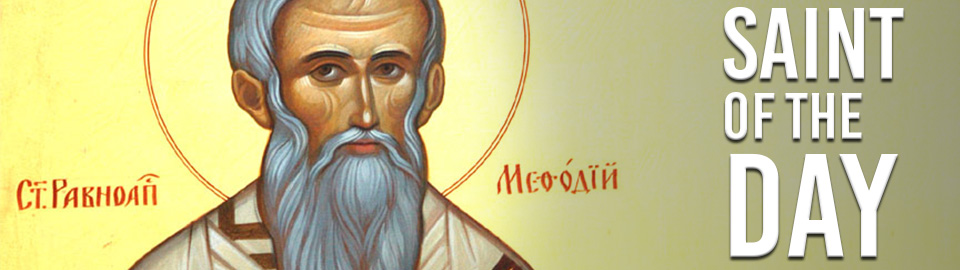


 Daily Readings for Saturday, April 20, 2024
 St. Marian: Saint of the Day for Saturday, April 20, 2024
 Children's Prayer For Parents: Prayer of the Day for Saturday, April 20, 2024