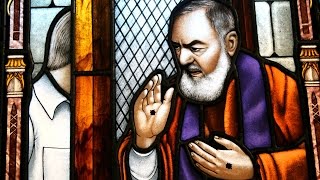
Ulfilas
FREE Catholic Classes
(Also: Ulphilas ), apostle of the Goths, missionary, translator of the Bible , and inventor of an alphabet, born probably in 311; died at Constantinople in 380 or 381. Though Ulfilas in speech and sympathies was thoroughly Gothic, he was descended not from Teutonic ancestors, but from Cappadocians captured, in the reigns of Valerian and Gallienus, during the raids in Asia Minor made by the Goths from the north of the Danube. There seems to be no valid reason for thinking Ulfilas was not born a Christian (Hodgkin places his conversion during his residence at Constantinople). As a young man he was sent to that city either as a hostage or an ambassador, and, after occupying for some time the position of lector in the church, he was consecrated bishop in his thirtieth year by the celebrated Arian bishop of Nicomedia, Eusebius. Shortly after his consecration he returned to Dacia and during the remaining forty years of his life he laboured among his fellow-countrymen as a missionary. The first eight or ten years of his missionary life were spent in Dacia, after which because of the persecution of his pagan countrymen he was compelled with many of his Christian converts to seek refuge in Moesia. It was at this period in his life that he conceived the idea of translating the Bible into the language of the Goths, a task demanding as a preliminary that he should invent a special alphabet. His familiarity with Greek made the task comparatively simple, only a few letters being borrowed from other sources, Runic or Latin. Despite his many other activities Ulfilas translated "all the books of Scripture with the exception of the Books of Kings, which he omitted because they are a mere narrative of military exploits, and the Gothic tribes were especially fond of war, and were in more need of restraints to check their military passions than of spurs to urge them on to deeds of war " (Philostorgius, "Hist. eccl.", II, 5). The Books of the Old Testament were translated from the Septuagint ; those of the New Testament from the original Greek. Ulfilas was at the Synod of Constantinople in 360 when the sect of Acacius triumphed and issued its compromise creed as a substitute for the formularies of the Orthodox as well as the Arian parties. It is unfortunate that the career of Ulfilas was marred by his adherence to the Arian heresy. It may be said in extenuation of this fault that he was a victim of circumstances in coming under none but Arian and semi-Arian influences during his residence at Constantinople; but he persisted in the error until the end of his life. The lack of orthodoxy deprived the work of Ulfilas of permanent influence and wrought havoc among some of his Teutonic converts. His labours were impressed not only on the Goths, but on other Teutonic peoples, and because of the heretical views they entertained they were unable to maintain themselves in the kingdoms which they established. Only a few chapters of Ulfilas's translation of the Old Testament are in existence. Of the New Testament we have the greater portion of the Gospels in the beautiful Silver Codex (a purple parchment with silver and gold letters) now at Upsala, and dating from the fifth century perhaps; nearly all of St. Paul's Epistles in a Milanese Codex edited by Cardinal Mai, and a large fragment of the Epistles to the Romans on a Wofenbüttel palimpsest.



Join the Movement
When you sign up below, you don't just join an email list - you're joining an entire movement for Free world class Catholic education.



 Daily Readings for Friday, April 19, 2024
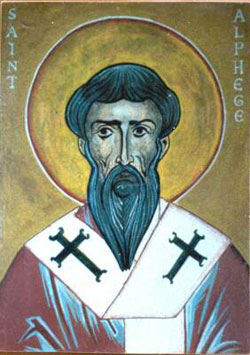 St. Alphege: Saint of the Day for Friday, April 19, 2024
 Stewardship Prayer: Prayer of the Day for Friday, April 19, 2024