We ask you, humbly: don't scroll away.
Hi readers, it seems you use Catholic Online a lot; that's great! It's a little awkward to ask, but we need your help. If you have already donated, we sincerely thank you. We're not salespeople, but we depend on donations averaging $14.76 and fewer than 1% of readers give. If you donate just $5.00, the price of your coffee, Catholic Online School could keep thriving. Thank you.Help Now >
Abbey of Arbroath
FREE Catholic Classes
This monastery was founded on the east coast of Scotland (1178) by William the Lion, for Benedictines, and was colonized by monks from Kelso. The foundation was in honour of St. Thomas of Canterbury, martyred eight years previously, with whom William had been on terms of personal friendship. At his death in 1214 William was buried in the eastern portion, then just finished, of the noble church, which was completed in 1233. It had a choir of three bays and a nave of nine, with side aisles, two transepts, a central and two western towers. The monastery was richly endowed by William and his successors, and by various Scottish barons, and was one of the most opulent in the kingdom. The monks constructed a harbour, and fixed a bell on the Inchcape Rock as a warning to mariners. The last Abbot of Arbroath was David Beaton, Archbishop of St. Andrews. After the Reformation the revenues were bestowed on the Hamiltons, the abbey being erected into a temporal lordship. Services were held up to 1590 in the lady-chapel, "stripped of its altars and images." The existing ruins of the church are considerable and imposing, but of the conventual buildings only a few fragments remain.
We ask you, humbly: don't scroll away.
Hi readers, it seems you use Catholic Online a lot; that's great! It's a little awkward to ask, but we need your help. If you have already donated, we sincerely thank you. We're not salespeople, but we depend on donations averaging $14.76 and fewer than 1% of readers give. If you donate just $5.00, the price of your coffee, Catholic Online School could keep thriving. Thank you.Help Now >

Join the Movement
When you sign up below, you don't just join an email list - you're joining an entire movement for Free world class Catholic education.





 Daily Readings for Wednesday, April 24, 2024
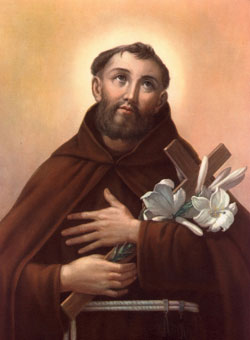 St. Fidelis of Sigmaringen: Saint of the Day for Wednesday, April 24, 2024
 A Prayer for Special Intentions: Prayer of the Day for Wednesday, April 24, 2024