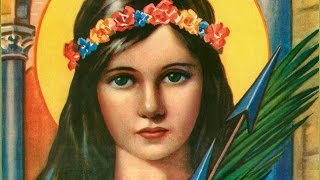
Feminine Beauty Created for 'Spousal Love,' says Catholic Professor Mary Shivanandan
FREE Catholic Classes
Dr. Shivinandan reflected that this "way of approaching feminine beauty is almost entirely foreign to our culture, which isolates feminine bodily beauty as a thing in itself, using it to sell products or titillate the senses.It is the great challenge of our time to recover this sense of feminine beauty as intrinsically spousal"

Highlights
Catholic News Agency (www.catholicnewsagency.com)
8/9/2010 (1 decade ago)
Published in College & University
P>CRESTVIEW HILLS, Ky (CNA) - Writing for the Thomas More College journal, Catholic professor Mary Shivanandan addressed the topic of feminine beauty, explaining that a woman's physical and spiritual attributes find their fullest expression in "spousal love," whether in motherhood or consecrated celibacy.
On Aug. 5, The Thomas More College of Liberal Arts released its latest journal issue, Second Spring: an International Journal of Faith and Culture. This recent edition is dedicated to exploring the Theology of the Body from several perspectives.
In her article titled, "The Spousal Nature of Feminine Beauty in John Paul II," Mary Shivanandan - a professor of Theology at the John Paul II Institute for Studies on Marriage and the Family at the Catholic University of America - explores the theme of the purpose of a woman's beauty and where it finds its fullest expression.
"Feminine bodily beauty!" Shivanandan began in her article. "Is this not a topic more suitable to a fashion magazine than a serious journal? What does it have to do with theology?"
"But John Paul II takes feminine beauty very seriously," the professor underscored.
"Towards the end of the first cycle of his Catechesis on Human Love, he writes: 'The whole exterior of woman's body, its particular look, the qualities that stand with the power of perennial attraction ... are in strict accordance with motherhood.'"
"Right away," she added, "we have a perspective on the feminine body that is not characteristic of our culture, which either favors the thin straight silhouette of the fashion model or the dress open and showing curves to the navel."
In modern society, woman "is presented either without sexual attributes or as a sex object," the professor lamented. "How is it even possible to address a culture that treats the feminine body in this way?"
However, "John Paul II does not hesitate to rise to the challenge," she wrote.
"When John Paul II links the visible bodily aspect of a woman with its power of perennial attraction 'in strict accordance with motherhood,' he may seem to be limiting the often wondrous visible beauty of woman to one dimension."
Yet, "the mystery of femininity manifests and reveals itself in its full depth through motherhood," Shivanandan said, quoting the late Pontiff.
"This mystery, as he explains in his Apostolic Letter Mulieris Dignitatem, involves 'a special openness to the new person' on the part of woman through which she discovers her own identity precisely as woman."
In this gift of self through the openness of bringing new life into the world, a woman not only realizes her identity as female, but reaches the fullest expression of what feminine beauty is, explained Shivanandan.
"Beauty, feminine beauty, which, as John Paul II says, is in strict accordance with motherhood, is
both a source and fruit of spousal love lived sacramentally in the family," she noted. "From it radiates the beauty of the civilization of love."
"It is the great challenge of our time to recover this sense of feminine beauty as intrinsically
spousal," Shivanandon wrote.
In addition to a woman expressing her beauty as a gift of self through spousal love in marriage, the professor added, in "the consecrated virgin the spousal form is also present but expressed in a different way, as signifying the priority of personhood over bodily sexual attraction."
"Espoused to the Lord, she points to the eschaton (heavenly reality) where there is no giving in human marriage. Thus the woman has to be affirmed in her role as person, oriented to self-gift, spouse and mother in a correct order."
Shivinandan reflected that this "way of approaching feminine beauty is almost entirely foreign to our culture, which isolates feminine bodily beauty as a thing in itself, using it to sell products or titillate the senses."
Pope John Paul II, however, "finds the search for what he calls 'integral beauty' or 'purity free from stain' in the bridegroom's search in the Song of Songs," the professor observed.
"He notes that the Song of Songs refers to the bride as 'a garden closed,' a 'fountain sealed,' because, in the Pope's words, she is 'the master of her own mystery.'"
"The authentic gift of the woman, which is essential to her personal dignity, is revealed in the gift of self as spouse and mother."
We ask you, humbly: don't scroll away.
Hi readers, it seems you use Catholic Online a lot; that's great! It's a little awkward to ask, but we need your help. If you have already donated, we sincerely thank you. We're not salespeople, but we depend on donations averaging $14.76 and fewer than 1% of readers give. If you donate just $5.00, the price of your coffee, Catholic Online School could keep thriving. Thank you.Help Now >
---
Founded in continued response to Pope John Paul II’s call for a “New Evangelization,” the Catholic News Agency (CNA) has been, since 2004, one of the fastest growing Catholic news providers to the English speaking world.
Join the Movement
When you sign up below, you don't just join an email list - you're joining an entire movement for Free world class Catholic education.






 Daily Readings for Wednesday, April 24, 2024
 St. Fidelis of Sigmaringen: Saint of the Day for Wednesday, April 24, 2024
 A Prayer for Special Intentions: Prayer of the Day for Wednesday, April 24, 2024