Pope Meets With 1,100 University Students
FREE Catholic Classes
Pope called University students to ' become the ferment and leaven of a society enlivened by evangelical love.'

Highlights
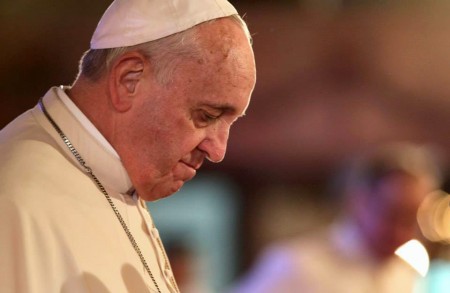
VATICAN CITY (Zenit) - Benedict XVI is urging students to be witnesses of faith in their universities, acknowledging that their Christian presence is becoming more demanding, but also more "fascinating."
The Pope stated this Saturday when he received in audience some 1,100 European university students.
The students were participants in the first encounter of its kind promoted by the Catechesis, Schools and Universities Commission of the Council of European Bishops' Conferences and organized by the vicariate of Rome.
The meeting focused on the theme "New Disciples of Emmaus: In University as Christians."
The Pontiff encouraged the young people to meet the risen Lord like the disciples at Emmaus, "in an authentic ecclesial experience, and especially in the celebration of the Eucharist."
He explained that their "missionary efforts in the university environment" consist in "bearing witness to your own personal encounter with Jesus Christ, the Truth who illuminates the path of all mankind."
"Only in this way can we become the ferment and leaven of a society enlivened by evangelical love," he added.
The Holy Father affirmed that pastoral activity in universities "must be expressed in all its theological and spiritual implications, helping the young to ensure that communion with Christ leads them to perceive the more profound mystery of man and of history."
He continued: "The Christian presence in universities is becoming ever more demanding, yet at the same time fascinating, because faith is called, as it was in centuries past, to offer its indispensable service to knowledge, which is the true motor of development in modern society.
"From knowledge, enriched with the contribution of faith, comes forth the capacity of a people to look to the future with hope, overcoming the temptation of a purely materialist vision of life and of history."
He affirmed that "working for the development of knowledge is the specific vocation of the university, and requires increasingly higher moral and spiritual qualities compared to the vastness and complexity of the knowledge of mankind."
The future
Benedict XVI said to the students, "You are the future of Europe."
He asked them to invest their best resources, not only on an intellectual plane, to mature personally as well as to contribute to the common good.
The Pope continued, "Contribute, together with your teachers, to create laboratories of faith and culture, sharing the labor of study and research with all the friends that you encounter in your university."
He added, "The new amalgamated culture which is currently being forged in Europe and in the globalized world needs the contribution of intellectuals capable of bringing discussion of God back into the classroom; or rather, of reviving mankind's desire to seek God, 'quaerere Deum.'"

The Pontiff assured the young people that the Church in Europe "places great trust in the generous apostolic commitment of all of you, aware of the challenges and difficulties but also of the great potential of pastoral work in the university environment."
After the audience, the students went to a Mass celebrated in St. Peter's Basilica by Cardinal Tarcisio Bertone, the Pope's secretary of state.
This audience with the Holy Father was one of the central points of the students' gathering, which took place in the University of Rome Tor Vergata. It began last Thursday and ended Sunday.
Participants reflected on issues such as the challenges of science and technology, the Christian roots of Europe, contemporary culture and the evangelizing mission of university students in the new millennium.
The young people came from more than 31 nations, including: Albania, Belgium, Bosnia Herzegovina, Bulgaria, Croatia, Cyprus, Czech Republic, Finland, France, Germany, England, Greece, Ireland, Latvia, Malta, Netherlands, Poland, Romania, Russia, Slovakia, Slovenia, Spain, Sweden and Switzerland.
We ask you, humbly: don't scroll away.
Hi readers, it seems you use Catholic Online a lot; that's great! It's a little awkward to ask, but we need your help. If you have already donated, we sincerely thank you. We're not salespeople, but we depend on donations averaging $14.76 and fewer than 1% of readers give. If you donate just $5.00, the price of your coffee, Catholic Online School could keep thriving. Thank you.Help Now >
Join the Movement
When you sign up below, you don't just join an email list - you're joining an entire movement for Free world class Catholic education.




 Daily Readings for Friday, April 19, 2024
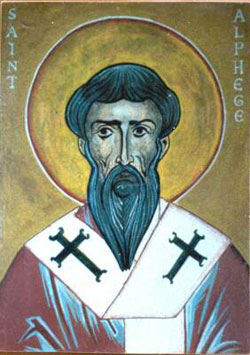 St. Alphege: Saint of the Day for Friday, April 19, 2024
 Stewardship Prayer: Prayer of the Day for Friday, April 19, 2024