 Dear readers, Catholic Online was de-platformed by Shopify for our pro-life beliefs. They shut down our Catholic Online, Catholic Online School, Prayer Candles, and Catholic Online Learning Resources essential faith tools serving over 1.4 million students and millions of families worldwide. Our founders, now in their 70's, just gave their entire life savings to protect this mission. But fewer than 2% of readers donate. If everyone gave just $5, the cost of a coffee, we could rebuild stronger and keep Catholic education free for all. Stand with us in faith. Thank you. Help Now >
Magdalen: A Catholic College Where the Students Sing (in Latin)
FREE Catholic Classes
With so many Catholic schools moving away from their religious identity, it's always good to see an institution that embraces it.
Highlights
Inside Catholic (www.insidecatholic.com)
2/24/2009 (1 decade ago)
Published in College & University
WASHINGTON, D.C. (Inside Catholic) - Recently I had the chance to speak with Jeffrey J. Karls, president of Magdalen College in Warner, New Hampshire. Like many people, I had a few misconceptions about the school. After speaking with him and getting the facts, I thought it would be nice to turn our conversation into an informal interview.
With so many Catholic schools moving away from their religious identity, it's always good to see an institution that embraces it.
♦ ♦ ♦
Deal W. Hudson: I understand that Magdalen College is a place where the students sing. Could you tell me about that?
Jeffrey J. Karls: Singing is at the heart of our life at Magdalen College. Other colleges might highlight their athletic programs, but we highlight the music program, especially the singing. Each student sings every year in the choir. Even students who don't think they can sing find their voices. Some enter the college a bit apprehensive about singing but are tutored in everything they need to learn to be a member of the team. They sing polyphonic harmony at Mass every day, and they chant the Mass in Latin.
Everyone who visits here comments on how incredibly beautiful our liturgies are. The choir is invited regularly to sing at the cathedral for the Red Mass and other special liturgies. We are receiving so many requests for them to sing we may have to get a booking agent. But this is only one way we teach our students how to work together.
I read that the Cardinal Newman Society college guide described your college as one of the top "joyfully Catholic colleges." Do you think your singing has anything to do with that?
It has everything to do with it. Singing gets the students out of themselves, helps them to be creators of harmony and beauty, and it nurtures their sense of wonder. That is part of the reason that joy permeates our campus. We recently went through the process of finding a new tutor, and all the applicants noticed how engaging the students are, how polite, and how joyful. Plus, it doesn't hurt that Magdalen College is surrounded by some of the most beautiful country New Hampshire has to offer.
Do you describe yourself as a "great books" college?
No, we are careful to distinguish ourselves from places like St. John's College and Thomas Aquinas College. We are a classic liberal arts program with a core curriculum based upon the classic works of western civilization, but our students read other books as well. All the tutors choose every book read in our classes. The faculty does everything by consensus. We also have a four-year emphasis on theology and catechesis. If a student keeps above a B average, he receives an apostolic catechetical diploma in addition to a Bachelor of Arts degree.
Are all of your classes run as Socratic-style seminars?
Yes, for the most part, except for classes like geometry or Latin, which tend from time to time toward lecture. We have 10:1 student-faculty ratio, so the seminars are small; and often two tutors will lead a seminar, such as in philosophy. The discussion between students and tutors doesn't end with the seminar; they eat meals together -- breakfast and lunch -- in a dining room, not a cafeteria. It offers faculty and students the opportunity to interact with students from different classes; freshmen with seniors, juniors with sophomores, and so on.
What you are telling me is somewhat at odds with the Magdalen that is perceived to have a reputation as a "Catholic boot camp."
These rumors are very misleading; they were probably first circulated in the founding years, in the early 1970s, and never went away. Magdalen, at the beginning, was somewhat like an overprotective mother and could have a bunker mentality, but we think we have now achieved a much better balance. For example, there is a rumor that we looked in students' drawers to see how their socks were folded. The truth is that each dorm has a clean-up day, and the resident life assistants check to make sure all the rooms are neat and tidy. The campus is 17 years old, and we still have the original carpets and paint -- everyone takes pride in our campus.
I have heard students are not allowed to date. Is that true?
That's another misunderstanding about our college. Our students go out together all the time, and we have wonderful couples on campus. We place a great deal of value on having a thriving community life, and young people can fall into cliques. With 70 students, having that kind of community is important. Exclusive friendships at the expense of not participating in the community are what we are trying to avoid. A former student, Nancy Carlin (class of 2002), said on EWTN's Life on the Rock, "If I was at another college or university I would have been friends with two or three students just like myself, but at MC I have 80 friends." That is the kind of community we want to nurture. Couples actually thrive at Magdalen because the friendships are so strong.
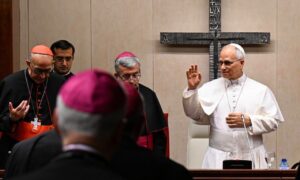
Francis Cardinal Arinze is speaking on campus in April to mark your 35th anniversary. How did you get the cardinal involved with Magdalen?
I wrote inviting him to be the commencement speaker, but his calendar was full. Then he offered to come in April. The cardinal knew all about Magdalen College and wrote us a beautiful, very complimentary letter. Cardinal Arinze, evidently, had heard about our commitment to liturgy.
Each day on campus begins with Mass at 7:30 a.m. -- it is not mandatory, but there is 100 percent participation among the students. Confessions are heard every day before Mass, and there is singing at every liturgy. The altar servers have a great training program, and when Sean Cardinal O'Malley [of Boston] was here, he said they should come train his seminarians on how to serve Mass. The liturgical life coordinator, chaplain, altar servers, and choir directors put everything together in a beautiful, sacred way. Some Masses are the Novus Ordo Latin, and some are a combination of Latin and English.
By the way, we have two Protestant students at Magdalen who were so motivated by the seminars they come to Mass every day.
What is your vocation record?
Thus far we have had 45 vocations to the priesthood and the religious life -- a little more than one per year. It is very natural for Magdalen students to consider a vocation, since the spiritual life is so front and center. Diocesan vocations directors come to the campus all the time, and religious orders come as well. Four Magdalen College graduates are in community with the Sisters of Mary, Mother of the Eucharist. Different religious orders come to campus each year to give the annual student weekend retreat. This way, students get the experience of different charisms.
How have your alumni done in the world of work?
Our alumni are found in all the professions, from education, business, medicine, technology, to the military. We help our seniors with writing their resumes and preparing for job interviews. An executive from Sun Microsystems was recently here interviewing students and was very impressed with the answers given by our students. He said Magdalen students could speak, write, and present themselves better than most students he had met. Magdalen students get intensive training in writing, including short stories, an autobiography, and a senior thesis presented to the whole school. Our students are not just learning a trade, they are learning the tools to sell a product, motivate others, provide leadership, communicate clearly, and think critically. Businesses need those skills but can't teach them.
Tell me about the month-long program in Italy.
Through a friend of the college, the prior at the Benedictine monastery in Norcia, we have created a program so students can spend time in Rome, Assisi, and Florence and live in a medieval walled city. In Norcia they walk in the footsteps of St. Benedict, read his Rule, and chant at Mass with the monks every morning. This program used to be done with the juniors, but now we schedule it for the month after the end of the sophomore year. The cost is rolled into the tuition, and students have chipped in by opening up a Norcia café on campus and donating all the profits to defray the costs of the program.
Where do your students come from?
We have as many students from California as New England. Many of our students -- 6o percent -- matriculate after having participated in our two-week summer camps for high school students. These camps are limited to 30-40 students, so we can get them all on one bus. Students are treated to academic classes, liturgy, recreation, and, of course, singing. By the end of the two weeks, the students are able to sing a full chant Mass in Latin. We also have two visitor weekends in the fall and the spring -- high school students can come and live with the college students and join in all our campus activities. In the fall, they can enjoy the New England fall foliage and our local fall foliage festival, and in the spring, they ski at a local ski resort and enjoy our drama weekend presentation.
What do you say to parents who ask you about Magdalen College?
Magdalen is a place where young people come to know and understand themselves better in relationship with others and with God and His beautiful creation. We provide the kind of academic environment described by Pope Benedict XVI in his address to Catholic college and university presidents last April: The Holy Father said that, first and foremost, every Catholic educational institution should be a place where its students encounter Jesus Christ and His love. That is very real at Magdalen College and is why our students are truly and joyfully Catholic.
Deal W. Hudson is the director of InsideCatholic.com. For more information about Magdalen College, please contact Rebecca Vinson at rvinson@magdalen.edu
---
The mission of InsideCatholic.com is to be a voice for authentic Catholicism in the public square.We believe that truth is both attractive and compelling and that in the marketplace of ideas, it will invariably win out.

Come Grow With Us
Sign up and walk the Catholic journey with millions around the world.
Receive inspiring emails on saints, daily readings, and free faith-building resources—no cost, ever.
Sister Sara Has One Message for Every Catholic Family This June
- Easter / Lent
- 5 Lenten Prayers
- Ash Wednesday
- 7 Morning Prayers
- Mysteries of the Rosary
- Litany of the Bl. Virgin Mary
- Popular Saints
- Popular Prayers
- Female Saints
- Saint Feast Days by Month
- Stations of the Cross
- St. Francis of Assisi
- St. Michael the Archangel
- The Apostles' Creed
- Unfailing Prayer to St. Anthony
- Pray the Rosary








Copyright 2026 Catholic Online. All materials contained on this site, whether written, audible or visual are the exclusive property of Catholic Online and are protected under U.S. and International copyright laws, © Copyright 2026 Catholic Online. Any unauthorized use, without prior written consent of Catholic Online is strictly forbidden and prohibited.
Catholic Online is a Project of Your Catholic Voice Foundation, a Not-for-Profit Corporation. Your Catholic Voice Foundation has been granted a recognition of tax exemption under Section 501(c)(3) of the Internal Revenue Code. Federal Tax Identification Number: 81-0596847. Your gift is tax-deductible as allowed by law.